
That's where fundraising comes in. The right campaign can cover a meet entry fee crisis or fund an entire travel season. The wrong one just burns out your volunteers and leaves you short of the goal.
This guide walks through the top swim team fundraising ideas, how to match one to your team's size and timeline, and a few practical tips for getting the most out of whatever you choose.
Key Takeaways
- Swim programs carry extra costs other youth sports rarely face: lane rental, travel meets, and suits
- Best fundraisers hit 40-50% margins with low volunteer effort and broad community appeal
- Strong options include product sales, swim-a-thons, calendars, sponsorships, and local events
- Match your mix to team size, season timing, and how supporters prefer to give
Why Swim Teams Need Strong Fundraising Strategies
Youth sports aren't cheap, and swimming carries costs most other sports never face. Beyond registration fees, teams typically budget for:
- Pool and lane rental (a fixed, recurring expense)
- Travel meets, lodging, and entry fees
- Coaching staff
- Gear and equipment
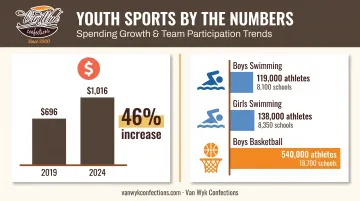
Sports families spent an average of $1,016 on a single child's primary sport in 2024, a 46% jump from 2019, according to Project Play's 2025 family spending survey. Swimming's mix of lane fees, travel, and equipment tends to push costs toward the higher end of that range.
Roster size makes the math harder. According to the 2024-25 NFHS athletics participation survey:
- Boys swimming and diving: about 119,000 athletes across roughly 8,100 schools
- Girls swimming and diving: about 138,000 athletes across roughly 8,350 schools
- Boys basketball (for comparison): over 540,000 athletes across nearly 18,700 schools
Basketball teams have a much larger base to split fundraising duties across.
Fewer swimmers per team means each athlete typically has to raise more to hit team goals. A proven, high-margin fundraiser matters more when the roster is small and the need is large.
Top Swim Team Fundraising Ideas
These options stand out for profit potential, easy execution for volunteer coaches and parents, and a proven track record with swim programs across the country.
Candy, Chocolate & Snack Fundraisers
Product-based fundraising remains one of the most dependable models for swim teams. Treats sell to a wide, repeat-buying audience (parents, teachers, neighbors, coworkers) without requiring an event or a big online push.
Van Wyk Confections, a family-owned fundraising supplier operating since 2000, offers a lineup built specifically for teams like yours:
- Original ONE DOLLAR BAR: five flavors, peanut-free and gluten-free
- Chocolatiers Premium Chocolate Bars: $2 price point, up to 55% margin
- Sweet & Salty Pretzel Rods: peanut-free, available at $1 and $2 tiers
- Gourmet Popcorn: higher price point for stronger per-unit profit
- Famous Fortune Cookies: chocolate-covered, peanut-free facility
| Factor | Details |
|---|---|
| Profit Margin | 40-50% profit, no complicated minimums |
| Order Flexibility | 1 case minimum, factory-sealed and guaranteed fresh; peanut-free options available |
| Best For | Teams wanting a low-effort, repeatable fundraiser with no event or online setup required |
Swim-a-Thon (Pledge-Per-Lap Event)
Swimmers collect pledges per lap or per minute swum within a set time window, tying the fundraiser directly to the sport itself. USA Swimming's Swim-a-Thon program frames it as both a fundraiser and a team-building event, and it works well digitally. Pledge-tracking tools let supporters commit online before race day.
| Factor | Details |
|---|---|
| Profit Margin | Varies by pledge rate; can scale into the thousands with strong per-swimmer promotion |
| Effort Level | Moderate: requires event planning and pledge collection, but no product handling |
| Best For | Teams wanting an athletic, in-season event that engages the whole roster |
Calendar Fundraiser
Each swimmer gets a digital or printed calendar with 31 numbered days that supporters "claim" with a donation. A fully claimed calendar can generate several hundred dollars per swimmer with minimal ongoing effort once it's shared.
| Factor | Details |
|---|---|
| Profit Margin | Close to 100%, since it's donation-based rather than product-based |
| Effort Level | Low once set up; mostly sharing links via text or social media |
| Best For | Teams with digital tools or apps to manage individual swimmer pages |
Online Crowdfunding Campaign
Each swimmer (or the team as a whole) creates a branded donation page shared with family and friends outside the immediate community. This extends the ask beyond the usual pool of neighbors and grandparents, which matters for club and travel teams whose supporters are scattered across cities or states.
| Factor | Details |
|---|---|
| Profit Margin | No product cost; funds raised are close to 100% profit minus platform fees |
| Effort Level | Low to moderate; success depends on how widely links get shared |
| Best For | Club or travel teams with supporters spread across multiple locations |
Business Sponsorship Packages
Tiered sponsorship packages (bronze, silver, gold) offer local businesses logo placement on banners, meet programs, or team apparel in exchange for a donation. This creates recurring, larger-dollar gifts instead of relying on lots of small individual purchases.
| Factor | Details |
|---|---|
| Profit Margin | Close to 100%, since sponsors pay directly for visibility, not a product |
| Effort Level | Moderate; requires outreach to local businesses and recognition materials |
| Best For | Teams with an established home pool or regular meet visibility |
Swim Clinic or Lessons for Kids
Host a one-day clinic or short lesson series taught by team swimmers under adult supervision, with a registration fee per participant. This is an easy sell in most communities. A C.S. Mott Children's Hospital poll found that 97% of parents consider basic swimming skills important for their kids.
| Factor | Details |
|---|---|
| Profit Margin | High, since costs are limited to facility time and instructor supervision |
| Effort Level | Moderate to high; requires scheduling, supervision, and registration management |
| Best For | Teams with pool access and older swimmers willing to instruct |
Discount Card Fundraiser
Supporters pay a flat fee, commonly $20-25, for a card offering discounts at local businesses, restaurants, and shops. Because supporters often look forward to renewing each year, it becomes a repeatable, low-effort annual fundraiser rather than a one-off ask.
| Factor | Details |
|---|---|
| Profit Margin | High; teams keep most of the card price after covering printing costs |
| Effort Level | Low once local business partnerships are established |
| Best For | Teams wanting a simple, no-inventory fundraiser with recurring annual potential |
Silent Auction or Trivia Night
Host a silent auction or themed trivia night at a school or restaurant, with donated items or entry fees driving revenue. Pairing it with a banquet or end-of-season celebration tends to boost both attendance and total dollars raised.
| Factor | Details |
|---|---|
| Profit Margin | Moderate to high, especially with donated auction items |
| Effort Level | High; requires securing donations, a venue, and event logistics |
| Best For | Larger teams or booster clubs with volunteer capacity for event planning |
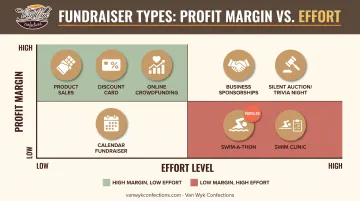
How to Choose the Right Fundraiser for Your Swim Team
Start with team size:
- Small teams: High-margin, low-effort options work best — think product sales or calendars.
- Larger teams: More volunteer bandwidth supports events like a trivia night or auction.
Next, weigh upfront cost and risk:
- Favor no-minimum, no-advance-payment programs. Ordering one case at a time, then reordering once it sells, keeps a small program from getting financially exposed.
- Match the fundraiser to your season's timeline. Run product sales during the season; save events and sponsorship pushes for the off-season.
- Watch for supporter fatigue. Running the same type of ask back-to-back wears out your donor base — diversify across the year instead of repeating one format.
- Confirm delivery speed before committing to a supplier. Fast, reliable shipping keeps a product fundraiser from disrupting practice or meet schedules.
Tips to Maximize Your Swim Team Fundraising Results
A few small adjustments separate a mediocre campaign from a strong one:
- Set a specific dollar goal tied to a real need (travel, lane rental, or new equipment) so supporters know exactly what their donation funds
- Give every swimmer a personal sharing link or order form so families can promote by text and social instead of one central seller
- Keep incentives simple and low-cost: team shout-outs or a small prize for top sellers protect margin better than pricey reward tiers
Conclusion
Successful swim team fundraising comes down to matching the right idea to your team's size, timeline, and volunteer capacity. A product sale that works for a 15-swimmer club might fall flat for a 60-athlete high school program, and vice versa.
Test a mix across the season — product sales, an event or two, maybe a sponsorship push — so you're not asking the same families for the same thing every month.
Looking for a straightforward, high-profit product fundraiser to anchor your season? Van Wyk Confections has helped schools, clubs, and sports teams raise more than $50 million over 26 years, with nationwide distribution and no complicated minimums.
Frequently Asked Questions
How much money can a swim team realistically raise through fundraising?
Totals vary widely based on team size and fundraiser type. Well-run programs commonly raise several hundred to several thousand dollars per campaign, especially when combining a product sale with a pledge event.
What is the best fundraiser for a small swim team?
Low-effort, high-margin options like product fundraisers or calendar fundraisers work best. Neither requires large volunteer staffing, which matters when your roster — and your parent pool — is small.
How do swim teams run a successful swim-a-thon fundraiser?
Set lap goals by age group, collect pledges in advance rather than after the event, and promote it heavily through team communications in the weeks leading up. Digital pledge tools make tracking much easier.
Are product fundraisers like candy or snack sales still profitable for swim teams?
Yes. Suppliers with no upfront costs and 40-50% margins on items families already buy — chocolate bars, pretzel rods, popcorn — remain some of the most reliable options available.
How early should a swim team start planning its fundraiser?
Begin 4-6 weeks before the season or targeted expense deadline. That gives enough time to set up the program, order product if needed, and promote it before the ask goes out.
What profit margin should swim teams expect from a fundraiser?
For product fundraisers, 40-50% is a strong benchmark. Donation-based options like calendars or sponsorship packages can reach nearly 100% because there's no product cost to cover.