Introduction
Pool time isn't free. Neither are meet entry fees, travel to away competitions, team equipment, or coaching stipends. For most swim teams — especially smaller youth clubs and high school programs — the gap between what parents can cover and what the season actually costs is real and persistent.
Lane rentals alone can run $20–$60 per hour depending on the facility. Add meet registration fees (the 2024 YMCA National Short Course Championship charged $15 per individual event plus a $20 athlete surcharge), travel costs, and gear, and a team's annual budget adds up fast.
Swim teams have more fundraising options than a bake sale or car wash. This guide covers 17 proven ideas organized into three categories — pool-based events, product and snack sales, and community events — plus practical tips for running a campaign that actually hits its goal.
Key Takeaways:
- Pool-based events like swim-a-thons generate strong community buy-in and work for all skill levels
- Product fundraisers (candy, popcorn, pretzel rods) often deliver the highest profit margins with the least logistical effort
- Community events expand your donor base beyond swim families
- Setting a specific dollar goal and clear end date improves results
- Timing matters — avoid launching campaigns during peak competition weeks
What Swim Teams Typically Spend Fundraising Money On
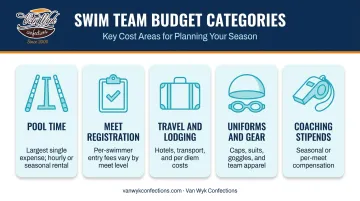
Swim team budgets stretch across more line items than most parents expect. Knowing where the money goes helps you set a realistic fundraising target:
- Pool time — lane rentals typically run $15–$60/hour depending on the facility and lane type
- Meet registration — individual event fees, relay fees, and athlete surcharges add up quickly across a season
- Travel and lodging — away meets and championships involve transportation, hotels, and coach travel
- Uniforms and gear — suits, caps, goggles, kickboards, and pull buoys
- Coaching stipends — high school programs often pay seasonal coaching stipends ranging into the thousands
The right fundraiser scale varies by program type. A recreational summer league of 20 kids has different needs than a USA Swimming club chasing regional championships. The 17 ideas below cover that full range. Use your team's size, schedule, and community connections to narrow down the best fit.
Pool-Based Fundraising Events
Pool-based events work naturally for swim teams because they use access your team already has. Swimmers do what they love in front of an audience, which builds excitement and makes donation asks feel organic rather than awkward.
Swim-a-Thon
The swim-a-thon is the most established fundraiser in aquatic sports. USA Swimming's official program supports per-length pledges or flat donations, with a standard format of up to 200 lengths within two hours.
How to run it:
- Have swimmers collect pledges (per lap or flat amount) from family, neighbors, and coworkers in the weeks before
- Set age-appropriate lap targets — younger swimmers might aim for 50–100 laps, older athletes for 150–200
- Host the event on a set date, track laps, and report totals to donors afterward
Named campaigns have raised between $9,225 and $19,348, though results vary widely based on team size, participation rates, and how aggressively swimmers solicit pledges.
Tread-a-Thon
A beginner-friendly alternative to the swim-a-thon, the tread-a-thon has participants tread water for a set duration while collecting per-minute pledges. It runs well relay-style, with team members rotating in — lower pressure, more inclusive, and a natural fit for younger age groups or mixed-ability rosters.
Relay Challenge Night
Form mixed-age teams, charge a small entry fee per swimmer, and run a fun relay format. Award prizes based on participation or creativity rather than speed — this keeps the energy high and removes pressure that might discourage younger swimmers. Opening the event to families as spectators adds atmosphere and can drive extra concession or raffle revenue on the night.
Pool Party with Entry Fee
Host an open community pool party with a modest admission charge, add-on concessions, and music. This pulls in supporters who wouldn't normally attend a swim meet — neighbors, extended family, local businesses — giving your team access to donors outside the usual swim-family circle.
Swim Lessons for Kids
Experienced team members offer 30–45 minute beginner swim lessons to younger children for a set fee per session. Parents prioritize water safety, which makes this an easy sell with minimal marketing needed. A quick illustration of the earning potential:
- 10 older swimmers × 2 sessions each = 20 lesson slots in a single weekend
- At $20–$25 per session, that's $400–$500 before any add-ons
Glow Swim or Cannonball Contest
Two quick event ideas that can be tacked onto the end of a regular practice:
- Glow swim night — LED lights, glow sticks, and ticket sales create a festive atmosphere with minimal setup cost
- Cannonball or dive contest — entry fee, judged on style and splash rather than technique, keeps it accessible and fun for all ages
Product and Snack Sale Fundraisers
Product-based fundraisers don't require an event day, every swimmer can participate independently, and supporters get something tangible in return. That combination makes these the highest earners — no venue coordination, no ticket sales, just direct selling at scale.
Candy Bar Fundraiser
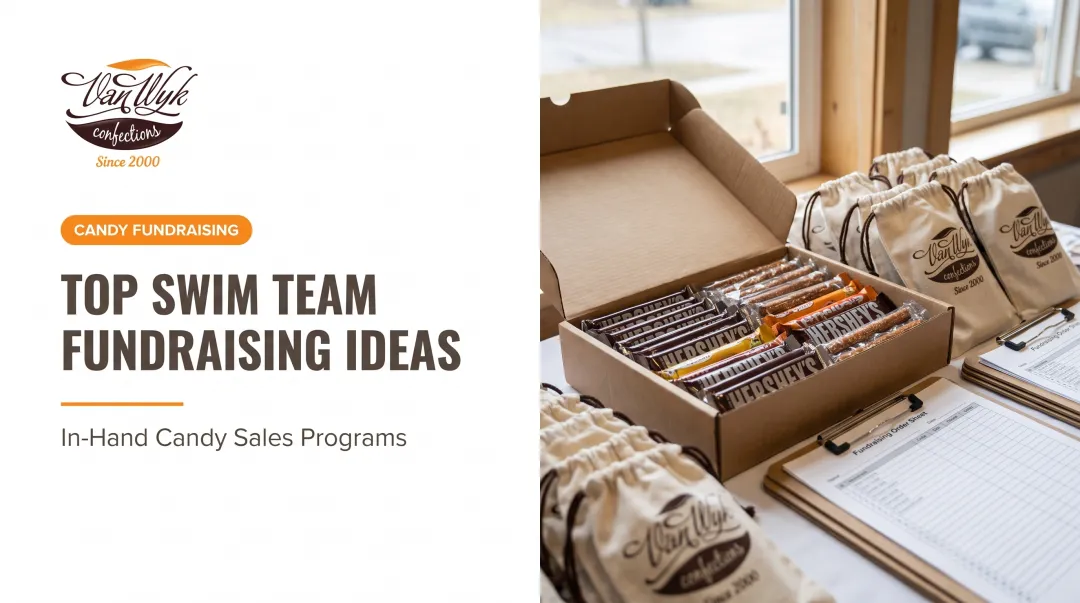
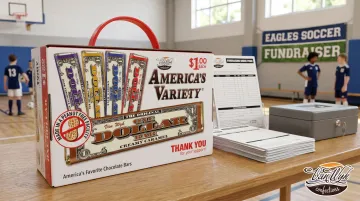
The direct-sale candy bar model is straightforward: swimmers carry a box of individually wrapped bars and sell them to family, neighbors, and coworkers. At a $1 price point, it's an impulse buy that rarely requires a hard sell.
Van Wyk Confections' Original ONE DOLLAR BAR was purpose-built for exactly this model. Each case contains 240 bars packaged across 4 carriers of 60 bars each — a manageable load for individual sellers. The company offers a 1-case minimum, which means even small teams can start without a large upfront commitment and reorder as needed.
Since 2000, Van Wyk has helped nonprofit groups raise over $50 million through fundraising products, with a sales team available to walk your group through the process from first order to final count.
Gourmet Popcorn Sales
Gourmet popcorn works especially well for repeat purchases — families buy multiple bags for snack nights, movie nights, or office breaks. Van Wyk Confections offers gourmet popcorn as part of their fundraising lineup, so teams can run it as a standalone campaign or pair it with candy bar sales to give supporters more options in a single order window.
Pretzel Rod Sales
Sweet-and-salty snacks sell particularly well during meet days and travel weekends when families are already hungry and looking for convenient options. Van Wyk's Sweet & Salty Pretzel RODS — individually wrapped, available in multiple flavors, and peanut-free — are a strong option for poolside selling. The product comes in a box of 60 or a full case of 240 units, and both $1 and $2 price-point options are available.
Poolside Concession Stand
Set up a simple snack and drink table during home meets or practice sessions managed by parent volunteers. Tips for keeping it manageable:
- Confirm with the pool facility in advance
- Limit selection to 4–5 items to avoid inventory headaches
- Price everything at round numbers ($1, $2, $3) for easy cash handling
- Pre-package snacks and pre-pour drinks to speed up service during busy meet breaks
Team Merchandise Pre-Sales
Pre-selling branded gear — swim caps, towels, hoodies, water bottles — eliminates inventory risk entirely. Limit to one or two designs, keep the campaign window short (one to two weeks), and collect payment upfront before placing the production order.
Bake Sale at Meets
Bake sales positioned at home meets tap a captive audience of hungry families who've been sitting in bleachers for hours.
Practical tips:
- Label every item with allergen information
- Coordinate with families in advance so you have enough variety without overlap
Community Events and Creative Fundraiser Ideas
These ideas extend the team's reach beyond the pool deck to neighbors, local businesses, and supporters who may never attend a swim meet. They're ideal for diversifying revenue or reaching donors who want to help but can't participate in pool events.
Car Wash
The classic approach still works. Choose a high-traffic location, make signage visible from the road, and assign clear roles to swimmers versus parent volunteers.
Tip: Add a small snack or product table (candy bars, popcorn) to increase total revenue without much extra effort. Families waiting for their cars are a captive audience.
Swim-Themed Trivia or Bingo Night
Charge entry per team or per player for a trivia night built around swimming facts, Olympic history, and aquatic fun facts. Parents and community members who can't make it to meets are the natural audience. Low production cost, high engagement, and easy to host at a local community center or school gym.
Restaurant Spirit Night
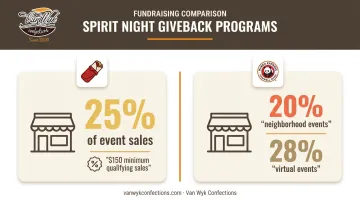
Partner with a local restaurant that offers a giveback program. Chipotle, for example, donates 25% of event sales (subject to a $150 minimum in qualifying sales), and Panda Express offers 20% for neighborhood events or 28% for virtual events. Promote the date through the team's social media channels and school networks. There's minimal planning involved and no upfront cost.
Silent Auction or Raffle
Solicit donated items from local businesses — gift cards, experiences, sports gear, restaurant vouchers — and run either a silent auction at a home meet or banquet, or a raffle with affordable ticket pricing ($5–$10 per ticket).
Prize quality directly affects participation. Strong auction items and raffle prizes to aim for include:
- Local experience packages (spa days, sports tickets, restaurant tasting menus)
- Swim gear bundles (goggles, training equipment, branded apparel)
- Gift card collections from recognizable local businesses
- Youth activity passes (waterparks, trampoline parks, escape rooms)
A compelling top prize makes promotion easier and drives higher ticket sales than a collection of generic donated items.
Online Crowdfunding Campaign
Set up a team fundraising page where each swimmer gets a personal link to share via text, email, and social media. This approach reaches extended family and out-of-town supporters who can't participate in local events.
Why it works:
- No logistics, no inventory, no event coordination
- Scales with team size — more swimmers sharing = more reach
- Works well alongside any of the above ideas as a complementary revenue stream
Crowdfunding platforms that support sports teams report an average of $2,500 raised per participating organization across all sports, though swim-specific results will vary based on team size and outreach effort.
Tips to Run a Successful Swim Team Fundraiser
Set a Specific, Visible Goal
Teams that communicate a concrete target — "We need $3,000 for travel to regionals" — give supporters a clear reason to give. Post a progress tracker in your team group chat, on social media, or on a physical thermometer at the pool. Seeing momentum encourages both late donors and swimmers who haven't started yet.
Time It Right
Swim season calendars vary significantly by state and program type:
- Fall programs (South Carolina, Florida) start practices as early as late July
- Winter programs (Ohio) begin in late October
- Spring championships (California) run through May
- Summer recreational leagues typically run June through July
Choose a fundraiser window that falls before peak competition weeks, not during them. Families stretched thin by meet schedules are harder to mobilize. Early in the season works well for pledging events; product sales can run at almost any time.
Keep Swimmers Motivated
Multi-week campaigns lose steam fast without a plan to keep momentum going:
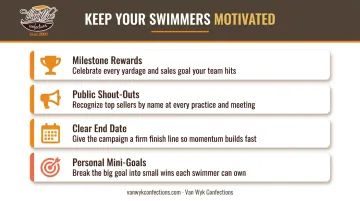
- Set milestone rewards (pizza party at 50% of goal, coach does a silly dare at 75%)
- Give public shout-outs to top sellers in the team group chat
- Announce a clear end date from day one — open-ended campaigns rarely finish strong
- Assign each swimmer a personal mini-goal so progress feels individual, not just collective
Frequently Asked Questions
What fundraisers bring in the most money for swim teams?
Product-based fundraisers — candy bars, popcorn, pretzel rods — and pledge-based events like swim-a-thons tend to generate the strongest returns, especially when every team member actively participates. Results scale significantly with team size and how broadly you promote before the event.
How do you raise money for a swim team?
Start with a specific dollar goal tied to a real expense (travel, equipment, meet fees). Choose a fundraiser that fits your team's size and schedule, assign clear roles to both swimmers and parent volunteers, and promote through personal networks first before going broader.
What are some unique swim team fundraiser ideas?
Glow swim nights, cannonball contests, swim-themed trivia nights, and a "coach dare challenge" tied to a fundraising milestone all stand out from the typical car wash or bake sale. These ideas generate social media content, create team bonding moments, and give community members a reason to show up.
When is the best time to run a swim team fundraiser?
It depends on your program's calendar. Fall teams do well fundraising at season kickoff; winter and spring championship programs benefit from early-season campaigns before competition stress sets in. Product-based fundraisers can run year-round. Avoid launching anything during the two weeks immediately surrounding major meets.
How much can a small swim team realistically raise?
Swim-a-thon campaigns have raised between $9,225 and $19,348 depending on team size, format, and outreach. For product fundraisers, a team of 15–20 swimmers can generate several hundred to a few thousand dollars per campaign — with individual participation rates making the biggest difference.