Introduction
The team needs new uniforms before next month's tournament. The PTO wants to fund a playground upgrade before the school year ends. Nobody has time to wait six weeks for a brochure order to ship.
That's where direct fundraisers come in. Instead of collecting orders and waiting on a supplier to fulfill them later, your group buys the product upfront and sells it on the spot. Money changes hands immediately, no delivery step required.
This guide breaks down how direct-sale fundraising works, how it stacks up against pre-sell or brochure campaigns, and which products perform best. You'll also learn what separates a smooth campaign from a stressful one.
Key Takeaways
- Groups buy inventory upfront and sell directly, earning 40-50% profit the moment a sale happens.
- Most direct-sale programs need only one supporter interaction, with no follow-up delivery required.
- Chocolate bars, pretzels, and popcorn are low-cost, high-demand sellers that move the fastest.
- Working with an established supplier protects against stale product and shipping delays.
What Is a Direct Fundraiser?
A direct fundraiser (also called an in-hand or direct-sale fundraiser) works exactly like it sounds. Your group orders products at wholesale cost, distributes them to sellers, and collects payment the moment someone buys. There's no catalog, no waiting period, and no second visit to deliver anything.
The Association of Fundraising Distributors and Suppliers (AFRDS) describes this as one of two core product-fundraising models: groups purchase products in bulk, prepay for them, then resell them directly to supporters. The alternative, catalog-based ordering, works very differently, which we'll cover next.
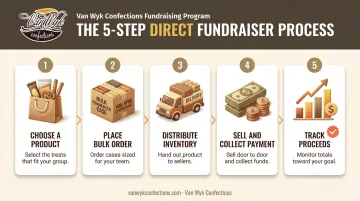
How the Process Typically Flows
- Choose a product based on your group's audience and typical price point.
- Place a bulk order with your supplier, usually by the case.
- Distribute inventory to sellers, whether that's classroom carriers, team boxes, or individual bundles.
- Sell and collect payment on the spot, no invoicing or follow-up needed.
- Track proceeds as they come in, rather than waiting for a shipment to arrive first.
Defining Characteristics
What sets direct sale apart from other fundraising models:
- Low per-item price point: typically $1 to $2, which makes buying an easy, impulsive decision
- Single-contact sale: one conversation, one transaction, done
- Immediate profit collection: no waiting on shipped orders before money lands in your account
- Modest order commitments: many suppliers, including Van Wyk Confections, keep minimums as low as one case, which limits how much cash your group has to put up front
This model tends to suit small to mid-size groups running quick campaigns: schools, sports teams, churches, and clubs that want cash in hand without a long planning runway.
Van Wyk Confections structures its direct-sale programs, including the $1 Pretzel Rods and One Dollar Bar lines, around a 40-50% profit target for participating groups. That figure reflects the company's own program pricing rather than a fixed industry standard, since margins vary by product and supplier.
Direct Fundraisers vs. Pre-Sell (Order-Taker) Fundraisers
Both models raise money. They just get there through completely different workflows.
How Direct Sale Fundraisers Work
Your group buys inventory first. Sellers then hand supporters a product and collect payment in the same interaction, no delivery step needed later. If someone buys a chocolate bar at the football game, that sale is complete the second cash changes hands.
Van Wyk Confections built its business around this exact model, supplying $1-$2 chocolate bars, pretzel rods, and other snacks that groups sell and collect payment for on the spot.
How Pre-Sell (Brochure) Fundraisers Work
Supporters flip through a catalog and place an order, often paying upfront or when the product arrives. Your group then compiles all those individual orders into one bulk order with the fundraising company. Once that shipment arrives, volunteers sort it by supporter and distribute it, sometimes weeks after the sale itself.
Comparing the Two Approaches
| Factor | Direct Sale | Pre-Sell (Brochure) |
|---|---|---|
| Upfront cost/risk | Group pays for inventory before selling | Little to no upfront inventory cost |
| Price point | Typically $1-$2 per item | Often $10-$25+ per item |
| Time investment | Minimal: one interaction per sale | Higher: order taking, sorting, delivery |
| Logistics | Distribute product, sell, done | Collect orders, place bulk order, sort, deliver |
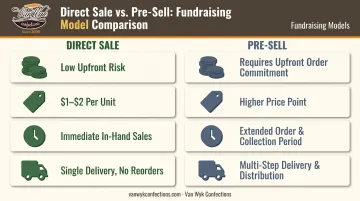
According to FundRaisers.com's comparison of direct sale and order-taker programs, direct sale programs take less overall time precisely because there's no later delivery visit or returned-goods process to manage. Pre-sell programs require more planning but can support a higher-dollar sale per supporter.
Choosing your model:
- Need cash fast with minimal risk? Go direct sale.
- Have more lead time and a bigger fundraising goal? Pre-sell may raise more per supporter.
- Want the best of both? Plenty of groups run a direct-sale snack campaign in the fall and a pre-sell catalog drive in the spring.
Best Products for a Direct Fundraiser
Not every product works for direct sale. The best candidates share a few traits:
- Low price point that makes buying an easy yes
- Broad appeal across ages and dietary preferences
- Shelf stability so unsold inventory doesn't go to waste
- Easy distribution without refrigeration, special packaging, or handling headaches
Chocolate and Candy Bars
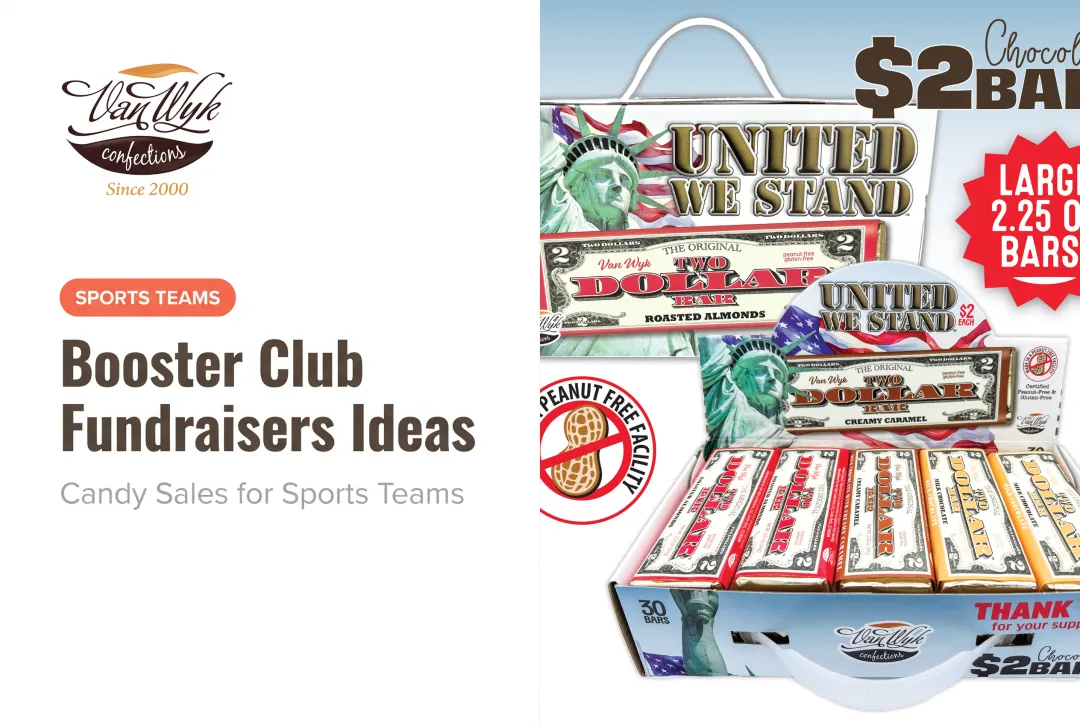
Chocolate bars remain a direct-fundraiser staple for a simple reason: everyone already knows they want one. The Original ONE DOLLAR BAR and Chocolatiers Premium Chocolate Bars from Van Wyk Confections are built for this exact use case. Both are factory-sealed and priced for impulse buys, with peanut-free options available for groups navigating allergy concerns.
Snacks and Treats
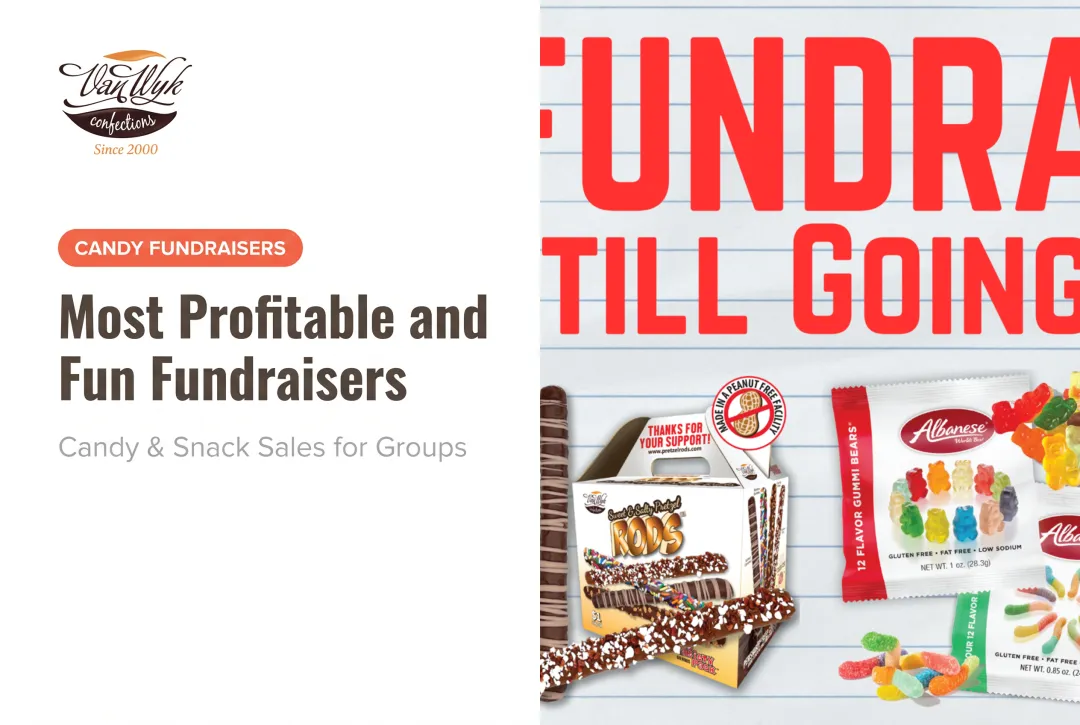
Pretzel rods, pretzel twists, and gourmet popcorn round out a strong direct-sale lineup. Van Wyk Confections was the original creator of Sweet & Salty Pretzel Rods in the fundraising industry, a product line that's become a go-to for groups wanting something beyond chocolate.
Novelty and Fun Items
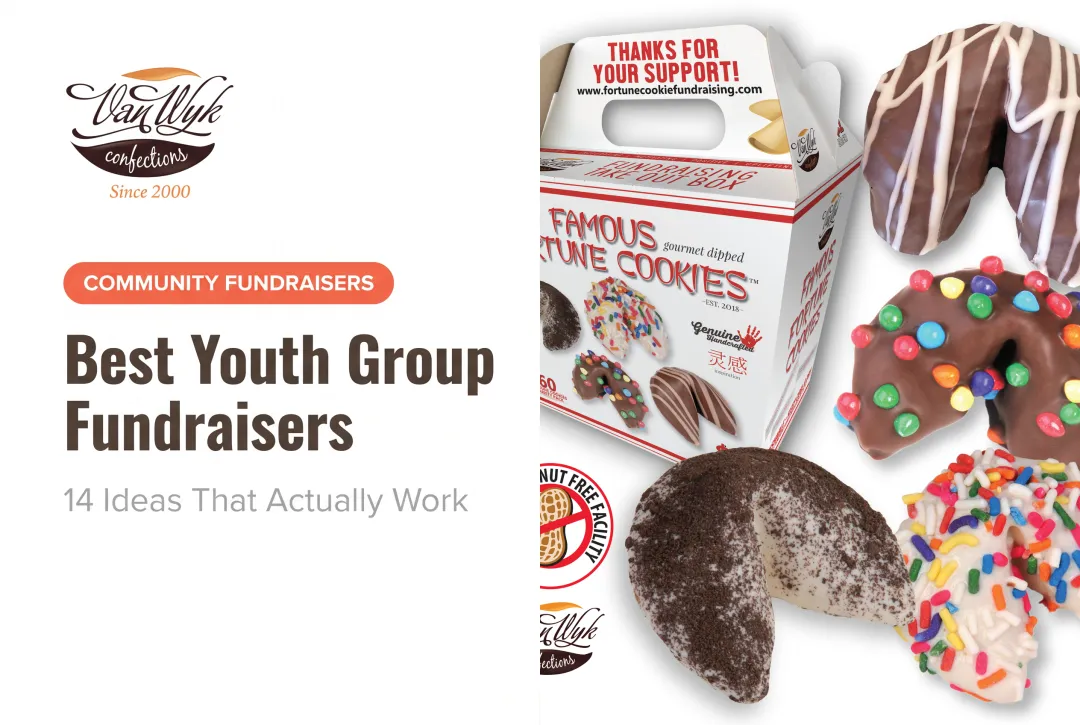
Famous Fortune Cookies add variety that keeps supporters interested season after season. When a group sells the same chocolate bar every year, novelty items help break the monotony and encourage repeat buyers.
Whatever product you choose, look for a supplier offering a 1-case minimum order, nationwide fast shipping, and no long lead times. That combination keeps your risk low and your buying process simple.
Benefits of Direct Fundraisers
Direct sale solves the specific pain points that trip up other fundraising models, especially slow cash flow and heavy volunteer workload.
- Immediate profit collection: money changes hands at the point of sale, so you're not waiting weeks for product delivery before seeing a dollar
- Simpler for volunteers: one interaction per supporter, no follow-up delivery visit, no matching orders to names later
- Lower financial risk: with a 1-case minimum order and shelf-stable products, a few unsold items won't sink your campaign's bottom line
That combination of speed and simplicity works especially well for groups without a dedicated fundraising committee. It removes the usual post-sale headaches:
- No order form to track down after the sale
- No delivery day to schedule around practices or events
- No returned-goods process to untangle if a few items go unsold
Tips for a Successful Direct Fundraiser
A few planning habits separate campaigns that sell out from ones that end with a box of leftover pretzels.
- Estimate order quantity carefully. Base it on group size and, if you have it, past sales history. Ordering too much ties up cash in unsold product; ordering too little means missed sales.
- Set a clear timeline and sales goal. A defined end date and target dollar amount keep participants motivated and organizers accountable.
- Use a simple tracking method. Even a shared spreadsheet noting who took inventory and what's been sold prevents confusion at the finish line.
- Partner with an established supplier. Van Wyk Confections has operated for over 26 years and holds AFRDS membership. Shipping from more than 10 warehouses nationwide keeps product fresher and turnaround faster for your group.
Frequently Asked Questions
What's the most profitable direct sales fundraiser?
High-margin, low-cost consumables like chocolate bars, pretzels, and popcorn tend to perform best. Their broad appeal combined with a $1-$2 price point makes them easy for supporters to buy without hesitation.
What is an example of direct response fundraising?
Direct response fundraising refers to appeals like mail, email, or phone campaigns asking supporters for a donation, as outlined in TNPA's direct response fundraising guide. People often confuse it with direct-sale fundraising, but the two differ: one solicits gifts, the other sells a product.
What is a direct fundraiser?
A direct fundraiser is a model where groups buy inventory upfront and sell it directly to supporters. Groups collect payment immediately, with no separate delivery step needed afterward.
What's the difference between a direct fundraiser and a pre-sell fundraiser?
Direct fundraisers involve in-hand products and instant payment at the point of sale. Pre-sell fundraisers use a catalog, requiring the group to fulfill orders later after supporters have already committed to buy.
How much profit can a group keep from a direct fundraiser?
Profit ranges vary by product and supplier terms, though many direct-sale programs, including Van Wyk Confections' $1 item lines, target roughly 40-50% for participating groups.
Is there a minimum order requirement for a direct fundraiser?
Many suppliers keep minimums low to reduce risk for smaller groups. Van Wyk Confections, for example, offers a 1-case minimum, making it accessible even for first-time fundraising teams.