Introduction
Planning a 2026 fundraiser? You're likely facing higher costs and donors you've already asked one too many times. The item you choose to sell matters more than ever.
Too many options exist: food, apparel, accessories, big-ticket experiences. Groups often pick based on what worked five years ago rather than what fits their audience and timeline today.
This guide breaks down the main categories of fundraising items, how they differ in margin and effort, and how to match the right one to your group's size and schedule.
Key Takeaways
- Food and confectionery items sell easily thanks to broad appeal and repeat demand
- Apparel drives higher revenue per sale but adds sizing and lead-time complexity
- Small accessories and digital items carry the lowest upfront financial risk
- The right choice depends on audience demand, order minimums, and volunteer capacity
- Low-minimum suppliers with fast nationwide delivery cut the risk of leftover inventory
What Are Fundraising Items (and Why They Matter in 2026)
Fundraising items are physical or digital products sold at a markup, where the gap between cost and sale price funds the cause. Schools, sports teams, churches, and nonprofits use them as a repeatable revenue source, not a one-off event.
Why this matters right now: donor retention is under pressure. The Fundraising Effectiveness Project found that while total dollars raised grew, donor counts fell 3.6% and overall retention sat at just 43.3% in recent reporting. Fewer supporters mean groups need income sources that don't depend entirely on repeat donations.
Product fundraisers solve part of this problem by turning members into an instant sales force:
- Students sell to parents and neighbors
- Teammates' families become natural buyers for players
- Volunteers tap their own personal and professional networks
That built-in distribution is why product sales stay popular even as giving patterns shift.
What Goes Wrong Without the Right Item
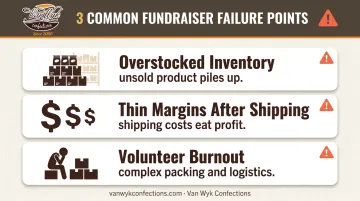
Pick the wrong item and the whole campaign stalls. Common failure points include:
- Overstocked inventory that never sells through
- Thin margins after shipping eat into what looked like a good deal on paper
- Volunteer burnout from complicated packing, sizing, or delivery logistics
Choosing well up front avoids most of this.
Types of Fundraising Items to Sell in 2026
Fundraising items generally fall into three core categories, each suited to different goals, budgets, and group sizes. Picking the wrong one, say, high-effort apparel for a fast two-week campaign, is one of the most common reasons fundraisers underperform.
Food & Confectionery Items
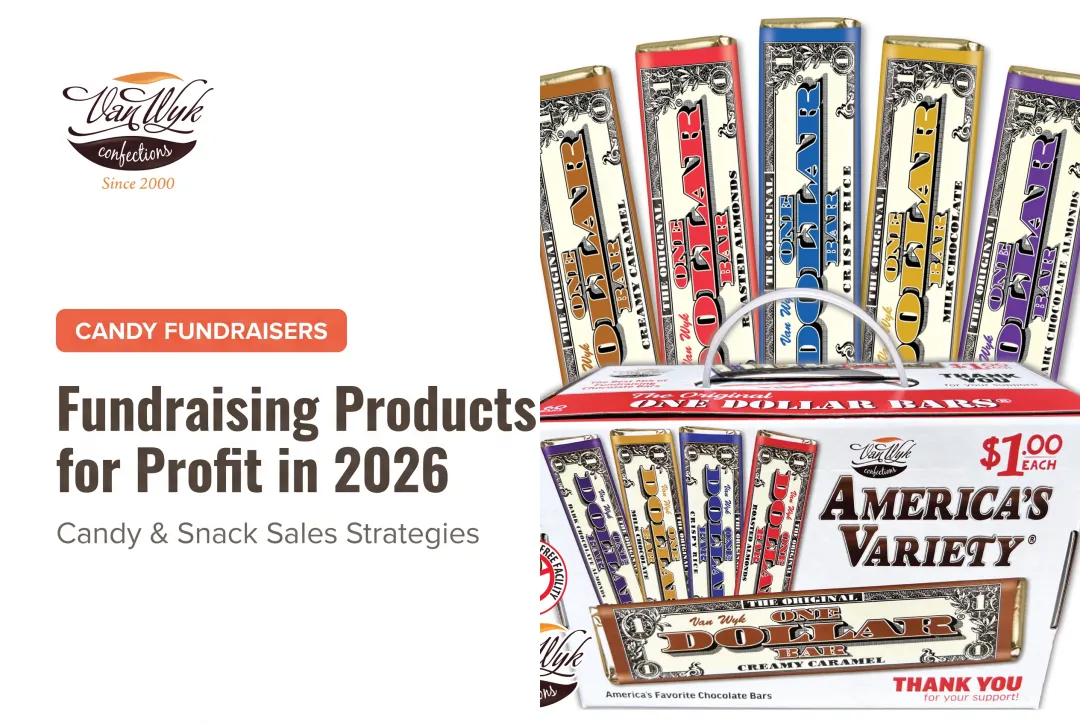
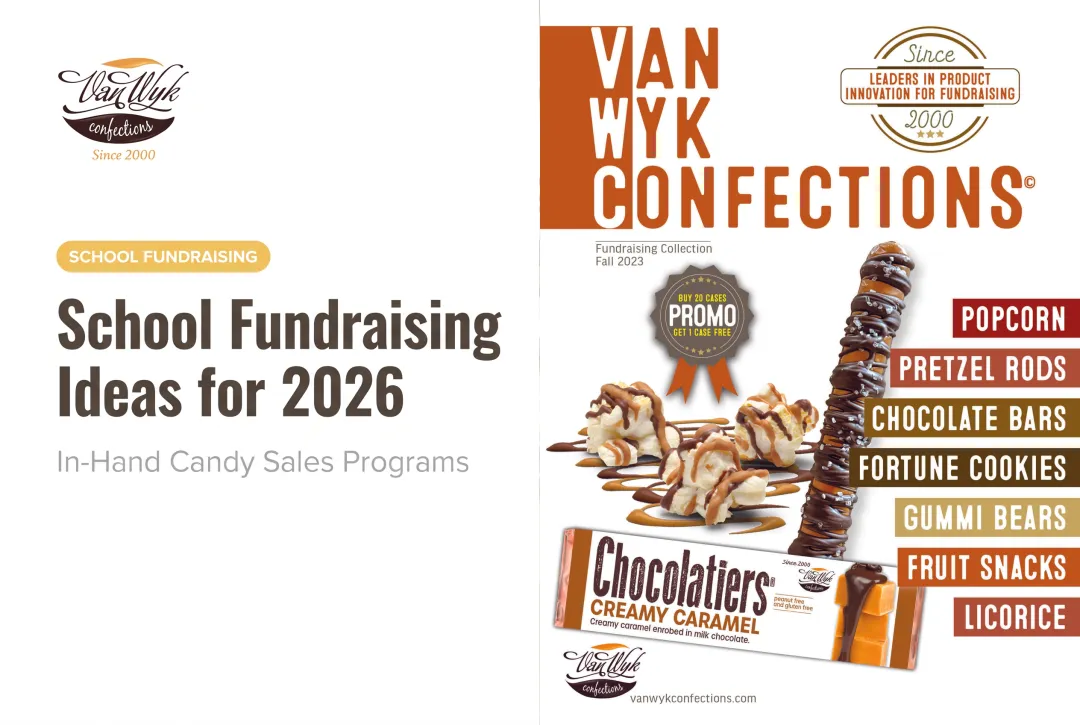
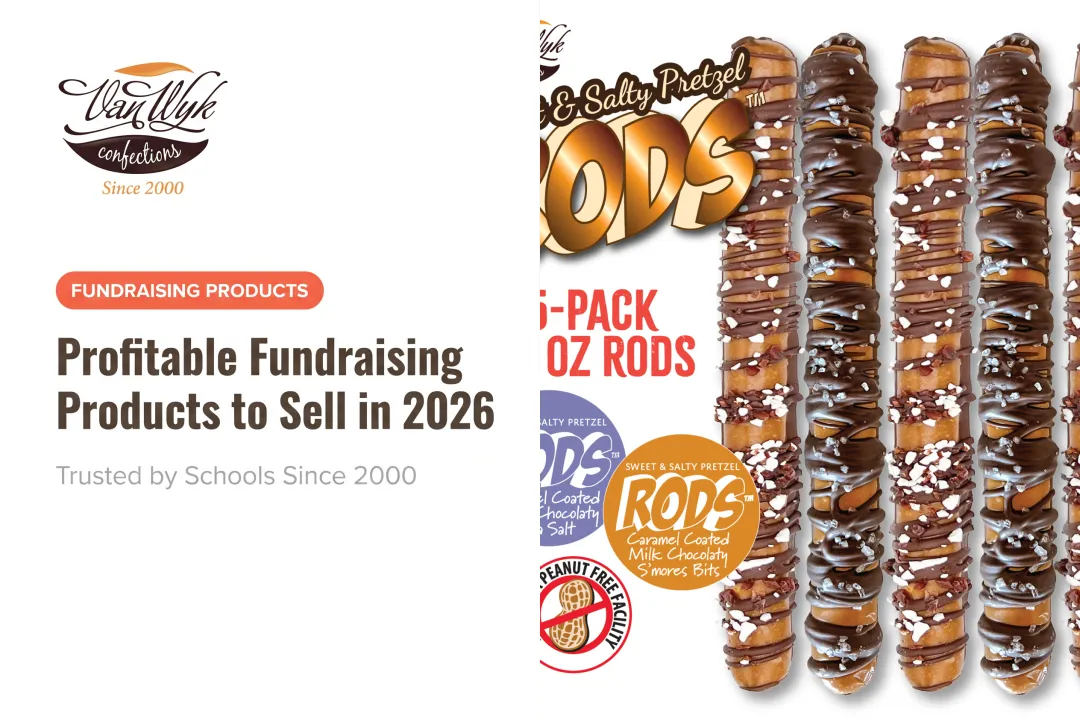
This category covers pre-packaged snacks and candy: chocolate bars, gourmet popcorn, pretzel rods and twists, cookie dough, and fortune cookies. Groups typically take pre-orders through brochures or online stores, then distribute products directly to buyers once they arrive.
What sets food apart: it has the broadest demographic reach of any category. A chocolate bar appeals to a grandparent and a ten-year-old the same way. Apparel doesn't cross generations that easily, and novelty accessories often depend on a passing trend.
Food fundraisers work best for:
- Schools and PTOs running short, high-volume campaigns
- Sports teams and youth groups on tight timelines
- Churches needing a low-effort, repeatable option
- Band and choir programs juggling several small fundraisers each year
Key strengths:
- Low per-unit pricing ($1 to $2) makes buying an easy yes for supporters, encouraging repeat purchases
- Van Wyk Confections, a Colorado-based supplier since 2000, offers 40-50% profit across chocolate bars, pretzel rods, popcorn, and fortune cookies
- A 1-case minimum removes the pressure of committing to a large order before you know demand
- Peanut-free options and nationwide delivery from more than 10 warehouses keep fulfillment simple
Trade-offs to plan for: perishable items need proper storage, and allergy considerations (particularly nut-free requests) should be confirmed before you commit to a product line.
Apparel & Branded Merchandise
Custom t-shirts, hoodies, tote bags, and water bottles branded with a school or team logo fall here. Groups typically design merchandise through a print-on-demand platform, collect pre-orders, then distribute or ship finished goods once production wraps.
How it differs from food: apparel commands a higher price point and more revenue per sale, but the percentage margin is usually lower once you factor in design proofs, sizing charts, and production lead time.
Best suited for:
- Larger, longer-running fundraisers
- School-spirit campaigns and senior class gifts
- Booster clubs wanting something giftable and wearable
Key strength: every worn item is a walking advertisement, and it raises average order value compared to a $1 snack.
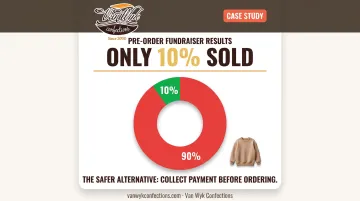
The real risk is unsold inventory. One PTO profiled by PTO Today ordered sweatshirts in advance and sold only 10%, leaving 90% unsold. Extended sizes like 2X and 3X can also carry added charges. Taking payment before placing the order, rather than guessing at quantities, is the safer path.
Small Accessories, Novelty & Digital Items
Keychains, stickers, bracelets, phone accessories, plus digital products like coupon books or e-tickets. These sell individually or in small bundles at low price points, often as impulse buys at events or through an online store link.
What makes this category different: cost of entry is extremely low, and digital products carry almost no inventory or shipping cost at all.
Best suited for:
- Student-led fundraisers with minimal budget and a short runway
- Groups wanting close to zero financial risk
Key strength: margins can run high because production costs stay low.
As a historical benchmark, physical discount cards purchased for $5 or less and resold at $10 delivered 50% or more in advertised gross profit, according to a PTO Today report. Digital versions can push margins even higher since there's no physical card to produce or ship.
The catch: low price points mean you need serious volume to hit a large fundraising goal. Reaching a $1,000 target requires selling 500 stickers at $2 each, compared to just 100 units of a $10 product, a volume gap that can strain smaller groups without built-in distribution support.
How to Choose the Right Fundraising Items for Your Group
The best category depends on your audience, your timeline, and how much effort your volunteers can realistically give. It's not about what's trending on social media.
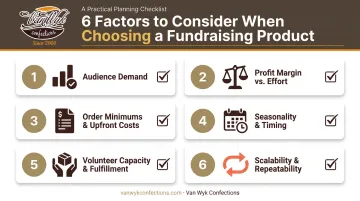
Weigh these factors before you commit:
- Audience demand: Poll parents, members, or supporters before locking in an item. Guessing wrong is the single most avoidable mistake.
- Profit margin vs. effort required: A 90% margin item that takes 40 volunteer hours to pack and ship may net less value than a 45% margin item that ships itself.
- Order minimums and upfront costs: Favor programs with low case minimums, since a 1-case minimum protects you from a garage full of unsold product.
- Seasonality and timing: Holiday gift items make sense in November; snack sales work year-round.
- Volunteer capacity and fulfillment logistics: Done-for-you supplier programs, where products ship pre-packed or direct to supporters, cut volunteer workload compared to DIY assembly.
- Scalability and repeatability: Pick items your audience won't tire of. A snack fundraiser can run every fall for years, while a novelty item may fade after one cycle.
Weighing these factors together—not chasing whatever's trending online—is what separates fundraisers that hit their goals from those left scrambling to unload leftover inventory.
Mistakes to Avoid When Finalizing Your Fundraiser Item
A few recurring errors sink otherwise well-intentioned campaigns:
- Chasing trends without testing demand. A viral product elsewhere doesn't guarantee your specific community will buy it.
- Ignoring hidden costs. Shipping, storage, and unsold inventory quietly erase margin that looked great on paper.
- Overlooking allergy and school-policy restrictions. Confirm nut-free or gluten-free needs before finalizing a product—Van Wyk's peanut-free line is one easy fix.
- Picking what's familiar over what fits. The candy bar sale your school always ran might not suit a smaller group with a two-week window this year.
Checking these four boxes before you sign a contract saves most groups from a disappointing outcome.
Conclusion
Fundraising items remain central to how schools, teams, and nonprofits generate reliable revenue in 2026. Food and confectionery, apparel, and small accessories each serve different goals. Weighing margin against effort, and price point against volume, helps groups choose the strongest fit for their program.
For groups leaning toward a food-based fundraiser, partnering with an established, low-minimum supplier like Van Wyk Confections can simplify the entire process. From ordering a single case to nationwide delivery, groups can earn profit margins of 40-50% without added complexity.
Frequently Asked Questions
What can I sell to raise some money?
Most groups choose from food and confectionery, apparel or branded merchandise, or smaller items like accessories and digital products. Food is typically the easiest starting point since it appeals across ages and requires the least upfront commitment.
What is the most profitable fundraiser item to sell in 2026?
Low-cost food items and digital products tend to carry the highest percentage margins. Digital products can reach up to 90%, while food fundraisers typically land in the 40-50% range. Margins vary by supplier, so always confirm the actual payout before committing.
What food items sell best for a fundraiser?
Chocolate bars, gourmet popcorn, pretzel rods and twists, cookie dough, and fortune cookies consistently perform well. They hit a low, easy price point that appeals to nearly any buyer.
Do fundraising companies require large minimum orders?
This varies by supplier. Look for programs with low case minimums, such as a 1-case minimum, to reduce your financial risk if sales come in slower than expected.
How much profit can a group expect from a product fundraiser?
Profit margins depend heavily on the item and supplier. Food fundraisers through a supplier like Van Wyk Confections, for example, offer 40-50% profit, though ranges vary elsewhere.
Are candy and chocolate fundraisers still effective in 2026?
Yes. Their broad appeal and repeat-purchase pattern keep them relevant, and options like peanut-free chocolate bars and pretzel rods make them accessible to a wider range of supporters.