The numbers back this up: U.S. sports families spent an average of $1,016 on one child's primary sport in 2024, a 46% jump from 2019, according to a 2025 survey from the Aspen Institute's Project Play. Add a second sport, and that average nears $1,500 per child, per year.
The right fundraiser depends on your team's size, age group, and how much time volunteers can actually give. A 10U rec team and a varsity travel squad need completely different approaches.
This guide covers how to plan and budget your fundraiser, then breaks down the best product-based, in-person, and digital ideas for teams of any size.
Key Takeaways
- Candy and snack fundraisers earn 40-50% profit with minimal effort
- Set a clear budget and goal first to avoid wasted time and low returns
- Combine a product sale, event, and digital sharing for stronger results
- Younger or smaller teams do best with simple, low-logistics fundraisers
- Older travel teams can handle galas and sponsorship drives
How to Choose, Plan, and Budget Your Sports Team Fundraiser
Before picking a fundraiser type, get your numbers straight. Guessing at a goal is how teams end up $2,000 short heading into playoffs.
Setting a Realistic Fundraising Goal and Budget
Start by tallying actual expenses: uniforms, tournament entry fees, travel, lodging, equipment replacement, and referee costs. Add them up first. Don't estimate.
According to a 2022 survey by Aspen Institute's Project Play, conducted with Utah State University's Families in Sport Lab, parents spent an average of $883 per child on their primary sport per season.
Multiply that figure by your roster size to gauge the financial pressure a season puts on families, though it isn't a direct stand-in for your team's operating budget.
Here's the distinction that trips up first-time organizers:
- Gross profit = total sales revenue before expenses
- Net profit = what's left after product costs, shipping, and supplies
Product fundraisers with no high order minimums reduce upfront risk. You're not stuck with unsold inventory if turnout is lower than expected.
With your budget set, match the fundraiser type to your team's size and age group. Younger athletes and smaller teams see the most success with simple, low-effort options:
- Product sales (candy, snacks, popcorn)
- Bake sales
- Basic car washes
Older and travel teams have the volunteer bandwidth and community reach to support higher-effort formats like galas, silent auctions, or business sponsorship drives. Trying to run a gala with a 12-player U10 roster and three parent volunteers usually backfires.
DIY vs. Hiring a Professional Fundraising Partner
Running everything with volunteers gives you full control, but it also means managing logistics, inventory, and collections on top of everyday life. That's a real burden for a team with two working parents doing the heavy lifting.
Partnering with an established fundraising supplier shifts that weight. Van Wyk Confections, a family-owned fundraising supplier operating since 2000, has helped groups nationwide raise over $50 million through turnkey product programs. These programs typically include premium products, order-taking materials, and support from planning through delivery.
Nationwide distribution matters more than most teams realize. A supplier with a strong distribution network reduces the risk of running out of product or missing a tournament deadline during a short selling window.
A Simple Step-by-Step Timeline
Most fundraisers fit into a 4-6 week window:
- Week 1 - Set your goal and choose a method
- Weeks 2-3 - Promote the fundraiser and collect sign-ups
- Weeks 3-5 - Run the active selling or event window
- Week 6 - Collect payments, deliver product, and send thank-yous
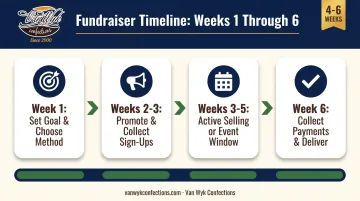
Simple product sales can move faster than this. Galas and sponsorship drives usually need more lead time.
Product-Based Fundraising Ideas That Maximize Profit
Product fundraisers stay popular for a reason. They require little event planning, work for teams of any size, and commonly pay out 40-50% profit per sale. No venue booking, no weather worries, no permits.
Chocolate and Candy Bar Sales
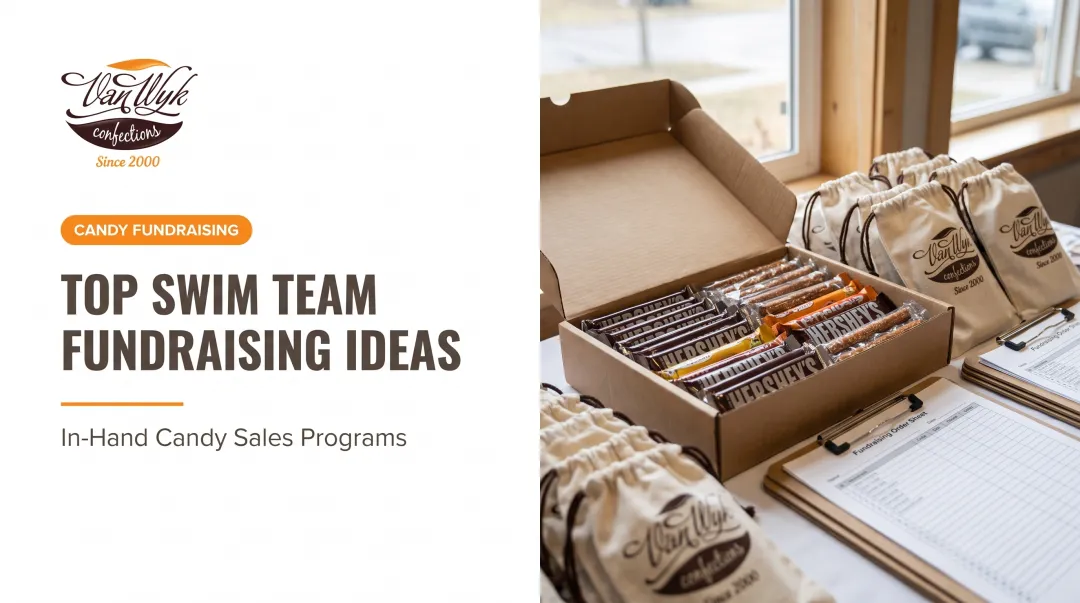
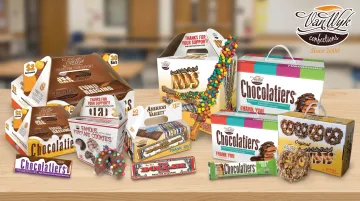
Chocolate bar fundraisers appeal across every age group, from six-year-old T-ball players to varsity athletes. Van Wyk's Original ONE DOLLAR BAR has been a top-selling fundraising item for over two decades, priced at $1 per unit for easy in-hand sales.
For teams wanting a higher price point, the Chocolatiers Premium Chocolate Bars sell at $2 per unit and come in variety packs, offering the same strong 40-50% profit margin for the group. Both options carry a low, one-case minimum, so smaller teams aren't stuck ordering more than they can sell.
Popcorn, Pretzels, and Shelf-Stable Snacks
Chocolate can melt in a hot car or on a July doorstep. Gourmet popcorn and sweet & salty pretzel rods and twists don't have that problem.
These shelf-stable items ship well to out-of-town grandparents and alumni supporters, making them a smart choice for travel teams with far-flung fan bases. No spoilage, no refrigeration, no rushed delivery windows.
Fortune Cookies and Novelty Treats
When three teams in the same league are all selling chocolate bars the same month, standing out gets hard. Famous Fortune Cookies give a team something different to offer.
They come in playful, unexpected flavors that give supporters something new to talk about. A novelty item like this can outsell a repeat chocolate bar campaign simply because supporters haven't seen it before.
Discount Cards and Coupon Books
Discount cards work by partnering with local businesses. Supporters buy a card for a set price and get ongoing discounts at participating restaurants, shops, or services in the area.
The trade-off: setting up business partnerships takes upfront legwork, and profit percentages vary widely depending on the program and the company running it. It's worth weighing that setup time against a simpler product sale.
Whichever route a team picks, the appeal comes down to logistics. Beyond avoiding venues and permits, product sales also skip the need for a large volunteer crew on game day. Products arrive factory-sealed, and nationwide delivery networks mean a team ordering on a tight timeline still gets product before the deadline.
This combination of low logistics and fast turnaround is why most teams start their season with a product sale before trying anything more complex.
In-Person and Community Event Fundraising Ideas
Events create a shared experience that brings the community together in a way a simple purchase can't. They also take more coordination, so match the format to your team's actual capacity.
Classic Community Events
Car washes, bake sales, and concession stands remain reliable standbys. A few things drive turnout:
- Schedule car washes on warm, sunny weekends, never right before predicted rain
- Post clear signage at busy intersections, not just the event location
- Pick a high-traffic spot like a grocery store lot or busy corner
Trivia Nights, Bingo, and Game-Based Fundraisers
Charge an entry fee, offer prizes, and let people have fun while supporting the team. The model works well because it gives supporters something in return beyond a receipt.
An engaging host or caller makes a bigger difference than most organizers expect. A flat, monotone bingo caller kills the energy fast. A lively one keeps people coming back season after season.
Restaurant Spirit Nights
Partner with a local restaurant for a "give-back" night, where a percentage of sales from a specific evening goes to your team. Promote it through:
- Team group chats and social media
- Flyers sent home with players
- Reminder posts the day of the event
Low effort, low risk, and it introduces your team to families who might not otherwise attend a fundraiser.
Galas, Silent Auctions, and 50/50 Raffles
Combining an auction, a raffle, and ticket sales at one event is a common strategy among nonprofits aiming for a big single-night total.
A 2025 industry report on nonprofit auction revenue from the Association of Fundraising Professionals notes that live donation appeals are frequently paired with auctions at these events, though results vary by organization and audience.
This format takes real planning: securing auction items, selling tickets, and running the event itself. It suits older travel teams with an established parent network, not a first-year rec squad.
Fun Runs, Walkathons, and Skill Challenges
Pledge-based events tie fundraising to physical activity. Supporters pledge a flat amount or a per-lap/per-mile rate, and athletes complete the challenge on event day.
This format doubles as a team bonding exercise, giving athletes a shared goal that extends beyond the fundraising total.
Digital and Sponsorship Fundraising Ideas
Digital tools extend your reach well past the people who show up in person.
Online Crowdfunding and Peer-to-Peer Campaigns
Individual athlete donation pages let out-of-town family and alumni contribute without attending an event.
Snap! Mobile, a platform focused on youth activity fundraising, reported surpassing $1 billion raised for school and sports programs as of 2025, according to Snap! Mobile's own reporting. That figure spans sports alongside band, cheer, and other school programs, but it shows how much reach digital sharing can add.
Social sharing turns each athlete into a mini fundraising hub, extending the campaign beyond what a single event or door-to-door sale could reach.
Local Business Sponsorships
Tiered sponsorship packages give businesses a clear return for their contribution:
- Bronze tier - Logo on team roster or program
- Silver tier - Logo on jerseys or team banner
- Gold tier - Social media shoutouts plus banner and jersey placement
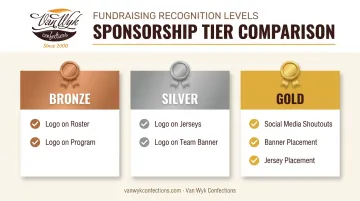
Local businesses often prefer this over a one-time donation because it comes with visible, ongoing recognition.
Blending Digital Tools with Traditional Fundraisers
Pairing a product sale, like a candy bar fundraiser, with a shareable online link and simple payment tools like Venmo or Square increases participation. Some supporters want to pay cash at the game; others would rather tap a link from their phone at 9 p.m. on a Tuesday. Covering both options means you're not leaving money on the table.
Tips to Maximize Participation and Avoid Fundraising Fatigue
Asking the same families for money every month burns goodwill fast. A few practical guardrails keep support strong season after season.
A few strategies help maintain that support without wearing out your volunteer base:
- Rotate fundraiser types each season instead of repeating the same ask. One well-run, direct fundraiser typically outperforms several smaller, overlapping asks, so choose products and events supporters actually want, not whatever was easiest to set up last time.
- Track progress visibly with team apps, group chats, or simple leaderboards. Athletes and families engage more when they see real-time results, not just the final tally.
- Reduce volunteer burden by choosing a fundraiser with minimal logistics. A pre-packaged product program with no high order minimums, like Van Wyk's one-case minimum structure, frees up time otherwise spent on inventory management and reordering.
Frequently Asked Questions
How much can a sports team typically raise with a fundraiser?
Totals vary widely by method and team size. Product fundraisers commonly return 40-50% profit on sales, while larger gala-style events can generate the highest total for a single night.
What is the best fundraiser for a sports team?
There's no single best option. The right fit depends on team size, age group, and community, though product sales and combined digital-and-event approaches tend to be the most reliable across the board.
What are the steps to organize a successful sports team fundraiser?
Set a clear goal and budget first, then choose a method that fits your team's size and volunteer capacity. Promote consistently through multiple channels, then follow up with thank-yous once collections are complete.
How long does it take to plan and run a sports team fundraiser?
Most fundraisers run efficiently within a 4-6 week window from initial planning through collection. Simple product sales can move faster than events requiring venue bookings or auction items.
Should we hire a professional fundraiser or run the fundraiser ourselves?
DIY works well for teams with strong volunteer bandwidth and time. A professional partner reduces logistics and financial risk for busier teams or smaller volunteer bases.
How do we set a realistic fundraising goal and budget for our sports team?
Total your actual season expenses first, including uniforms, travel, and fees. Then choose a fundraiser type that can realistically cover that gap based on your team's size and community support.