Here's the problem: most planning energy goes to venue booking, catering, and finding a band that still knows your school song. Fundraising gets bolted on as an afterthought, usually a donation jar near the check-in table.
That's a missed opportunity. This guide covers reunion fundraising ideas that actually work, a practical planning framework, and simple ways to collect money without creating a headache for your volunteer committee.
Key Takeaways
- Alumni at reunions are emotionally invested already, so a direct ask lands better than a cold email
- Pair low-effort treat sales with legacy gifts like scholarships to maximize total raised
- Start six months early and track progress publicly to raise more total dollars
- Crowdfunding and text-to-give let absent alumni contribute without attending in person
Why Class Reunions Are a Natural Fundraising Opportunity
Reunions put alumni in a mindset that's hard to replicate with a mailed appeal letter. People are surrounded by old friends, walking familiar hallways, and remembering who they were at 18. That combination tends to open wallets.
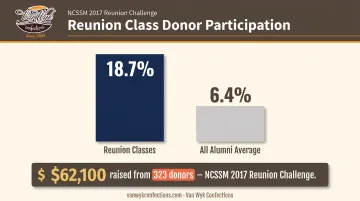
The data backs this up. When the North Carolina School of Science and Mathematics ran its 2017 Reunion Challenge, reunion classes hit 18.7% donor participation, compared to just 6.4% participation across all alumni during the same period. That's more than three times higher.
The NCSSM reunion campaign also pulled in over $62,100 from 323 donors that year alone.
Why reunions outperform standard appeals:
- They gather alumni across every income bracket and career stage in one room (or one Zoom call)
- The nostalgia factor creates urgency — "if not now, when will I see everyone again?"
- A shared class identity makes a collective ask feel personal rather than transactional
Many schools also let reunion-year gifts count as multi-year pledges. A donor can spread a gift over three or five years, yet the full pledge still counts toward the class total at the reunion. That structure encourages bigger commitments than a one-time ask.
Best Class Reunion Fundraising Ideas for Alumni
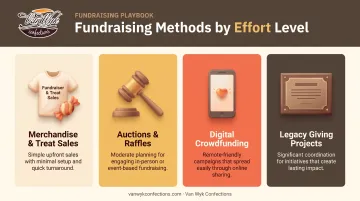
Below are proven approaches, arranged from simplest to most involved. A committee of three volunteers can run the first two. A larger group with more lead time can tackle the rest.
Sell Nostalgic Merchandise and Treat Fundraisers
Branded gear works because it doubles as a souvenir. A "Class of 1998" t-shirt or a mug with the old school mascot gives alumni something tangible in exchange for their support, and they'll likely wear or use it long after the reunion ends.
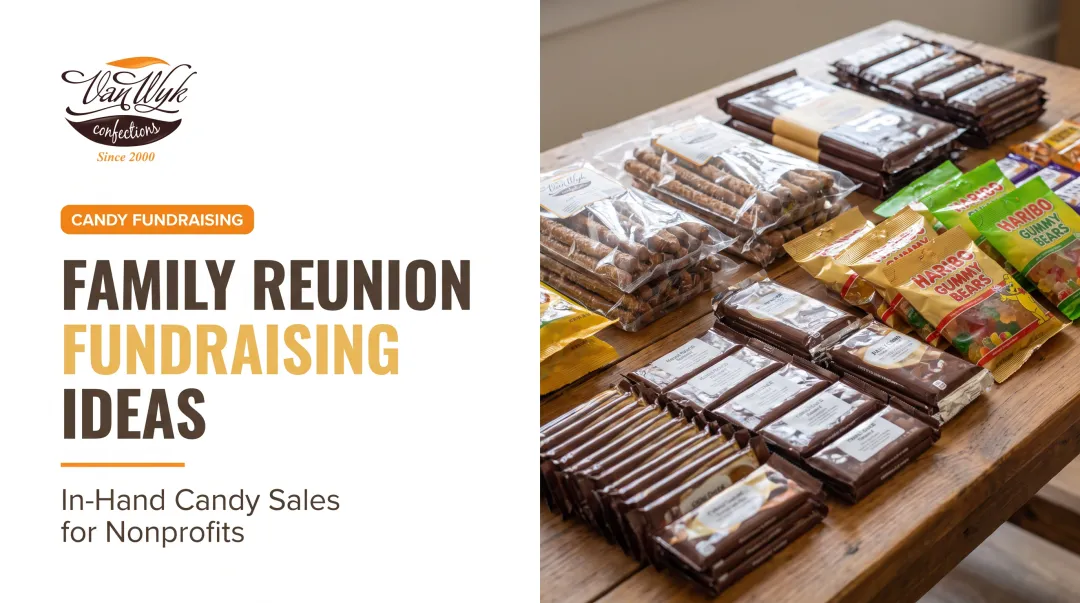
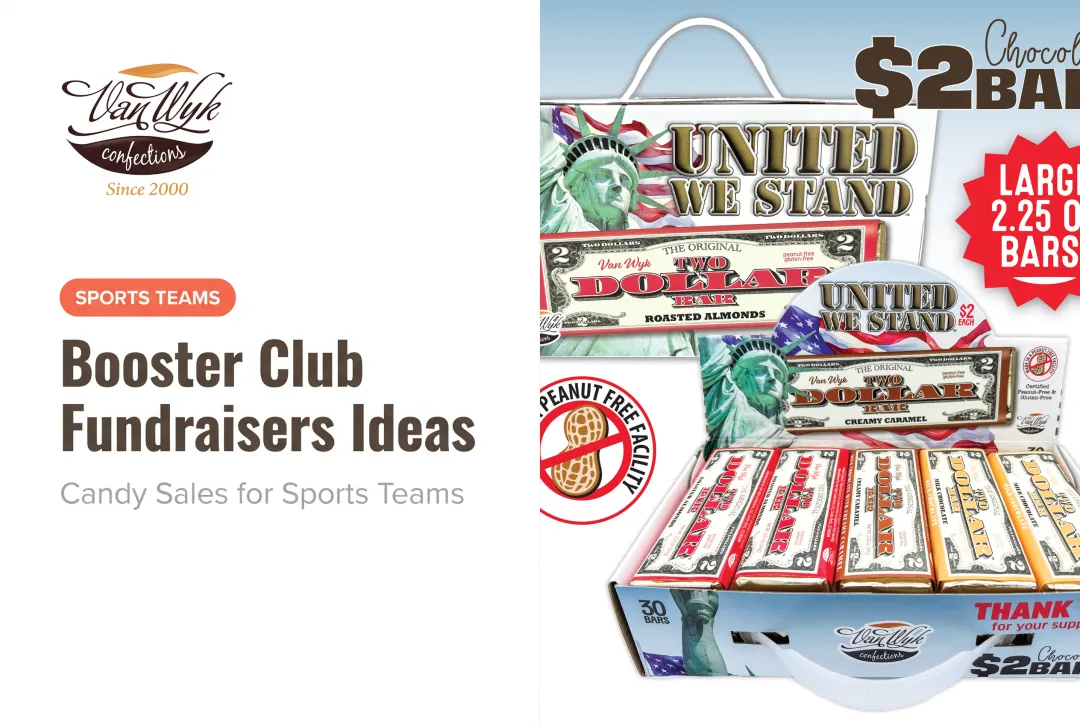
Treat and candy fundraisers are the easiest add-on to any reunion campaign. There's no cooking, no complicated fulfillment, and volunteers can sell right at check-in tables or send items home with attendees. Suppliers like Van Wyk Confections run programs built specifically for groups with limited time:
- Chocolate bars, gourmet popcorn, and fortune cookies, all priced at $1 or $2 per unit
- 40-50% profit margins on most product lines
- A 1-case minimum order (as few as 60-240 units), so committees can start small and reorder as needed
- Nationwide delivery with peanut-free and gluten-free options for dietary accommodations
For a bigger per-purchase revenue boost, bundle apparel, treats, and memorabilia into a single "reunion box." A $35-40 bundle generates far more per sale than any single item on its own.
Auctions, Raffles & Interactive Games
Silent or online auctions work especially well when items come from alumni-owned businesses or local sponsors: a weekend at a classmate's vacation rental, a gift basket from a grad's restaurant, or tickets to a local event.
Paul Smith's College raised $4,600 for scholarships through its annual reunion silent auction, drawing on donated items from its alumni network at an event with over 400 attendees.
Raffles pair well with auctions and require less setup:
- Sell tickets online weeks in advance, plus at the door on reunion night
- Source prizes from alumni donations rather than purchasing them outright
- Announce winners publicly during the event for extra energy
Small entry-fee games add another revenue stream. Trivia challenges about school history, costume contests tied to a decade theme, or a scavenger hunt through old yearbook photos all give alumni a reason to open their wallets while having fun.
Digital Crowdfunding & Peer-to-Peer Campaigns
Not every alum can make it back to campus. A crowdfunding page launched several weeks before the event lets out-of-state and overseas classmates give and share the link with their own networks, extending your reach well beyond the guest list.
At the event itself, text-to-give and QR-code donation stations remove friction entirely. Someone scans a code on their phone, types in an amount, and they're done. No cash, no checks, no waiting in line.
Peer-to-peer challenges add a competitive layer. Barnard College's Race to Reunion pitted classes against each other on percentage growth in giving. In one recent cycle, the Class of 1972 led all classes with 166% growth over the prior year's totals — proof that friendly rivalry between class years genuinely moves the needle.
Legacy Giving Projects
For alumni who want their contribution to outlast the reunion weekend, legacy projects create lasting impact. A class-funded scholarship, a paver campaign, or bricks along a campus walkway give donors a permanent, visible connection to their gift.
Consider dedicating a plaque, bench, or mural funded entirely by reunion-year gifts, then unveiling it live during the event. Watching your name (or your class year) etched into something permanent often turns hesitant givers into enthusiastic ones. It also photographs well for social media afterward.
How to Plan a Successful Reunion Fundraiser
Good fundraising results rarely happen by accident. They come from structure, timing, and follow-through.
Form a Dedicated Fundraising Committee
Separate your fundraising subcommittee from the general event-planning team. General planners worry about catering and seating charts; fundraising volunteers should own specific dollar and participation targets. That ownership creates accountability.
Peer solicitation outperforms generic appeals every time. Alumni respond to a text or call from a classmate they actually remember, not a form email from "the Alumni Office."
Start Early and Set Clear Goals
Begin outreach at least six months before the reunion date. This gives alumni time to budget for a gift and plan travel around the event. Waiting until a month out compresses your window and limits pledge-based giving options.
Set one specific, public goal tied to a defined purpose:
- A dollar amount (say, $25,000 for a scholarship endowment)
- A donor-count target (100 gifts from your class, regardless of size)
- A named project (a bench, a plaque, a specific fund)
Vague appeals like "help support the school" raise less than a goal alumni can visualize.
Track Progress and Recognize Donors
A public fundraising thermometer or class leaderboard turns giving into something visible and motivating. UT Austin's College of Pharmacy used exactly this approach with its Classes of 2011-2013 reunion campaign. The class set a $25,000 goal and ultimately raised $34,763.05, well past the original target.
Recognize donors publicly during the event itself. Name mentions, small pins, or a "wall of honor" display encourage last-minute giving from attendees who see their peers being celebrated and don't want to miss out.
Best Ways to Collect and Manage Reunion Donations
Once alumni are ready to give, don't make them work for it. Choose a secure, mobile-friendly platform such as PayPal, Venmo, or dedicated fundraising software. Alumni can give instantly from a phone, whether they're in the reunion hall or at home in another state.
Offer multiple giving formats to match different budgets:
- One-time gifts for straightforward, immediate donations
- Multi-year pledges for larger commitments spread over time
- Merchandise or treat purchases for alumni who want something tangible in return
Put one person in charge of logging gifts and matching totals to your goal so nothing slips through. After the event, send a transparent thank-you email with the final amount raised and a clear note on where the money is going. That follow-through builds trust and makes your next reunion fundraiser easier to run.
Tips to Make Your Reunion Fundraiser Memorable
The best reunion fundraisers feel like part of the celebration, not a separate pitch for money.
- Add nostalgic touchpoints. A memory wall, a yearbook scavenger hunt, or a "then and now" slideshow ties giving to real emotion instead of obligation.
- Pick one cohesive theme. A decade throwback, a masquerade, or a school-spirit night pulls merchandise, auction items, and decor into one shareable look.
- Capture and post content afterward. Photos and videos in alumni social groups keep momentum going past reunion weekend and prime everyone for next time.
None of this requires a big budget. It takes intention: plan fundraising and fun as one event from the start, not two competing agenda items.
Frequently Asked Questions
How do I raise money for a class reunion?
Combine ticket sales, merchandise or treat sales, a silent auction, and an online crowdfunding page. Start planning at least six months out with a dedicated committee.
How can we make a class reunion memorable?
Pair nostalgic touches like memory walls, trivia contests, or theme nights with a meaningful giving moment, such as unveiling a legacy project funded by the class.
What is the best way to collect money for a reunion?
Use a secure, mobile-friendly platform like PayPal, Venmo, or text-to-give for instant donations. Add a simple in-person option, such as a merchandise or treat table, for attendees who prefer to buy something.
How much money can a class reunion realistically raise?
Totals vary widely based on class size and giving history. Some classes raise a few thousand dollars; others raise much more. Set one specific goal based on your school's past reunion results.
How far in advance should reunion fundraising planning start?
Committee formation and alumni outreach should begin at least six months before the reunion date. This gives donors time to plan a gift or pledge and gives organizers time to build momentum.
What fundraising products work best for a low-effort reunion fundraiser?
Simple treat or candy fundraisers with low order minimums, like those from Van Wyk Confections, let volunteer committees start raising money without big upfront costs. A one-case minimum keeps financial risk low for first-time organizers.