Introduction
Most PTA presidents, coaches, and church committees assume you have to pick one: raise real money, or let people actually enjoy themselves. That's a false choice.
The bigger problem is repetition. The same bake sale or car wash every spring leads to donor fatigue and shrinking returns. In fact, 87% of nonprofit professionals say donor fatigue is at least somewhat problematic, according to a 2024 OneCause survey of nearly 1,000 fundraising professionals.
This guide ranks fundraiser ideas by both profitability and enjoyment, then shows you how to boost margins no matter which one you pick.
Key Takeaways
- Product sales and ticketed events offer the strongest profit margins.
- Fun runs, color runs, and trivia nights drive the best repeat participation.
- Candy and popcorn sales return 40-50% profit with minimal risk.
- Group size and timeline matter more than an idea's popularity.
What Makes a Fundraiser Both Profitable and Fun
Profitable means high margin relative to cost and effort. A candy fundraiser that nets 45 cents per dollar sold, with almost no setup time, is more profitable than a gala with a five-figure catering bill. That holds true even when the gala raises more total dollars.
Fun means high engagement, shareability, and a memorable experience for participants, not just donors. A color run photo on Instagram does more for next year's turnout than a thank-you letter ever will.
Organizations need both, because one without the other fails long-term:
| Criteria | Profitable Fundraiser | Fun Fundraiser |
|---|---|---|
| Defined by | High margin, minimal effort | High engagement, shareability |
| Example | Candy sale netting 45 cents per dollar | Color run photos flooding Instagram |
| Risk if missing | Burns out volunteers over time | Wastes everyone's Saturday |
That contrast shows up in national survey data too.
Pew polled Ohio voters and public-school parents in 2015, asking them to assume every fundraiser format was equally profitable. 54% of both groups picked activity-based events like walk-a-thons as their top choice, well ahead of auctions at 34-38%. Pew's 2015 Ohio school nutrition poll suggests audiences genuinely prefer active, participatory formats over passive ones, even before profit enters the equation.
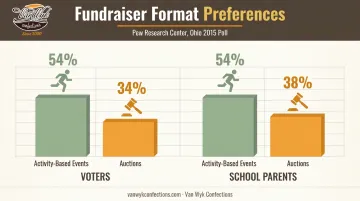
The list below ranks ideas on both dollars raised and how much people actually enjoy taking part.
Top Most Profitable and Fun Fundraising Ideas
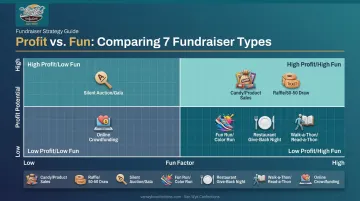
We scored each idea below on profit potential, fun factor, and how realistic it is for a volunteer-run group to pull off without a professional events team.
Product & Candy Bar Fundraisers
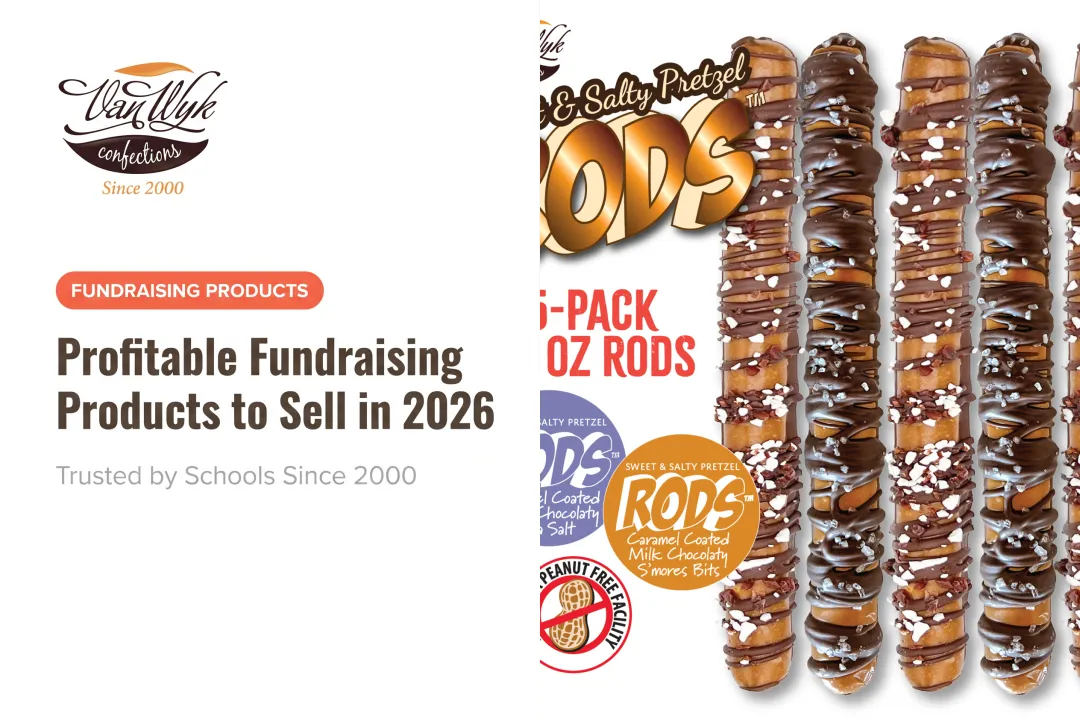
Selling pre-priced items like chocolate bars, fortune cookies, popcorn, or pretzel rods lets supporters raise money through everyday transactions. There's no venue to book, no permits, and no event to staff.
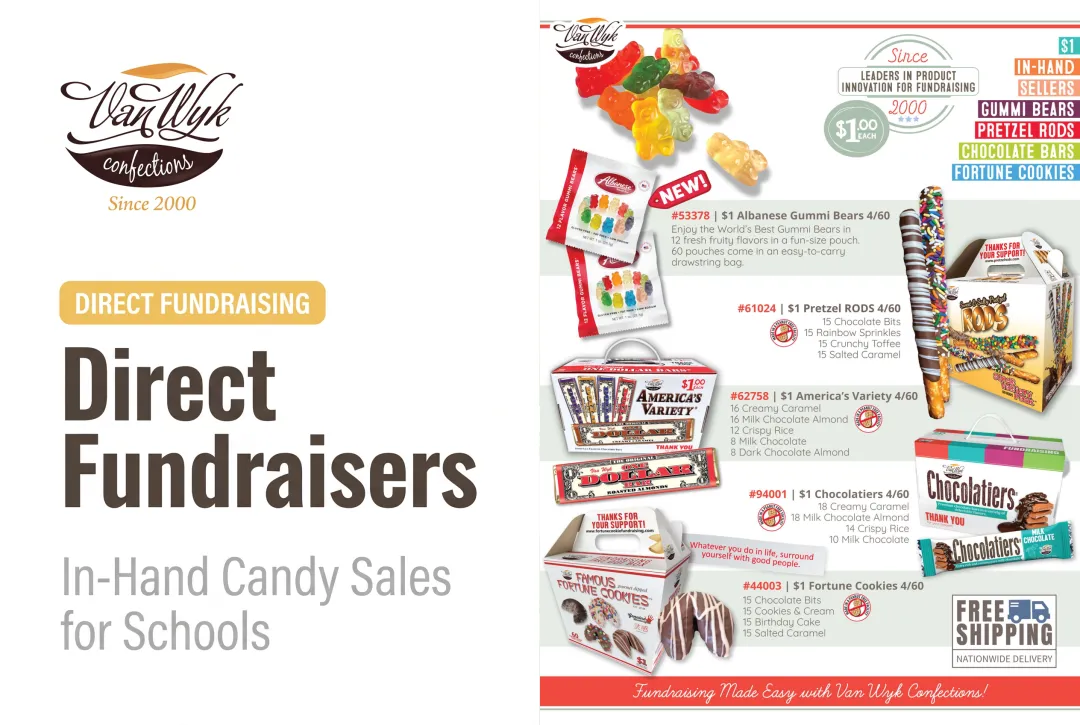
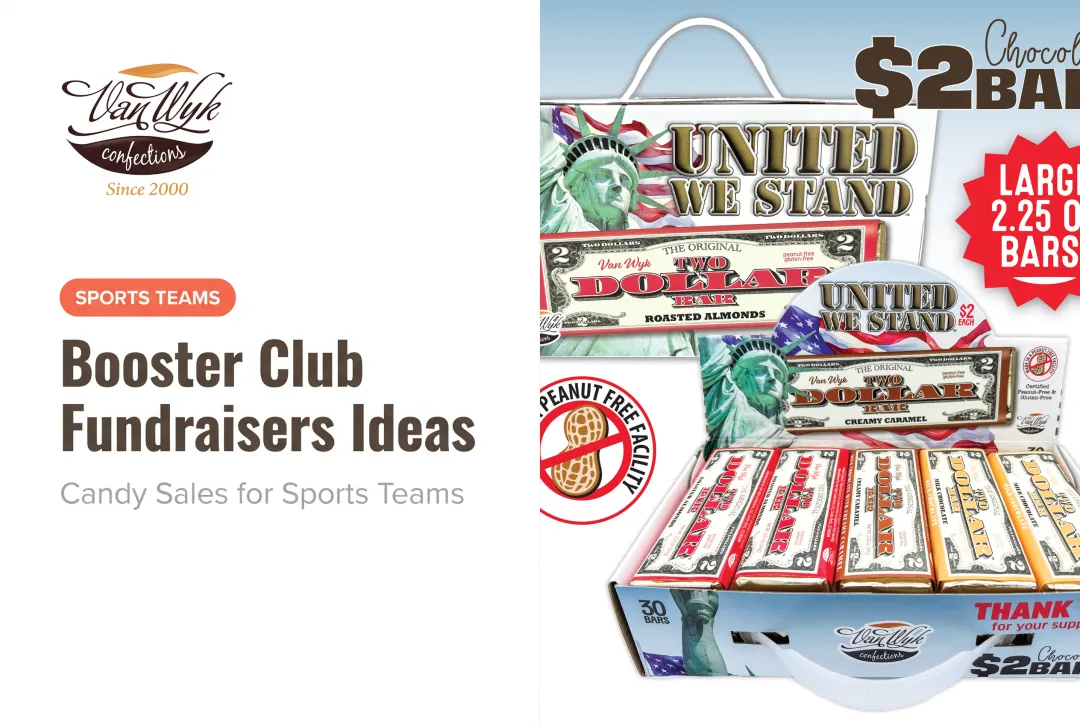
Van Wyk Confections, for example, offers 40-50% profit margins on items priced at $1-$2 each, with a 1-case minimum so smaller groups aren't forced into bulk orders they can't move. Cases ship fast nationwide from a network of warehouses, which matters when your fundraiser deadline is three weeks out.
| Factor | Rating |
|---|---|
| Cost to Run | Low (no upfront investment with the right supplier) |
| Fun Factor | Moderate; kids and teams enjoy selling and sampling |
| Profit Potential | High (40-50% margin) with predictable, repeatable sales |
Fun Run / Color Run
Pledge-per-lap or flat-donation fun runs turn physical activity into a school-wide event nearly every student can join, regardless of athletic ability. Adding color powder stations or music increases shareability dramatically, and photo-worthy events drive next year's sign-ups.
| Factor | Rating |
|---|---|
| Cost to Run | Moderate (course setup, powder, permits) |
| Fun Factor | Very high; energetic, photo-worthy, community-building |
| Profit Potential | High via pledges, sponsorships, and entry fees |
Restaurant Give-Back Night
Partner with a local or chain restaurant, and they donate a percentage of a single night's sales to your cause. Documented programs from major chains typically donate 20-25% of qualifying sales, though your group covers no food or labor costs.
The catch: profit stays modest since the restaurant keeps most of the revenue.
| Factor | Rating |
|---|---|
| Cost to Run | Very low (flyers and promotion only) |
| Fun Factor | Moderate; casual, family-friendly night out |
| Profit Potential | Low to moderate (typically 10-30% of sales) |
Silent Auction or Gala
Donated items and experiences, combined with ticket sales, create a high-dollar event that appeals to major donors. A 2025 OneCause auction report found the average auction features 67 items with 5.36 bids per item, generating proceeds equal to 134.5% of the stated item value.
That's a strong return on donated goods, but 38% of nonprofit professionals cited securing sponsors as their top planning challenge, and venue and catering costs eat into net profit.
| Factor | Rating |
|---|---|
| Cost to Run | High (venue, catering, marketing) |
| Fun Factor | High; social, upscale, memorable |
| Profit Potential | Very high on gross bids, though net margin depends heavily on overhead |
Raffle or 50/50 Draw
Donated prizes and cheap ticket sales create a low-effort fundraiser with built-in excitement. Anticipation around the draw makes this a natural add-on to any other event, from game nights to product-fundraiser pickup days.
Real-world numbers vary widely. One official raffle deducts 14% of gross receipts for administration before splitting the rest with the winner, so profit depends heavily on prize donations and local gaming rules.
| Factor | Rating |
|---|---|
| Cost to Run | Very low |
| Fun Factor | High; built-in excitement and anticipation |
| Profit Potential | Moderate to high depending on prize donations |
Walk-a-Thon or Read-a-Thon
The pledge-per-unit model, meaning per lap, per mile, or per page read, appeals to every age and ability level. Schools favor these because they double as fitness or literacy activities, not just fundraisers.
Results can be substantial: one elementary school raised a record $42,000 through its sixth annual walk-a-thon, and a community education foundation raised more than $207,500 through a five-day read-a-thon involving nearly 1,600 readers.
| Factor | Rating |
|---|---|
| Cost to Run | Low |
| Fun Factor | Moderate to high; inclusive and low-pressure |
| Profit Potential | Moderate to high with strong pledge promotion |
Online Crowdfunding or Peer-to-Peer Campaign
Supporters create personal fundraising pages that expand your reach well beyond your immediate community. Classy/GoFundMe Pro reports that time-based campaigns using a peer-to-peer component raised 3.8 times more total funds than campaigns without one, based on its 2023 State of Modern Philanthropy report.
Overhead stays near zero, and these campaigns pair well with almost any in-person event running alongside them.
| Factor | Rating |
|---|---|
| Cost to Run | Very low (platform fees only) |
| Fun Factor | Moderate; competitive, social sharing element |
| Profit Potential | High, especially when paired with matching gifts |
Tips to Maximize Profit on Any Fundraiser
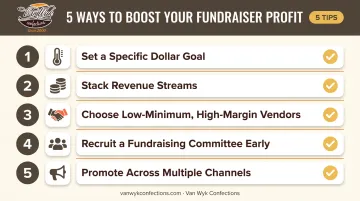
The format matters less than execution. A handful of habits separate the campaigns that hit their goals from the ones that fizzle out:
- Set a specific dollar goal and publicize it. A visible thermometer or countdown creates urgency that vague appeals never do.
- Stack revenue streams. Add a raffle or 50/50 draw to your fun run, or run a concession stand at your gala.
- Choose vendors with low minimums and high margins. Van Wyk Confections offers a 1-case minimum with 40-50% profit, ideal for smaller groups.
- Recruit a fundraising committee early. Spreading planning across five volunteers instead of one prevents burnout before the event even starts.
- Promote across multiple channels. Email, social media, flyers, and in-person asks each reach different supporters, and relying on just one limits total donations.
How to Choose the Right Fundraiser for Your Organization
Not every idea fits every group. Match the fundraiser to your actual capacity, not the one that sounds most exciting.
- Group size and volunteer capacity: A gala needs a planning committee and event-day staff. A product sale or online campaign needs almost none.
- Timeline: Passive fundraisers like candy sales can run year-round with no lead time. Event-based fundraisers need weeks, sometimes months, of planning.
- Past habit vs. current fit: The fundraiser your school ran for a decade might not match this year's smaller volunteer pool or shorter timeline. Base the choice on current resources, not tradition.
Conclusion
The best fundraisers deliver strong profit and genuine fun at the same time. Color runs, product sales, and well-run raffles prove you can have both at once.
Start small. Test a low-cost idea like a product fundraiser or raffle first, then scale toward bigger events as your volunteer capacity grows.
If you're ready to try a fundraiser with no big upfront commitment, Van Wyk Confections' fundraising programs offer an easy, high-margin option with a 1-case minimum and fast nationwide shipping, no gala required.
Frequently Asked Questions
What kind of fundraiser makes the most money?
High-dollar events like galas, auctions, and golf tournaments can raise the most per event when they go well. Product fundraisers and passive shopping programs, however, offer the best margin-to-effort ratio for smaller groups.
What is the easiest fundraiser to organize that still makes good money?
Product sales and restaurant give-back nights require minimal planning and almost no upfront cost, and raffles work similarly well. Candy and snack fundraisers in particular need no venue, permits, or event staffing.
What profit margin should a fundraiser aim for?
Product-based fundraisers typically return 40-50% profit with predictable costs. Event-based fundraisers vary widely, since venue, catering, and marketing expenses can cut deeply into gross proceeds.
What are some fun fundraiser ideas that work well for schools and kids?
Color runs, walk-a-thons, candy sales, and snack sales are consistent favorites. They're inclusive, require little physical skill or equipment, and give kids a tangible role in the effort.
How do product fundraisers compare to event fundraisers in profitability?
Product fundraisers require far less time and labor while offering predictable, repeatable margins. Events can earn more per occasion but demand far more planning, volunteers, and upfront cost.
Can a fundraiser really be both profitable and fun at the same time?
Yes. Color runs combine high energy with strong sponsorship and pledge revenue, and product sales like candy bars combine easy participation with 40-50% margins. The two goals aren't mutually exclusive.