
Local government funding still makes up the backbone of public library budgets. Data from the Institute of Museum and Library Services shows local sources supplied 85.9% of U.S. public library operating revenue in a recent fiscal year. But that funding isn't growing fast. A 2025 Library Journal survey of 292 public libraries found operating budget growth slowed from 7.9% in 2023 to just 3.5% in 2024, while state funding actually dropped 9.2%.
That gap is exactly why fundraising has become a standard part of running a library, not an occasional extra. This guide covers book-themed ideas, crowd-drawing events, low-effort product sales, and how to pick the right mix for your library.
Key Takeaways
- The strongest library fundraisers boost community engagement without overworking staff or volunteers
- Candy bar sales deliver predictable, high-margin income without event planning
- Bigger event crowds mean more future patrons walking through your doors
- Mixing several small fundraisers year-round beats betting on one big event
Book & Literary-Themed Fundraiser Ideas
Book-focused fundraisers reinforce your library's core mission while bringing in cash, a natural pairing that's hard to beat.
Book Sales, Fairs & "Blind Date with a Book"
A traditional used book sale still works: collect donations year-round, sort by genre, and price paperbacks at $1-$2 and hardcovers at $3-$5.
The twist that's gaining traction is "Blind Date with a Book." Wrap donated books in plain paper, then write three or four teaser clues on the outside (genre, a key theme, maybe a single quote). Readers buy the mystery, not the cover.
Timing matters. NEA's Read Across America materials recommend holding a community Read-In during the first week of March, which lines up perfectly with a spring book sale. Holiday season is the other reliable window, when gift-buying interest spikes.
Book Clubs & Author Events
Recurring book clubs can charge a small registration fee ($10-$20 per session or per season) for steady, predictable income. Partnering with a local café for a percentage of sales during meetings adds revenue without extra work on your end.
Ticketed author visits and signings deliver value in multiple ways:
- Function as legitimate literacy programming
- Generate ticket revenue plus book sale commissions
- Attract media coverage that raises your library's profile
Read-A-Thons & Reading Challenges
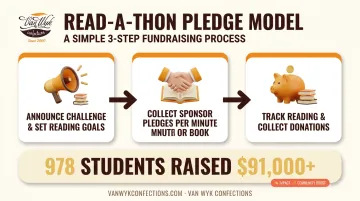
The pledge model is simple. Readers ask friends and family to sponsor them per minute read or per book finished, then collect donations once the challenge wraps up.
Lake County Public Library's Foundation runs one of the more notable examples. In 2025, 978 students raised more than $91,000 through their annual Read-A-Thon, split between the library and participating schools. That's one system's result, not a universal benchmark, but it shows what's possible when a read-a-thon is run consistently year after year.
Community Events That Draw Bigger Crowds
If you're wondering how to get more people through the door, experiential events solve two problems at once. They raise money and introduce new visitors to what your library offers.
Themed Parties & Trivia Nights
Murder mystery dinners, Gatsby-style galas, and trivia nights are reliable draws because they combine entertainment with a low barrier to entry. Charge a flat ticket price ($15-$40 depending on the event) and offer small prizes for winning trivia teams. Keep the format repeatable so you can run it quarterly instead of just once a year.
Active & Family-Friendly Events
Fun runs and walkathons that finish at your library bring in families who might not otherwise attend an event. The same goes for in-library mini golf tournaments built from cardboard and household items. A few practical notes:
- Partner with your parks department for permits on outdoor routes
- Ask local businesses to sponsor holes or mile markers in exchange for signage
- Keep registration fees affordable ($10-$25) to maximize participation over profit margin
Arts, Music & Creative Showcases
Paint-and-sip nights, live music series, open mic poetry evenings, and craft fairs all work because they charge admission or take a percentage of vendor and art sales. Friends of the Library groups frequently organize craft fairs as recurring seasonal events. These draw local artisans and steady foot traffic without requiring heavy staff involvement.
Product Fundraisers: An Easy, High-Margin Alternative
Not every library has the volunteer bandwidth to plan a gala or coordinate a 5K. That's where product fundraisers earn their keep — especially for Friends of the Library groups and school librarians juggling limited hands and limited time.
Candy Bar & Chocolate Fundraisers
Selling premium candy bars requires no venue, no tickets, no setup crew. Volunteers hand out the product, collect payment, and pass the proceeds along to the library. It's about as low-friction as fundraising gets, which makes it a strong fit for smaller or rural libraries without a big volunteer base.
Van Wyk Confections built its business around exactly this model. Their Original ONE DOLLAR BAR and Chocolatiers Premium Chocolate Bars typically earn organizations 40-50% profit on every sale. A few details that matter for library planning:
- Orders start at a 1-case minimum, so there's no high minimum to hit before you can launch
- The ONE DOLLAR BAR is peanut-free and gluten-free certified, making it easy to offer an inclusive option for allergy-conscious patrons
- Both product lines are individually wrapped and shelf-stable, so unsold inventory isn't a total loss

Beyond Chocolate: Popcorn, Pretzels & Fortune Cookies
Variety helps widen your donor base. Gourmet popcorn, Sweet & Salty Pretzel Rods and Twists, and Famous Fortune Cookies give supporters more than one reason to buy, and let your library offer multiple price points in a single campaign.
Van Wyk Confections ships from a network of distribution centers across the country, which means a library can typically launch a product fundraiser without waiting weeks for inventory to arrive. That speed matters when you're trying to time a sale around a specific event or season.
Low-Effort Fundraisers for Busy Library Staff
Some of the best fundraisers require almost no staff time at all. Passive giving options run in the background with minimal upkeep:
- Online donation pages linked from your website and email newsletter
- Memorial or tribute bookplate programs, where a small donation buys a dedicated plate inside a book
- Round-up donation jars at the circulation desk for spare change
Recycling drives (used shoes, old eyeglasses, ink cartridges) cost nothing to run and only need a drop-off bin and a little signage.
Restaurant give-back nights work well too: partner with a local restaurant for one evening where a percentage of sales goes straight to your library. No inventory, no ticketing, just a flyer and a date on the calendar.
Choosing & Promoting the Right Fundraiser for Your Library
Not every fundraiser fits every library. Match the format to your community:
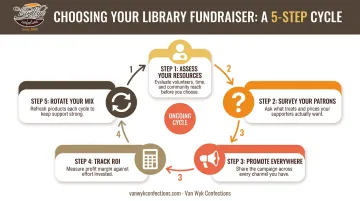
- Assess your resources. Small volunteer pool? Lean toward product fundraisers and passive giving. Strong Friends group with event experience? A gala or trivia night can pay off bigger.
- Survey your patrons. If you're unsure what will land, ask supporters directly what they'd actually attend or buy.
- Promote everywhere. Social media, local press, and partnerships with schools and businesses do double duty — raising funds and pulling in new visitors who didn't know what your library offers.
- Track ROI (return on investment) on each fundraiser. A trivia night that costs $500 to run and nets $800 isn't as strong as a candy bar sale that costs almost nothing and clears $1,200.
- Rotate your mix. Combining a few smaller fundraisers throughout the year creates steadier cash flow than betting everything on one annual event.
Frequently Asked Questions
How to fundraise for a library?
Libraries typically combine grants, government funding, and community fundraisers, such as book sales, ticketed events, and product sales like candy bar fundraisers, to supplement their operating budgets.
How to attract more people to the library?
Hosting engaging events like trivia nights, author visits, and craft fairs draws new visitors while raising money. Promoting these through social media and local partnerships extends their reach further.
What is the most profitable library fundraiser?
Profitability comes down to effort versus return. Product fundraisers, such as candy bar sales from suppliers like Van Wyk Confections, and read-a-thons perform well because they require little overhead relative to the funds they bring in.
How do libraries typically get their funding?
Most funding comes from local property taxes and government budgets, supplemented by state and federal grants along with community fundraising efforts.
Can schools and Friends of the Library groups fundraise together?
Yes. Many school libraries and Friends groups co-host events or product fundraisers to pool volunteer resources and reach a wider pool of donors.
What are good low-cost fundraiser ideas for small or rural libraries?
Product fundraisers with no upfront cost, book sales built from donated inventory, and passive donation programs that need almost no staffing all work well for libraries with limited resources.