That gap between vision and budget is why fundraising isn't optional — it's the plan.
The good news: reaching a large playground goal is achievable when you combine the right strategies. This article covers product-sale fundraisers, community events, online campaigns, grants, and how to choose the most profitable approach for your specific group.
Key Takeaways
- Combine multiple fundraising methods rather than betting everything on one approach
- Product-based sales (candy, snacks, confections) offer strong profit margins with low overhead
- Community events like walk-a-thons and carnivals build excitement alongside revenue
- Grants provide free funding that never needs repayment, making them worth pursuing alongside other efforts
- A clear dollar target and an organized committee keep your campaign on track and accountable
Before You Start: Planning Your Playground Fundraiser
Set a Concrete Dollar Target
Before choosing any fundraiser, nail down what you actually need to raise. Use Playworld's component breakdown as a starting framework:
- Equipment: 40–50% of total project budget
- Installation: 25–35% of equipment cost
- Safety surfacing: ~$15–$35 per sq. ft.
- Contingency: 10–15% buffer recommended
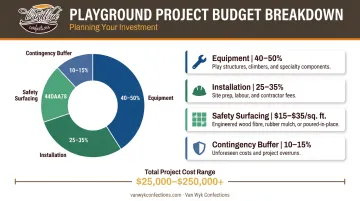
A basic inclusive structure starts near $25,000. Larger composite structures can reach $75,000–$250,000 or more. Get a site-specific quote early — that number becomes your campaign's north star.
Build a Fundraising Committee
A playground campaign is too large for one person. Divide responsibilities across dedicated roles:
- Marketing lead — social media, flyers, community outreach
- Event coordinator — logistics for any in-person fundraisers
- Grant researcher — identifies and tracks application deadlines
- Finance/donor tracker — manages the spreadsheet and bank account
Distributing the workload prevents burnout and keeps every task covered across what's typically a multi-month campaign. Once your team is in place, the next priority is making sure the money you raise is properly managed from day one.
Separate Your Funds
Set up a dedicated bank account or earmarked fund for playground donations. This keeps contributions transparent to donors, easy to track against your goal, and restricted for playground use only.
Many PTAs and school organizations are required by their bylaws to maintain separate accounts for named purposes. Confirm your organization's specific requirements before you collect a dollar.
Product Sales Fundraisers: A High-Profit Way to Raise Playground Money
How Product-Based Fundraising Works
Volunteers or students sell products directly — door-to-door, at school, at church, or at community events. The organization keeps a significant percentage of every sale. There's no venue to book, no large event to coordinate, and sales continue steadily over days or weeks rather than depending on a single high-stakes event.
For playground campaigns, this model has a practical edge: it keeps fundraising visible in the community throughout the entire campaign, not just on one Saturday.
Why Confectionery Products Sell
Candy, chocolate bars, pretzel rods, gummy snacks, and fortune cookies consistently perform well for a few practical reasons:
- Priced at $1–$2, these items drive impulse purchases with almost no buyer hesitation
- Appeal cuts across age groups — kids and adults buy them equally
- Fast sell-through means groups see cash within days, not weeks
Research from the Acosta Group found that 56% of shoppers made an unplanned treat purchase simply because they saw the item. That's the same impulse in-hand candy sales rely on.
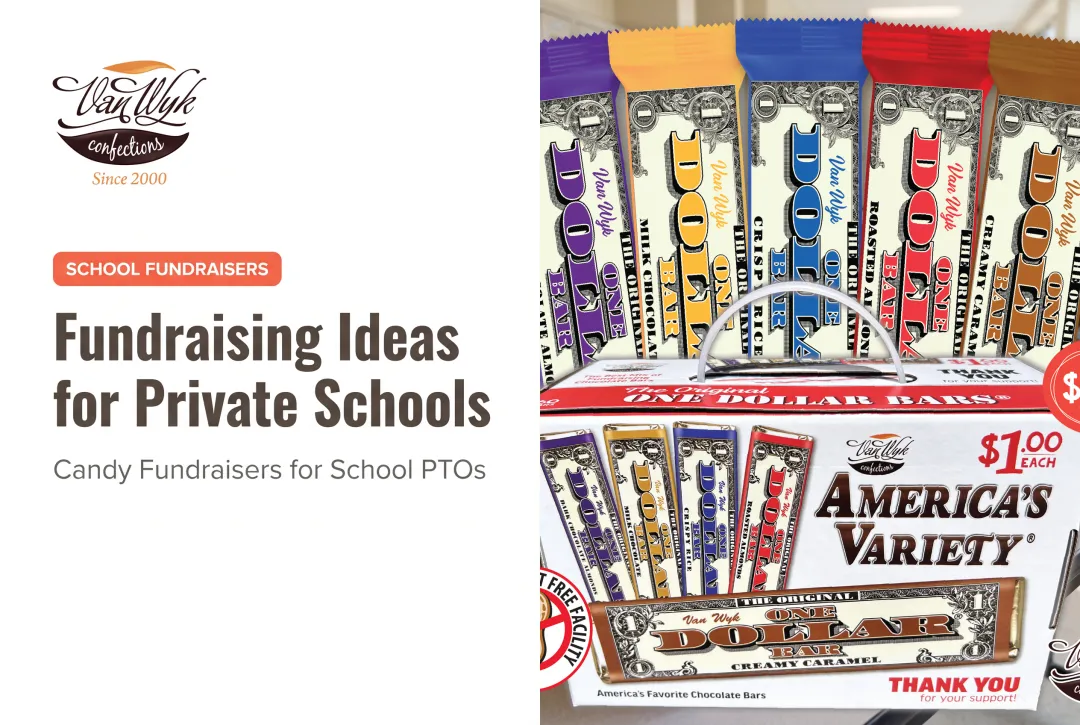
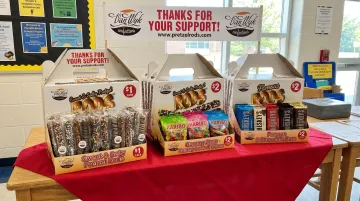
Van Wyk Confections, a Castle Rock, Colorado-based fundraising supplier operating since 2000, offers chocolate bars, pretzel rods, gummy bears, fortune cookies, and more at $1–$2 retail price points, with profit margins that make them worth considering for playground campaigns. Their America's Variety Pack One Dollar Bars are manufactured in a peanut-free facility — an important consideration for schools with allergy policies.
Other Product Categories to Consider
- Cookie dough: popular with families, but requires careful refrigeration handling
- Candles: higher price points, though sell volume tends to be lower
- Coupon books: strong margin, but require coordination with local businesses
- T-shirts: work well when tied to a playground theme or school event
Any of these can supplement a candy-based campaign — or serve as the primary fundraiser depending on your group's capacity and timeline.
Reduce Risk with a Presell Model
One underused tactic is taking orders before purchasing inventory. Sellers collect payment upfront using order forms or brochures, then the organization purchases only what's been sold. This eliminates the risk of unsold product and ensures nearly every dollar collected goes directly toward the playground fund.
Van Wyk Confections offers brochure and order-taker options for select product lines — connect with their team at vanwykconfections.com/start-fundraising to discuss what's available for your group.
Fun Playground Fundraising Events That Engage the Community
The right event does more than fill the fundraising bucket. It builds community buy-in, draws local media attention, and gives volunteers something concrete to rally around. The most profitable events layer multiple revenue streams — ticket sales, raffle tables, concession stands, and merchandise — so income keeps flowing throughout the day.
Talent Shows and Performances
School talent shows are a natural fit. Students perform, families attend, and admission fees add up fast. Stack revenue by:
- Selling programs with local business ad space
- Setting up a concession stand
- Running a photo booth with a small fee
Walk-a-Thons and Fun Runs
Participants collect pledges per lap or mile — and the outdoor, active theme ties directly to a playground's purpose. PledgeStar reports more than $175 raised per student through sponsored a-thon events (results vary by school size and local participation). Increase total revenue by adding registration fees, event T-shirt sales, and a raffle.
Silent Auctions and Raffles
A 50/50 raffle is simple to run: sell tickets, split the pot with one winner. Silent auctions take more coordination but generate more per item — OneCause's 2025 State of Nonprofit Auctions report found auctions realize 134.5% of item value on average. Solicit donations from local restaurants, service providers, and retailers for the auction table. Hosting an auction alongside another event amplifies turnout for both.
Carnivals and Family Days
A community carnival creates multiple simultaneous revenue streams from a single event:
- Admission or wristband fees
- Game booth tickets
- Food and beverage sales
- Vendor table fees
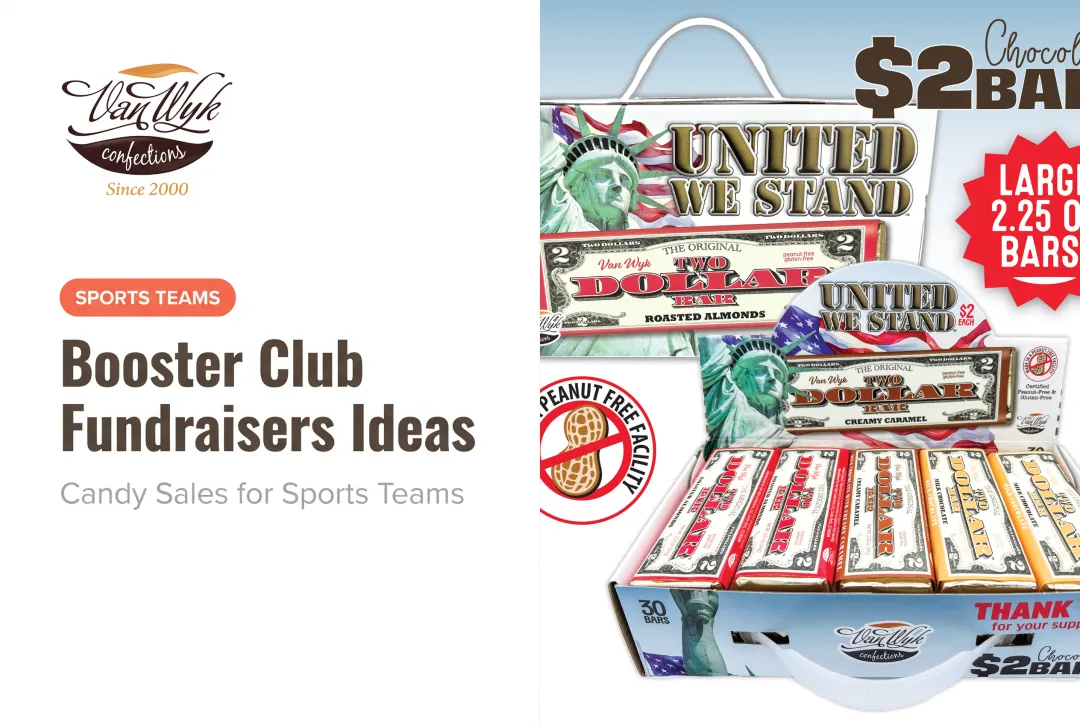
Even a small-scale family day with five to ten activity booths raises meaningful funds while keeping the community emotionally connected to the playground goal. A concession booth selling individually priced snacks — like Van Wyk Confections' $1 and $2 candy and pretzel items — fits naturally here, since products are already packaged for direct sale and move quickly in high-foot-traffic settings.
Online and Community-Based Fundraising Strategies
Crowdfunding
Platforms like GoFundMe or Patronicity let organizations reach donors far beyond their immediate community. A compelling campaign typically requires:
- A clear story explaining why the playground matters to the community
- A specific dollar goal with a visible progress tracker
- Consistent social media sharing to maintain momentum through the campaign
Real-world results vary widely. A Detroit Retro Play Park campaign raised $26,994 against a $25,000 goal — and qualified for a matching grant through MEDC, effectively doubling total funds raised. If your organization qualifies for a matching grant, feature it prominently in your campaign — it gives donors a concrete reason to act now rather than later.
Local Business Sponsorships
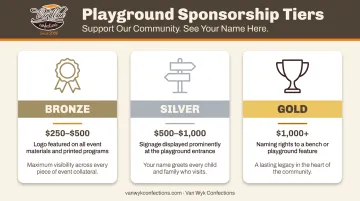
Approach local businesses with tiered sponsorship packages:
| Tier | Contribution | Recognition |
|---|---|---|
| Bronze | $250–$500 | Logo on event materials |
| Silver | $500–$1,000 | Sign at playground entrance |
| Gold | $1,000+ | Naming rights to a bench or feature |
Businesses gain community goodwill and visible brand recognition. For your organization, sponsorships generate reliable revenue that doesn't depend on event attendance or volunteer coordination.
Personalized Brick or Paver Campaigns
Donors "buy" an engraved brick that becomes permanently embedded in the playground or surrounding walkway. The model is effective for several reasons:
- It offers lasting, visible recognition — motivating higher donations
- It generates ongoing revenue as the deadline approaches
- It creates an emotional connection to the finished project
Supplier pricing starts around $19–$30 per brick for organizations, with donor prices typically set higher to generate a margin. Most brick fundraising platforms include an online order portal, which eliminates cash handling and simplifies fulfillment tracking.
Playground Grants: Free Money to Supplement Your Fundraising
Grants are funds that don't need to be repaid — which makes them worth pursuing even if the application process takes time. Most successful playground campaigns combine grants with active fundraising from the start.
Currently Active Grant Sources to Research
| Program | Eligible Applicants | Verified Value |
|---|---|---|
| KABOOM! Community Built Playspaces | Child-serving nonprofits & municipal agencies | Accepting applications (nationwide) |
| KABOOM! Georgia Playspace Refresh | Georgia communities | Up to $25,000 |
| GameTime Community Champions Grant | Organizations buying qualifying play systems | Up to 100% matching for systems over $25,000; apply by Oct. 23, 2026 |
| Arkansas Outdoor Recreation Matching Grants | Arkansas municipalities/counties | Up to 50% reimbursement; open through Aug. 28, 2026 |
| USDA Community Facilities Program | Rural public bodies & nonprofits (under 20,000 population) | 15–75% grant share based on population/income |
Check your state's parks and recreation department for additional regional programs — New York, Pennsylvania, and Utah all maintain active grant cycles for community park improvements.
Grant Application Tips
- Align your language with the funder's stated mission (children's health, outdoor activity, community development)
- Include a clear budget breakdown showing how grant funds will be used
- Demonstrate community need with data — enrollment numbers, underserved population stats, distance to nearest playground
- Get administrative approval from your school board or organization leadership before submitting
- Apply to multiple grants simultaneously — competition is high and timelines are unpredictable
What Is the Most Profitable Playground Fundraiser?
There's no single universally "best" fundraiser. The right answer depends on your group's size, volunteer capacity, and timeline.
Here's a practical comparison:
| Method | Profit Potential | Key Trade-off |
|---|---|---|
| Product sales | Strong margins on revenue | Requires active sellers; results scale with participation |
| Ticketed events | Variable; depends on venue/setup costs | Higher overhead; one-day revenue window |
| Crowdfunding | Keeps nearly all funds raised | Typically reaches smaller audiences without matching incentives |
| Grants | 100% free money | Competitive, unpredictable, restricted to eligible uses |
Match the Method to Your Group
- Small church group or limited volunteers: Product sales or crowdfunding — low overhead, flexible timeline
- School with an active PTA and large network: Walk-a-thon or carnival — more total dollars even with lower margins
- Any group: Grants run in parallel with active fundraising, regardless of size
The Most Reliable Overall Strategy
Most groups that hit large playground goals follow this sequence:
- Start with a product sale to build an initial fund — low overhead, quick turnaround
- Add one or two community events to build visibility and local support
- Pursue grants at the same time — don't wait for event results before applying
- Use crowdfunding to close the gap, especially if you can secure a matching incentive
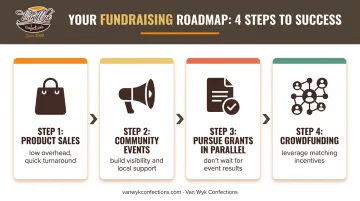
Running these in parallel, rather than one at a time, is what separates campaigns that hit their goal in a single season from those that stall.
Frequently Asked Questions
How do you raise money for a playground?
Combine multiple strategies: product sales for consistent high-margin income, community events to drive engagement and visibility, grants for free funding, and online crowdfunding to reach donors beyond your immediate community. Running two or three of these at once — rather than one at a time — keeps momentum going and shortens your overall timeline.
What is the most profitable playground fundraiser?
Product-based fundraisers — particularly candy and confection sales — typically offer strong profit margins with low overhead, making them among the most reliably profitable options. They perform especially well when paired with a community event to maximize total reach and revenue.
What are some fun playground fundraisers?
Talent shows, walk-a-thons, carnivals, and silent auctions are consistently popular options. Events that connect to the playground's theme — outdoor activity, community, and kids having fun — tend to draw stronger turnout and repeat participation.
How long does it take to raise money for a playground?
Timelines vary widely based on goal size and fundraising methods. Most playground campaigns take several months to over a year to reach their full target. Running multiple fundraiser types simultaneously — rather than sequentially — compresses the timeline considerably.
Can you apply for grants and do fundraisers at the same time?
Yes — and most organizations should. Grants are competitive and often unpredictable, so running active fundraising in parallel ensures progress continues regardless of grant outcomes. Budget and plan around what your fundraisers bring in; any grant money that comes through is extra.