
But here's the common trap: many groups run the same egg hunt or bake sale every single year. It works, sort of, but the profit margins stay thin and volunteers burn out repeating a formula that never grows.
This guide covers classic, food-based, active, and virtual Easter fundraising ideas — plus how to pick the right one for your group and squeeze more profit out of whichever you choose.
Key Takeaways
- Easter pairs familiar traditions with a season people already link to giving.
- Ideas span low-cost egg hunts to high-margin candy and chocolate sales.
- Virtual campaigns extend your reach beyond your immediate community.
- Combining an activity with a product sale typically outperforms either one alone.
- The right idea depends on your group's size, timeline, and volunteer bandwidth.
What Is an Easter Fundraiser and Why Does It Work So Well?
An Easter fundraiser is any event, sale, or campaign timed around the Easter season that raises money for a school, church, team, or community cause. The reason it works comes down to timing.
Spring puts people in a community-minded mood, and they're already spending money on candy, baskets, and family get-togethers. Riding that wave, rather than competing against it, is what makes Easter such a productive fundraising window.
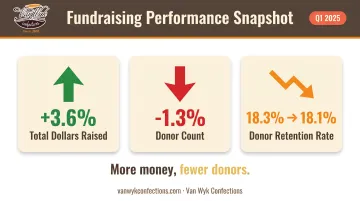
That said, the season doesn't guarantee results on its own. Fundraising Effectiveness Project Q1 2025 data found total dollars raised increased 3.6% year over year, but donor count fell 1.3%, and retention slipped from 18.3% to 18.1%.
In other words, more money came from fewer people—a sign that goodwill alone isn't enough.
What typically goes wrong without a plan:
- Low turnout because promotion started too late
- Thin margins from underpriced bake sale items or unclear pricing
- Poor timing that clashes with Easter weekend travel and family plans
- No backup plan for rain on an outdoor event day
A little structure—clear pricing, early promotion, and a weather backup—changes the outcome. The ideas below show how to put that structure in place.
Types of Easter Fundraising Ideas
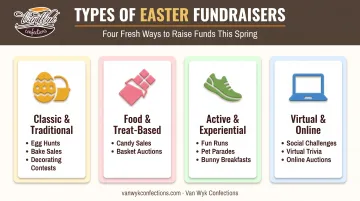
Most Easter fundraisers fall into four buckets: classic community events, food and treat sales, active or experiential events, and virtual campaigns. Each suits a different group size, timeline, and goal.
Classic & Traditional Easter Fundraisers
These are low-cost, high-turnout events built on traditions people already love.
- Easter egg hunt with entry fees, golden-egg prizes, and local business sponsorships
- Bake sale featuring hot cross buns, carrot cake, and Easter cookies, with a pay-what-you-can option to boost participation
- Egg decorating contest with entry fees and judged categories (funniest, most creative, best team theme)
This category fits schools, churches, and community groups with volunteer support and access to indoor or outdoor space. The catch: weather contingency and manual labor cap how much these events can scale.
Food & Treat-Based Easter Fundraisers
Product-based sales generate solid per-unit profit without the planning headache of running an event.
- Chocolate and candy bar sales with pre-packaged options like Van Wyk Confections' Original ONE DOLLAR BAR or Chocolatiers Premium Chocolate Bars—no cooking, no setup
- Easter basket auctions filled with donated chocolates, spring treats, and gift cards
- Guess-the-candy-count jar game as a simple add-on activity at any other event
This route suits groups that want predictable profit without event logistics. Programs with 40–50% margins and one-case minimums keep risk low for smaller teams testing the waters for the first time.
Active & Experiential Easter Fundraisers
Ticketed events that combine activity or entertainment with fundraising tend to scale well when a group has the volunteer muscle to run them.
- Bunny Hop 5K or fun run with costume themes and tiered VIP registration
- Easter pet parade and costume contest with category prizes
- Breakfast with the Easter Bunny featuring photo ops and a simple pancake menu
These can grow into major community draws. Autism nonprofits and health foundations have run Easter-adjacent 5Ks and bunny breakfasts that pulled in hundreds of attendees and tens of thousands of dollars in a single day. That kind of scale takes real planning time and a bigger volunteer crew than a bake sale ever will.
Virtual & Online Easter Fundraisers
Digital campaigns let groups reach supporters beyond the neighborhood.
- Social media donation challenge — a bunny-hop challenge with tagging and small donation asks
- Virtual trivia night with entry fees and bonus donation rounds
- Online silent auction or virtual bake sale with local pickup
Platform data backs this up. Classy's analysis of more than 12 million donations found peer-to-peer fundraising events hit a 47% conversion rate, well above typical online giving benchmarks (Classy, 2022). If your supporters are scattered across a wide area, this is where the reach shows up.
How to Choose the Right Easter Fundraising Idea for Your Group
Pick the fundraiser that fits your group's real constraints, not whatever is trending on social media.
Run through these factors before committing:
- Purpose and goal — Do you need a quick boost or a full spring campaign?
- Group size and volunteer availability — A 5K needs far more hands than a bake sale table.
- Lead time before Easter — Product fundraisers need ordering and delivery time; don't wait until two weeks out.
- Budget for supplies, permits, or venue — Outdoor events often hide fees a candy sale never will.
- Audience reach — Local groups can lean on in-person events; scattered supporters need a virtual option.
- Profit vs. effort — Some ideas take heavy work for modest returns; others need one order form and a few weeks of selling.
A small church youth group with six volunteers and three weeks of lead time shouldn't try to run a 5K. A candy sale, though, fits almost any timeline and group size.
Tips to Maximize Profit From Your Easter Fundraiser
Small adjustments tend to matter more than picking the "perfect" idea. A few worth building into your plan:
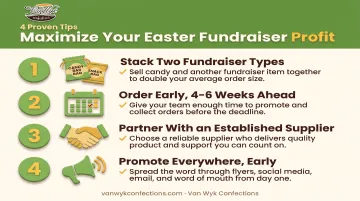
- Stack two fundraiser types. An egg hunt with a candy sale table at the entrance earns more than either one running alone.
- Order early. Start planning and ordering at least 4-6 weeks before Easter to avoid shipping delays, especially for treats and perishables.
- Work with an established supplier. Van Wyk Confections offers no high order minimums, fast delivery from 10+ warehouses, and full program support. Groups often earn 40-50% on the $1 ONE DOLLAR BAR and up to 55% on the $2 Chocolatiers line.
- Promote everywhere, early. Social media, email, flyers — and offer multiple giving options (cash, online, tickets) to capture supporters who prefer different payment methods.
Planning timelines matter more than most groups realize. National PTA's own event guidance recommends assigning volunteer roles at least 6-8 weeks before an event, then actively recruiting additional volunteers about two weeks out (National PTA Event Planning Checklist). That window matches when product-based fundraisers need to place orders, so pairing event planning with your candy order keeps both on track.
Conclusion
Easter's spirit of renewal makes it one of the strongest seasons for community fundraising. Real results come from matching the right idea (classic, food-based, active, or virtual) to your group's size, timeline, and goals.
If you're weighing your options, pair a proven product fundraiser with a fun community event. An egg hunt draws the crowd; a candy table converts that crowd into steady, high-margin revenue. Together, they tend to outperform either approach running solo.
Frequently Asked Questions
What are some ideas for fundraising at Easter?
Chocolate or candy bar sales, egg hunts, bake sales, and virtual options like online auctions or social media challenges all work well. Most groups earn more by pairing a product sale with at least one event.
What is the most profitable Easter fundraiser?
Product-based fundraisers like chocolate or candy bar sales tend to be the most profitable, thanks to high margins and low overhead. Pairing one with an event, like an egg hunt, typically boosts total revenue further.
What are fun Easter fundraising activities?
Egg hunts, egg decorating contests, bunny-themed fun runs, and pet costume parades are all popular, low-barrier activities that work well as standalone events or add-ons to a bigger fundraiser.
How much can a group typically earn from an Easter fundraiser?
Earnings vary widely by event type and group size. Candy bar sales with 40-50% margins usually deliver more predictable profit per seller than one-off events that carry higher overhead.
When should you start planning an Easter fundraiser?
Start 4-6 weeks in advance. That gives enough time to order products, secure a venue if needed, recruit volunteers, and promote the event before Easter weekend arrives.
Can Easter fundraisers be done virtually?
Yes. Virtual trivia nights, online auctions, and social media donation challenges all let groups raise money beyond their local community, which helps when supporters live across a wide area.