Heading into 2026, that competition is only getting tighter. Teachers, booster leaders, and student council officers don't just need fundraising ideas. They need ideas that are fast to launch, appeal to busy teenagers juggling AP classes and part-time jobs, and actually turn a real profit instead of barely covering costs.
This guide breaks down high-margin product fundraisers, exciting event formats, low-effort quick wins, and the practical tips that separate a fundraiser that limps to its goal from one that blows past it.
Key Takeaways
- Chocolate bar and candy sales can net 40-50% profit with almost no upfront cost
- Pledge drives and per-unit margins paired with strong multi-channel promotion yield the highest profits
- Focus on top-performing fundraisers and reliable supporters; the 80/20 rule beats spreading thin
- Blend one or two big annual events with several quick, low-effort fundraisers to spread revenue year-round
- Assess student and parent volunteer capacity honestly before choosing any fundraising plan
How to Choose the Right Fundraising Idea for Your High School in 2026
High schoolers aren't middle schoolers. They can run their own committees, manage peer-to-peer sales, and pitch a fundraiser to their own social circles without constant adult hand-holding.
That independence opens up options that simply don't work as well for younger grades, including student-led product sales, ambassador-style crowdfunding pages, peer-led event committees run by juniors and seniors, and grade-versus-grade sales challenges.
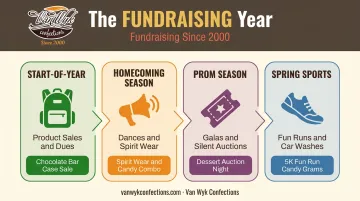
Timing Around the School Calendar
Fundraiser type should follow the calendar, not fight it:
- Start-of-year: Product sales, such as candy or snack fundraisers, and dues-style contributions work well while enthusiasm is high
- Homecoming season: Dances, spirit wear, and concessions pair naturally with existing school events
- Prom season: Higher-ticket events and silent auctions fit when families are already spending
- Spring sports: Fun runs, car washes, restaurant nights, and outdoor spirit events suit the season
Matching Scale to the Goal
A club trying to raise $1,000 for a competition entry fee needs a completely different plan than a booster club chasing $50,000 for a turf field or gym upgrade. Small goals favor a quick product sale, like a candy or snack fundraiser, or a single restaurant night. Big goals typically need a gala or major walk-a-thon, often paired with a season-long sequence of smaller fundraisers.
Some schools also cap how many fundraisers can run at once, such as limiting food nights per week or allowing only a couple of product sales at a time. Check your school's fundraising calendar before locking in a plan.
Most Profitable High School Fundraising Ideas for 2026
Profitability comes down to three things: how much of every dollar the school actually keeps, how much overhead the fundraiser requires, and how easily students can promote it to family, friends, and the wider community.
Product sales tend to win on margin and simplicity. Events tend to win on total dollars raised per single night, provided the school has the volunteer bandwidth to pull one off.
Candy & Chocolate Bar Fundraisers
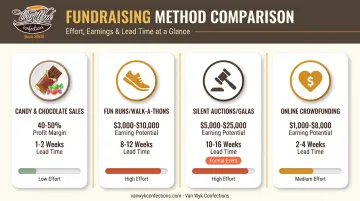
Product fundraisers remain a staple for a reason: students typically keep 40-50% of every sale, and there's no need for a big planning committee or a rented venue. A student sells a case of chocolate bars to neighbors, teachers, and grandparents, and the group keeps the difference between wholesale cost and retail price.
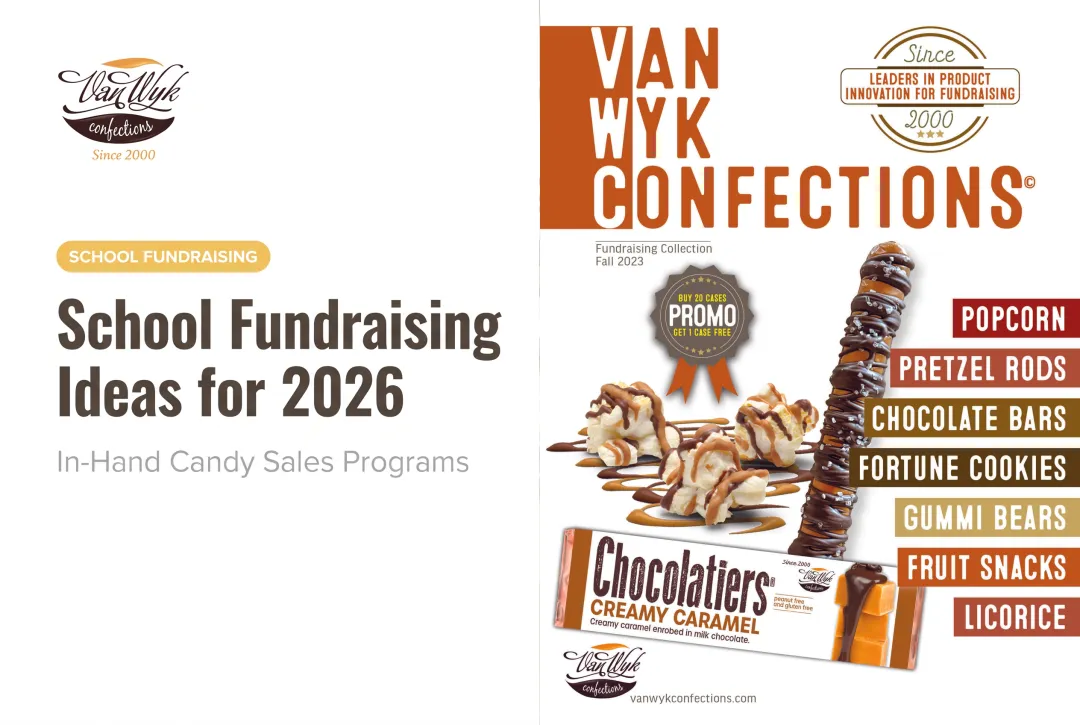
Van Wyk Confections, a fundraising confectionery supplier based in Castle Rock, Colorado, has built its whole model around this format since 2000. Its lineup includes:
- Original ONE DOLLAR BAR: a $1 chocolate bar made in a peanut-free facility
- Chocolatiers Premium Chocolate Bars: a step-up $2 option
- Nifty 50 Chocolatiers Pack: peanut-free and gluten-free, with profit potential up to 55%
Because orders start at just one case, a class or club can launch a sale within days rather than waiting weeks on a large minimum order. Peanut-free and gluten-free lines also mean groups can run an inclusive fundraiser without leaving allergy-conscious families out.
Fun Runs & Walk-a-Thons
The peer-to-peer pledge model works differently than a straight product sale. Sponsors pledge per lap, per mile, or a flat donation, and earnings scale directly with how many students show up and how hard they push friends and family for support.
Results can get big. Bishop Guertin High School's annual Walk-A-Thon grew from $25,102 in 1992 to more than $120,000 in a recent year, according to the school's own fundraising page. That's an extreme case built on decades of tradition, not a typical first-year result, but it shows the ceiling on this format when a school commits to it long-term.
Silent Auctions & Galas
Galas can produce the single largest one-night total of any fundraiser on this list, especially at schools with strong local business ties and an engaged parent network.
The tradeoff is real: these events generally need three to four months of lead time and a sizable committee to solicit donations, manage logistics, and run the night itself. Skip this format if you're short on volunteer hours.
Online Crowdfunding & Peer-to-Peer Campaigns
Digital fundraising pages stretch a campaign's reach well past the hallway, pulling in alumni, out-of-state grandparents, and extended family who'd never see a paper flyer. Pairing a campaign with a QR code and social sharing tends to perform well with this age group. 46% of U.S. teens ages 13-17 report being online almost constantly, according to Pew Research's 2024 teen technology survey.
Meeting students where they already are removes a lot of friction from the ask.
Fun & Community-Building Event Fundraising Ideas
These fundraisers do double duty. They raise money, and they build the kind of school-spirit moment that gets talked about in the hallway for weeks. Most work best when you layer two or three revenue streams into a single night instead of relying on ticket sales alone.
School Dances & Battle of the Bands
Ticket sales are just the starting point. Add a student-voted theme contest to drive early buy-in, then sell concessions at the door. Each layer adds revenue without adding much extra planning.
Talent Shows & Trivia Nights
Admission fees cover the baseline. A text-to-give option or live-voting component (where the audience pays a small fee to vote for their favorite act) adds real revenue on top of ticket sales. That extra layer alone can turn a modest show into a stronger earner.
Car Washes & Local Business Partnerships
A car wash is about as low-cost and high-visibility as fundraising gets — soap, hoses, a parking lot, and a few hours of student labor. Pair it with a restaurant percentage night or a food truck parked nearby, and you've got a second revenue stream running alongside the first.
One easy add-on for any of these events: stock a concession table with fast sellers. Try:
- Spirit wear such as t-shirts or hats
- $1-$2 candy bars, pretzel rods, or gummy snacks
- Bottled water and other grab-and-go treats
These low-cost items boost revenue without extra logistics.
Quick & Low-Effort Fundraising Ideas for Busy High School Schedules
Not every group has a committee or a spare Saturday. These options ask almost nothing of student leaders and still move the needle:
- Dress-down or pajama days — Students and even staff will happily pay a small fee to skip the dress code for a day. Near-zero setup, near-zero cost.
- Restaurant partnership nights — A local restaurant donates a percentage of one evening's sales to the school. The school's job is simply spreading the word.
- Direct online donation campaigns — A simple page with a visible goal thermometer lets supporters give directly, often outperforming product sales since there's nothing to buy.
These formats won't replace a major event. But they're perfect for filling gaps between bigger fundraisers, or for a smaller club without the volunteer capacity for anything larger.
Tips to Maximize Your High School Fundraiser's Success
A few habits separate fundraisers that hit their number from ones that fall short.
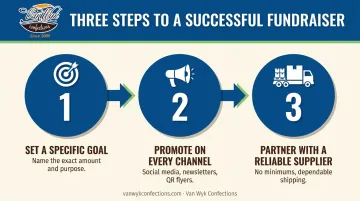
- Set a specific, named goal. "$5,000 for new band uniforms" beats a vague appeal every time. People give more readily when they know exactly what their dollars buy.
- Promote across every channel you've got. Student social media, school newsletters, and QR-code flyers should all carry the message, not just one announcement at the start.
- Partner with a supplier that handles the logistics. Working with an established fundraising supplier that offers no high order minimums and dependable nationwide delivery keeps student leaders from getting stuck managing shipping problems instead of selling.
Van Wyk Confections, for instance, ships from warehouses across the country and lets groups start with as little as one case. That flexibility matters when a booster club is trying to launch fast without tying up cash in inventory it might not sell.
Frequently Asked Questions
What are the most profitable fundraising ideas for high schools?
High-margin product fundraisers, like candy or chocolate bar sales, and scalable pledge events such as fun runs tend to be most profitable. Both pair low overhead with strong per-participant returns.
How can high schools raise money?
Schools typically combine product sales, ticketed events like dances and talent shows, and online donation pages. The right mix depends on your volunteer capacity and timeline.
What is the 80/20 rule in fundraising?
The traditional version holds that roughly 80% of donations come from about 20% of donors, according to Nonprofit Quarterly. For schools, this means focusing promotion on your most reliable supporters and highest-earning formats instead of spreading effort evenly.
What is a good fundraising idea for a small club or student group?
Low-effort options like dress-down days, restaurant nights, or a small-batch product sale work well for groups without a large committee behind them.
How much profit should a high school fundraiser realistically earn?
It varies by type. Product fundraisers commonly net 40-50% margins, while large events can earn more per night but require greater upfront investment in time and volunteers.
What's a fresh fundraising idea to try in 2026?
Combine a digital crowdfunding push with a classic product sale, like a chocolate bar fundraiser. You capture online reach from alumni and family while still running the in-person sales students are used to.