Introduction
Football season isn't cheap anymore. Equipment, travel, camps, and facility upkeep add up fast, and booster clubs feel the pressure to close the gap every year.
A recent national survey found families spend an average of $633.72 annually on tackle football alone, covering registration, gear, travel, and camps, according to a 2024 national parent survey from the Aspen Institute.
Team-level expenses like facility rentals and travel add even more pressure, and one bake sale won't close that gap.
Many coaches and booster parents know the frustration well: knocking on doors all fall for modest returns, or betting everything on one big event. Neither approach scales well. Teams that raise the most in 2026 aren't relying on a single trick. They're combining product sales, digital campaigns, and community events into a season-long plan.
This guide covers the highest-earning options across product-based, event-based, digital, and community fundraisers, plus how to combine them for maximum profit.
Key Takeaways
- Combining a product sale, digital campaign, and live event outraises single-method fundraisers
- Candy and snack sales remain among the highest-margin, lowest-effort options for teams of any size
- Crowdfunding tools help teams reach donors well outside their local zip code
- Starting early and explaining exactly where funds go boosts donor participation
- Corporate matching gifts add extra dollars at no cost to donors
Product & Snack Fundraisers: High-Profit, Low-Effort Options for 2026
Product fundraisers stay popular with football programs for a simple reason: no venue, no equipment rental, no weather risk. Players sell something people already want, and supporters get a tangible item in exchange for their donation.
Logistics stay simple too. Order a case, hand it out to players, collect payment, done. For programs juggling practice schedules and away games, that simplicity matters as much as the profit margin.
Chocolate Bar Fundraisers
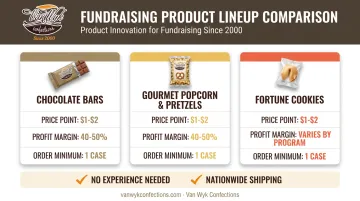
The classic candy bar fundraiser still works because pricing is straightforward for buyer and seller alike. Van Wyk Confections' Original ONE DOLLAR BAR sells at exactly $1 per bar, so there's no math involved and no confusion for young sellers.
For groups wanting a premium option, the Chocolatiers Premium Chocolate Bars sell at $2 each, appealing to supporters willing to give a bit more per item.
Both lines share the same core structure:
- $1 or $2 pricing makes it an easy yes for buyers on the spot
- 40-50% profit margins go back to the team, built into the wholesale pricing
- No experience needed since players just need a case and a short list of contacts
For a roster of 40 players each selling one case, that margin adds up quickly without a single event to plan.
Gourmet Popcorn & Pretzel Fundraisers
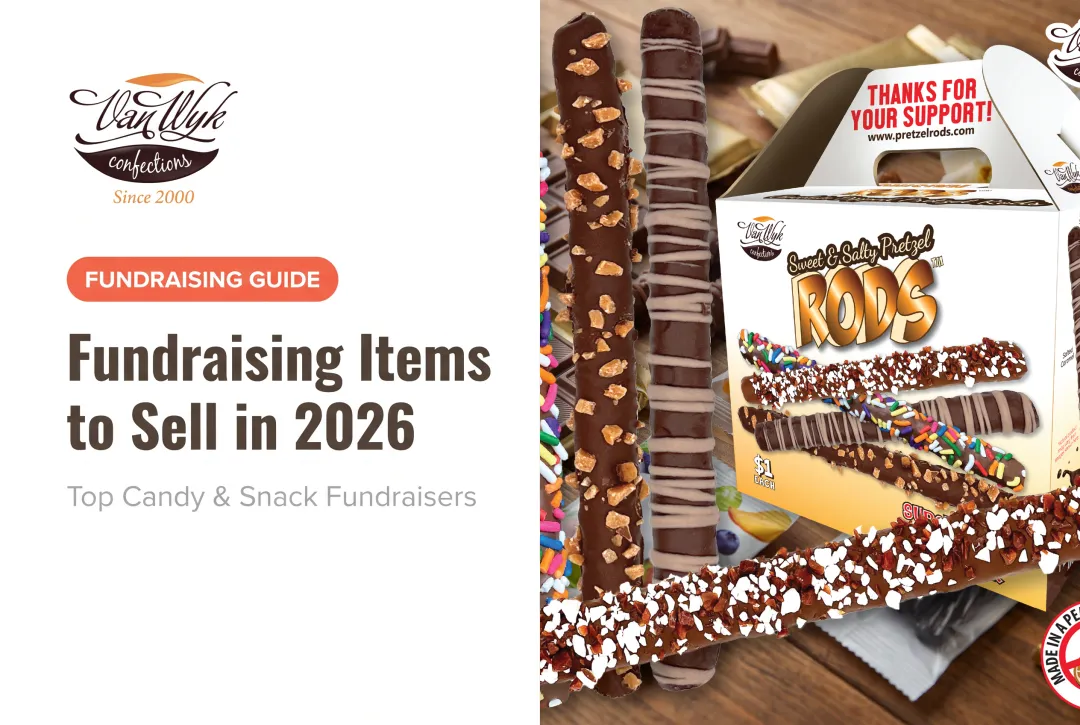
Not every supporter has a sweet tooth. Van Wyk's Sweet & Salty Pretzel Rods give teams a salty alternative: chocolate-dipped rods in four flavors (S'mores Bits, Salted Caramel, Rainbow Sprinkles, and Crunchy Toffee), made in a peanut-free facility.
The Gourmet Popcorn line goes further with nine flavors, ranging from Movie Theater Butter to Jalapeño Blue Cheese, sold through an order-taker program or a ship-to-home option.
Rotating candy one season and popcorn or pretzels the next keeps the ask fresh. Supporters who've already bought chocolate bars from three other teams this fall are more likely to say yes to something new.
Famous Fortune Cookie Fundraisers
Fortune cookies make an easy conversation starter at a concession stand or tailgate table. Van Wyk's Famous Fortune Cookies come in flavors like Birthday Cake and Salted Caramel, giving fans something novel to grab between quarters.
A few practical details reduce risk for teams placing their first order:
- 1-case minimum orders, so teams don't need to commit to a warehouse's worth of product
- Factory-sealed freshness on arrival
- Nationwide shipping from a network of 10+ warehouses, timed to arrive before kickoff
That last point matters most in the weeks before the season starts, when a late shipment can throw off an entire sales calendar.
Event-Based Football Fundraisers That Build Team Spirit
Event fundraisers do double duty. They raise money and bring the team, families, and the wider community together before the season even kicks off. A well-timed August event builds momentum that can carry through the whole fall.
Football Camps, Clinics & Tournaments
Hosting a youth football camp or flag football clinic lets varsity players and coaches run drills for younger kids, charging an entry fee per participant. Layer in concessions and team merchandise sales, and a single Saturday clinic generates three revenue streams at once.
Tournaments work similarly: charge entry fees to visiting teams, then sell food and gear to the families in the stands. The added bonus is exposure. Younger players and their parents get a firsthand look at the program, which often turns into future roster interest or booster support.
Tailgates & Restaurant Spirit Nights
Tailgate parties charge entry fees while selling food and merchandise on-site, turning a home game into its own fundraiser. Restaurant spirit nights work differently: partner with a local restaurant that agrees to donate a percentage of sales on a designated night when supporters mention the team.
Both formats strengthen ties with local businesses that may later become season sponsors, and neither requires the team to handle food prep or inventory.
Car Washes, Walk-a-Thons & Themed Contests
These low-cost classics still earn their keep. Popular options include:
- Car washes charging $8 to $12 per vehicle
- 5K walk-a-thons funded through pledge-based donations
- Powderpuff games with gate ticket sales
- Kicking challenges charging a few dollars per attempt
Each needs little upfront investment, mostly volunteer hours and basic supplies.
The tradeoff is weather. A rained-out car wash or walk-a-thon means rescheduling, which can cost momentum. Build a rain date into the plan from the start, and treat these events as a supplement to product sales rather than the season's sole source of funds.
Digital & Crowdfunding Fundraisers to Extend Your Reach
Crowdfunding platforms let individual players share a personal donation page through text, email, and social media, reaching grandparents, family friends, and former neighbors who live nowhere near the stadium.
That reach matters. A team limited to local sales can only ask the same few hundred families year after year, while a shared link reaches donors across the country in one text thread.
Online donation pages also solve a timing problem. Preseason costs like new pads, cleats, or a July training camp hit before ticket sales or concessions bring in cash. A donation page open in May or June gives supporters a way to give before the season structure even exists.
Once that donation page is live, one often-missed step can double what it brings in. Corporate matching gift programs are the most overlooked lever in football fundraising. Many employers match employee donations dollar-for-dollar, effectively doubling a gift at no extra cost to the donor. Encourage supporters to check with their HR department before they give.
Digital fundraising also compounds when paired with other channels:
- Digital campaigns reach distant relatives and alumni scattered across the country
- Product sales work best with local neighbors and coworkers
- Live events bring out the immediate community, from parents to school staff
That compounding effect shows up in the data, too. NextAfter's Digital Fundraising Benchmark Report tracked 27 nonprofits and found donors acquired online gave 19.4% more during their first year and were 48% more valuable over time than donors acquired offline. That's donor-level data from general nonprofits, not youth football specifically, but the direction is clear: an online ask captures a different, and often larger, donor than a door-to-door pitch alone.
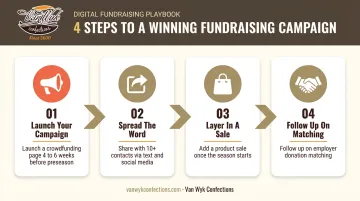
Try this simple sequence:
- Launch a crowdfunding page 4-6 weeks before preseason
- Have every player share it with at least 10 contacts by text or social media
- Layer a product sale on top once the season starts
- Follow up with a reminder about employer matching
Raffles, Auctions & Sponsorships
Raffles and 50/50 drawings work well because setup costs stay low, and prizes don't have to come out of the team's budget. Local businesses often donate raffle prizes, such as gift baskets, gear, or gift cards, in exchange for recognition on game day.
Silent and themed auctions raise the stakes further, gathering sports memorabilia, gift cards, and VIP experiences donated by community members and business sponsors.
OneCause's 2025 State of Nonprofit Auctions report found nonprofit auctions averaged 5.36 bids per item, with winning bids reaching 134.5% of the item's stated value. That suggests bidders will pay well above face value for something meaningful, favoring unique, team-specific items over generic donated goods.
Unlike auction proceeds, which cluster around a single event, touchdown or game sponsorships create recurring recognition for local businesses all season long. A sponsor pays a set fee before the season, and their name gets announced each time the team crosses the goal line:
- Businesses get repeated in-game visibility all season
- The team locks in funding before the first snap
- No ticket sales or inventory management required
These formats work best layered on top of a product sale or digital campaign, since raffle and auction proceeds tend to concentrate around one or two events rather than a full season.
Tips to Choose & Maximize Your 2026 Football Fundraiser
Match the fundraiser to your team's age and size. Peewee and youth teams do best with simple product sales, like a candy bar or popcorn drive parents can manage without extra logistics. Varsity and older programs can handle bigger swings, such as a camp, tournament, or full auction night.
Once the format fits your roster, start early and set a clear, communicated goal. "We're raising $8,000 for new practice jerseys and a bus for the away tournament" gets more buy-in than a vague ask for "team funds."
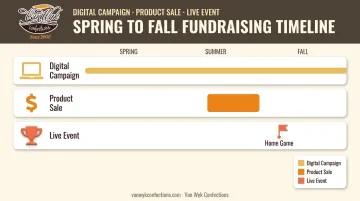
With that goal locked in, combine 2-3 fundraiser types across the season instead of leaning on one:
- Product sale (chocolate, popcorn, or pretzels) in late summer
- Digital campaign running quietly from spring through fall
- Live event, such as a tailgate, camp, or auction, timed around a marquee home game
This spread keeps cash flowing instead of one large lump sum followed by months of nothing.
For the product-sale piece of that mix, working with an established supplier removes some of the guesswork. Van Wyk Confections has supported schools, sports teams, and booster clubs nationwide since 2000, shipping from more than 10 warehouses to keep orders on schedule. That kind of full program support, from product selection through delivery, lets coaches focus on the season instead of chasing a shipment.
Frequently Asked Questions
What are some effective fundraisers for a football team?
A mix works best: product sales like candy bars or popcorn, one live event such as a tailgate or camp, and a digital campaign running in the background. Combining channels reaches more supporters than any single method alone.
What is the most profitable fundraiser for a football team?
High-margin product fundraisers, like Van Wyk's ONE DOLLAR BAR chocolate bars offering 40-50% profit, perform well with minimal setup. Pairing that with a digital crowdfunding campaign often produces the best overall return since it reaches donors outside your immediate community.
How much money can a football team typically raise from a fundraiser?
Totals vary widely by team size, method, and community support, so there's no single reliable figure. Squads that pair a product sale with a live event and steady online giving tend to outraise teams sticking to just one tactic.
What's a good fundraising idea for youth or peewee football teams?
Simple, low-effort options work best for younger teams. Candy bar or popcorn sales require no venue, no volunteers to staff an event, and minimal parent coordination, making them easy for young players to sell.
How early should a football team start planning its fundraiser for the season?
Aim for several months before kickoff, especially for product fundraisers that need vendor lead time for ordering and delivery. Starting in spring also gives a digital campaign time to build momentum.
Can football teams combine multiple fundraising ideas at once?
Yes, and it's usually the most effective approach. Spacing out a product sale, a live event, and ongoing online donations across the season keeps cash flowing steadily instead of arriving in one lump sum.