

Add in "fundraiser fatigue," parents and students tired of the same wrapping paper catalogs and candy bar tables, and you've got a real problem. Freshness matters. Theatricality matters.
This guide walks through classic fundraisers with a theatrical twist, drama-specific ideas, concession and candy programs, digital options, and how to pick the right mix for your production.
Key Takeaways
- Tie fundraisers to your show's theme or students' talents for turnout
- Mix one-time events with ongoing sales for steady cash flow
- Candy and concession fundraisers offer high margins with low effort
- Parents, alumni, and local businesses boost funds and community goodwill
- Match your fundraiser to your timeline, volunteers, and budget gap
Classic Fundraisers Reimagined with Theatrical Flair
Car washes, bake sales, and talent shows aren't new. They still work, but they work a lot better when your theatre kids bring their own flair to them.
Costume Car Washes & Themed Bake Sales
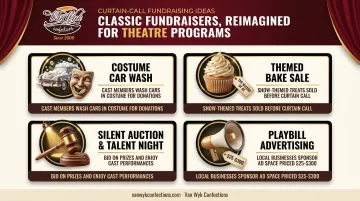
Have cast members show up in costume, past show, upcoming show, doesn't matter, and suds up cars in full character. It photographs well, draws a crowd, and gives your social media accounts something worth posting.
Bake sales get the same treatment. Name your treats after characters or songs:
- "Defying Gravity" brownies
- "Seasons of Love" cupcakes
- "One Day More" cookies
Themed names raise perceived value. People pay more for a brownie with a story attached than a brownie with a sticky note that just says "brownie."
Auctions, Raffles & Talent Nights
Silent auctions work especially well when the prizes are theatre-specific: a signed playbill from the cast, a backstage tour, a walk-on cameo in the next production. Running your silent auction across every performance of the run gives each item repeated exposure to a fresh audience night after night.
Ticketed coffeehouses, talent showcases, or a staff-versus-student variety show also work as standalone fundraising events, and they build community buzz heading into your main production.
Playbill & Program Advertising
Local businesses want their name in front of hundreds of families, and a playbill ad delivers that every single show. Typical pricing across theatre programs looks like this:
- Quarter-page ads: $25-$30, full-page ads: $100-$150
- Season-long packages covering every show: up to $300
Recurring revenue like this adds up fast across a multi-show season, and it costs your students nothing but a few phone calls to local shops.
Fundraisers Built Specifically for Drama Programs
Most fundraising ideas get borrowed from other clubs. Theatre has something almost nobody else does: a built-in cast of talented performers who can be the fundraiser.
Backstage Experiences & Sponsorships
Sponsorship campaigns let donors fund a specific piece of the production in exchange for recognition. Popular formats include:
- Sponsor a seat: a name plate on an auditorium seat
- Adopt a prop: program credit for funding a costume or set piece
- Sponsor a scene: an engraved plaque recognizing support for one scene
McClain High School's auditorium sponsorship campaign, launched in December 2024, structured its giving tiers starting at a $250 seat sponsorship and a $500 bronze level. Backstage pass raffles offer a related option: sell VIP tours, meet-the-cast Q&As, or dress rehearsal access as add-on tickets.
Performance-Based Fundraisers
Dinner theatre and murder mystery nights double as both a fundraiser and a preview event. Minisink Valley High School's Drama Club sold tickets to its murder mystery dinner, "Immortal till Death," at $25 for dinner and the show. A $10 show-only ticket gave families a lower-cost option.
Singing telegrams or short video shoutouts, think Cameo but student-run, give cast members a way to sell personalized birthday or holiday greetings for a flat fee.
Interactive Challenges
Jar challenges and "pie the director" campaigns turn fundraising into friendly competition between classes or grade levels. Broadway trivia nights or musical theatre karaoke pair naturally with concession sales, creating two revenue streams from one event. Other formats worth testing include guess-the-cast-member contests and grade-versus-grade ticket sales challenges.
Candy, Snack & Concession Fundraisers That Keep Profits High
Not every fundraiser needs a committee, a venue, and three months of planning. Candy and concession sales stay popular for a reason: they require minimal logistics and deliver strong margins at a show you're already running.
Selling themed concessions at intermission (chocolate bars, popcorn, pretzels) tied to your show's theme adds a bit of extra appeal without extra overhead. Show-themed candy grams with a personalized note make a nice low-cost add-on too, giving cast and crew families an easy way to show support.
This is where Van Wyk Confections fits into a theatre booster's toolkit. The Castle Rock, Colorado-based supplier has run fundraising programs for schools nationwide since 2000, and its lineup covers what a concession stand actually needs:
- Chocolate bars ($1 One Dollar Bars and $2 Chocolatiers bars) in multiple flavors
- Chocolate-dipped pretzel rods, individually wrapped, peanut-free
- Gourmet popcorn, including kettle corn and specialty flavors
- Famous Fortune Cookies, chocolate-covered, sold at $1 each
That variety keeps a concession stand fully stocked, and it pays off: programs typically earn 40-50% profit margins on these products, with a one-case minimum order and fast nationwide shipping, so a booster club doesn't need a warehouse to run a real program.

Storage and allergy management stay simple too:
- No refrigeration needed — bars, pretzel rods, and fortune cookies store fine backstage, in a prop closet, or in a volunteer's garage between shows
- Peanut-free options, including the pretzel rods and One Dollar Bars, make it easier to accommodate allergy policies without extra planning
Groups can start a program through Van Wyk's fundraising inquiry form to get pricing tailored to their production budget gap.
Digital & Passive Fundraising Ideas for Busy Theatre Teams
Not every fundraiser needs a table or a truck. Some of the best options run quietly in the background while your students focus on rehearsal.
Crowdfunding campaigns on GoFundMe, Kickstarter, or Indiegogo work best with a specific goal, a compelling story, and a short behind-the-scenes video. School-focused platforms show how far small asks can go: DonorsChoose's 2022-23 Year in Review reported that more than $140 million went directly to US public schools that year. Smaller, specific requests consistently outperform larger, vague ones.
Other low-effort, always-on options include:
- Add-on donation checkboxes at ticket checkout
- QR code donation stations posted in the lobby
- Facebook Fundraisers or Instagram donation stickers tied to show dates
- Text-to-give numbers printed in the program
None of these require staffing a table. They just need to exist, visibly, at the point where someone's already reaching for their wallet.
Tips for Choosing & Running a Successful Theatre Fundraiser
Not every idea on this list belongs in your season. Choosing well matters more than choosing a lot.
Match the fundraiser to your volunteer bandwidth. A bake sale or merch table bundled into opening night intermission costs almost nothing extra to run since the crowd's already there. A standalone gala requires committees, months of planning, and staff you may not have.
Track expenses closely. Pricing and fees can erode a "successful" fundraiser's margin to nothing if nobody's watching the books.
Limit your total number of events. PTO Today recommends running just two or three fundraisers per year and doing them well. Adding new campaigns constantly burns out volunteers and can make a program look like it exists only to ask for money.
Partner with an established supplier when time is tight. A candy fundraiser from a supplier like Van Wyk Confections, which ships fast, requires only a one-case minimum, and provides support from start to finish, frees your booster club to focus energy where it belongs: the production itself.
Frequently Asked Questions
How do I raise money for theatre?
A mix of ticket add-ons, themed events like auctions or dinner theatre, concession and candy sales, and playbill ads typically raises the most money with the least strain on volunteers.
What are good drama club activities?
Trivia nights, talent showcases, backstage tours, and themed game nights double as both community-building activities and fundraisers.
What's the easiest fundraiser for a high school theatre program to run?
Concession and candy fundraisers are among the easiest since they need no refrigeration, require minimal setup, and can be sold right at existing performances.
How much profit can a candy or concession fundraiser typically generate?
Programs often earn 40-50% profit margins with candy and snack fundraisers, making them a strong option compared to lower-margin alternatives.
How far in advance should a theatre program start fundraising for a production?
Start at least 2-3 months before opening night. That gives you time for planning, promotion, and order fulfillment on product-based fundraisers.
Are there fundraising ideas that don't involve selling anything?
Yes. Crowdfunding, grant applications, and sponsorship or naming-rights campaigns all raise money without requiring product sales.