Family spending on youth sports has climbed sharply in recent years, and gymnastics sits near the top of that cost list because training runs nearly year-round. Not every fundraiser deserves your team's time, though. Some eat up dozens of volunteer hours for a few hundred dollars. Others generate real money with almost no lift.
This guide breaks down the product, event, merchandise, and digital fundraising ideas that gymnastics programs of any size — from rec-level school teams to competitive travel clubs — can actually run.
Key Takeaways
- Product sales (chocolate, popcorn, pretzels) run 40-50% margins with no upfront risk.
- Skill-based events like flip-a-thons turn gymnasts' skills into sponsorship dollars.
- Digital fundraising pages let distant relatives contribute without buying a product.
- Tie every ask to a specific cost (meet fees, hotel blocks), not a vague "support the team" pitch.
- Launch fundraisers 4-6 weeks before major expenses, never during competition weekends.
What Gymnastics Programs Typically Need to Fund
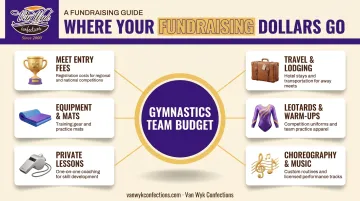
Unlike a fall soccer season with one uniform order and a handful of games, gymnastics costs stack up continuously across the whole year. Booster clubs and team handbooks typically list six recurring categories:
- Meet entry fees — invitationals, sectionals, state, regional, and national-level entries all carry separate costs
- Travel and lodging — hotels, gas, meals, and sometimes flights for out-of-state meets
- Leotards and warm-ups — competition leotards, team warm-up suits, and required practice wear
- Choreography and music editing — especially for optional-level floor routines
- Private lesson and coaching assessments — individual instruction billed separately from team tuition
- Equipment and mat upgrades — gym-use fees that help maintain training equipment
Because gymnasts train year-round rather than during a single season, these costs don't arrive as one lump sum. They trickle in constantly, which is exactly why steady, recurring fundraising matters more here than it does for a sport with a clear start and end date.
This applies whether you're running a school-based team or a competitive club program. Regardless of structure, most booster clubs distribute fundraising proceeds equally across all athletes rather than crediting individual sellers. This approach keeps things fair for families who can't always dedicate hours to selling but still benefit from the group's total effort.
High-Profit Product-Based Gymnastics Fundraising Ideas
Product-based fundraisers fit gymnastics families particularly well. Athletes can sell through a personal online link between practices, so there's no event to schedule around an already packed training calendar. Typical margins run 40-50% profit for the team.
Chocolate & Candy Bar Sales
Chocolate bar fundraisers remain a classic for a reason: they sell themselves at meets, in the school hallway, and door-to-door around the neighborhood. Van Wyk Confections' Original ONE DOLLAR BAR and Chocolatiers Premium Chocolate Bars are built for exactly this kind of simple math: buyers hand over a dollar or two, no making change, no confusion.
Gourmet Popcorn Sales
Popcorn appeals to a wider crowd than candy alone. Parents watching their sodium intake, siblings who don't love sweets, grandparents who just want to support the team, so flavored popcorn covers more ground. Bundling a few flavors into a single order also nudges up average order size compared to selling one bag at a time.
Sweet & Salty Pretzel Rods and Twists
Pretzel rods and twists solve a real problem: chocolate melts in a hot gym or a car trunk on the way to a meet. Pretzels don't. They're shelf-stable, easy to store in bulk, and sell just as well during casual competition-weekend concession sales as chocolate does.
Famous Fortune Cookies
Fortune cookies stand out simply because nobody else is selling them. Each one carries an encouraging, funny, or feel-good message inside: a nice novelty touch for showcases, banquets, or senior nights where the product doubles as a small keepsake.
What to look for in a confectionery supplier:
- Offers low case minimums so smaller or recreational teams aren't stuck with excess inventory
- Ships fast nationwide to hit meet-season deadlines
- Guarantees factory-sealed freshness
- Includes peanut-free and gluten-free options for inclusive team sales
Van Wyk Confections built its model around these exact needs, offering a one-case minimum, nationwide distribution, and peanut-free lines like the Original ONE DOLLAR BAR for schools, clubs, and sports teams that can't afford to gamble on a fundraiser that flops.

Event and Skill-Based Gymnastics Fundraising Ideas
Gymnastics is genuinely fun to watch, which makes performance-based fundraisers unusually effective at pulling in supporters beyond just parents.
Flip-a-Thon or Tumble-a-Thon
Athletes collect pledges per flip, cartwheel, or handstand held: a set dollar amount, or however many they can land in a set time. This ties the fundraiser directly to the sport itself, which makes it more compelling to sponsors than a generic pledge drive.
Gymnastics Showcase Night or Gala
A ticketed showcase stacks three revenue streams into one evening: admission, concessions, and a raffle. It also doubles as a recruitment tool, giving prospective families a reason to walk through your gym's doors for the first time.
Open Gym Night or Parents Night Out
Charge a flat fee for supervised open gym time. Parents get a few free hours to run errands or grab dinner, younger kids enjoy supervised playtime, and team members gain practice leading a group. Everyone walks away with something.
Color Run or Community Fun Run
This is a bigger lift, but it can grow into an annual community tradition. Before you commit, plan for:
- Permits: Most cities require a special-event permit for any run on public streets, sidewalks, or parks
- Insurance: Liability coverage is typically required for events held on city property, per Fort Collins' special event permit guidelines
- Timing and sponsors: Securing a date, a timing system, and local business sponsors takes weeks of lead time
Smaller programs can scale this idea down with seasonal or themed variations, such as a trunk-or-treat or a holiday-tied mini showcase, that require far less logistical overhead.
Merchandise, Sponsorship & Digital Fundraising Ideas
Team spirit wear (hoodies, water bottles, custom grip bags) does double duty. It raises money while building visible team pride around the gym and at meets.
Local business sponsorships offer another steady, ongoing revenue stream. A banner in the gym or an ad in the meet program requires outreach and relationship-building rather than any upfront cost from the team.
Coordinate solicitation lists across your booster club so the same business doesn't get three separate asks from three separate teams in one season.
Digital fundraising rounds out the picture:
- Crowdfunding pages for specific costs, like a national qualifier trip
- Sponsor-a-gymnast programs where extended family or family friends contribute directly
- Social media fundraising challenges that turn small donations from friends and followers into steady momentum
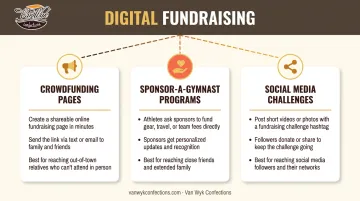
These digital options matter most for reaching out-of-town relatives who want to help but have no interest in buying another raffle ticket or hoodie. Peer-to-peer fundraising research backs this up: email senders in peer-to-peer campaigns raised 3-9 times more than those who didn't send any outreach at all.
Participants who updated their personal fundraising pages raised even more. Give each gymnast a shareable link and a little coaching on how to use it.
Tips for Running a Profitable Gymnastics Fundraiser
1. Tie the ask to a specific cost. "Support our team" raises less than "help cover the $3,200 balance for our regional trip." The National PTA recommends stating the exact goal, a suggested gift amount, and the specific use of funds — advice that applies equally well to booster clubs.
2. Time it right. Launch fundraisers 4-6 weeks ahead of major expenses, never during a busy meet weekend when families have zero bandwidth to sell anything.
3. Prioritize low-risk options. Choose fundraisers with no upfront cost and low minimum orders, so recreational or smaller teams can join without financial exposure.
4. Follow up publicly. A thank-you post, a progress update toward the goal, a final tally shared with the team: these small gestures build the kind of trust that brings donors back next season.
Frequently Asked Questions
How to raise money for gymnastics?
Most teams combine product sales (candy, popcorn, pretzels), pledge-based events like flip-a-thons, and community events such as showcases. Digital crowdfunding rounds things out by reaching extended family who live out of town.
What are good fundraising prizes?
Incentives tied directly to gymnastics costs, such as a credit toward meet fees, travel, or a new leotard, motivate participation far more than generic prizes like gift cards or toys.
How much money does a gymnastics team typically need to raise in a season?
This varies widely based on competition level and travel distance. A recreational team's needs look nothing like a Level 9 or 10 travel squad's, so base your goal on your program's actual expense calendar rather than a generic number.
What's the best fundraiser for a small or recreational gymnastics club?
Low-effort, low-minimum product fundraisers, such as candy or pretzel sales, work best. They don't require the volunteer hours a showcase or fun run demands.
Are candy or product fundraisers still profitable for gymnastics teams?
Yes. Product fundraisers remain effective thanks to consistent 40-50% margins and an easy built-in customer base: meet attendees, classmates, and family who are used to buying from athletes they know.
How far in advance should a gymnastics team start fundraising?
Aim for 4-6 weeks before major cost deadlines, such as the start of meet season or a travel trip. This avoids competing for attention during peak training and competition weeks.