The wrong one? It drains volunteers, frustrates teens, and leaves you short of your goal.
This guide breaks down 14 fundraising ideas organized by type — community-based, product-based, event-based, and digital — so you can quickly identify what fits your group's size, schedule, and capacity. Each idea includes practical tips on setup, staffing, and what makes it actually work.
Key Takeaways
- Match your fundraiser to your volunteer count and timeline, not just what sounds exciting
- Product-based fundraisers (candy, chocolate bars, snack items) consistently deliver 40–50% profit margins with minimal setup
- Service-based fundraisers (car washes, yard work) are ideal for small, resource-light teams
- Event-based fundraisers generate the most visibility but require the most planning
- Digital tools like peer-to-peer links reduce volunteer burden and extend your reach
What Makes a Youth Group Fundraiser Actually Work
Start with Honest Capacity Planning
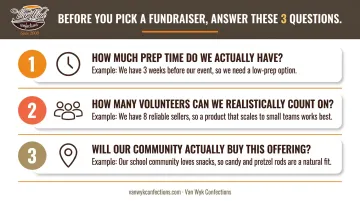
The most common mistake youth leaders make is choosing a fundraiser based on excitement rather than reality. Before committing to anything, answer three questions:
- How much prep time does this require? A trivia night needs weeks of coordination. A candy sale can launch in days.
- How many volunteers are realistically available? Not how many you hope will show up — how many consistently do.
- Will your community genuinely want what you're offering? A bake sale works after church. It may flop at a secular school event.
Give Your Fundraiser a Specific "Why"
Generic asks underperform specific ones. "We're raising money for the youth group" gets far less traction than "We're raising $2,500 so 12 students can attend a leadership retreat in June."
A named goal, a defined dollar amount, and a real story behind the cause all drive generosity. Share that story in every email, bulletin announcement, and social post — specificity is what turns a passive reader into an active donor.
Give Teens Real Ownership
When youth are assigned a personal fundraising goal — their own retreat spot, their own camp fee — participation climbs noticeably. When teens feel personally invested, they follow through. Groups that tie individual goals to a specific outcome (a camp spot, a uniform, a trip) consistently see higher sell-through than those running anonymous group totals.
Assign each teen a defined role rather than leaving participation open-ended. Good options include:
- Designing the flyer or social post
- Managing the sign-up sheet or order tracker
- Running the donation or sales table on event day
- Following up with family and neighbors via text
This builds real leadership skills and takes meaningful weight off adult organizers.
Community & Service-Based Fundraisers
These four ideas require little-to-no upfront cost and tap into your existing community — making them ideal for groups with small teams and tight timelines.
Car Wash (with Optional Dog Wash)
A standard church-lot car wash becomes genuinely shareable when you add a pet wash station alongside it. Families will talk about a dog wash. They won't talk about a car wash.
Tips for success:
- Pre-sell time slots through Sunday service or email to reduce day-of chaos
- Price the dog wash slightly higher than the car wash ($10–$15) to boost per-visit revenue
- Post photos of happy dogs on the group's social media or church page in real time
This fundraiser works with as few as one trusted adult supervisor and a group of enthusiastic teens — no special equipment or large crew required.
Envelope Wall Fundraiser
Number 100 envelopes from $1 to $100 and display them on a bulletin board in the church foyer or school hallway. Donors pick an envelope and contribute that amount. If every envelope gets claimed, the fundraiser nets $5,050.
The visual "disappearing wall" creates natural momentum — people see gaps filling in and want to participate before the popular amounts are gone. This works especially well as a season-opener or alongside a larger campaign to generate early energy.
Yard Work Sponsorships
Youth offer to rake, mow, mulch, or do seasonal cleanup for congregation members and neighbors in exchange for donations. Beyond the dollars raised, this one doubles as a character-building exercise.
Keeping it organized is simple:
- Track jobs and amounts raised in a shared Google Sheet — no finance committee needed
- Send each donor a handwritten thank-you note from the teen who did the work
- Include a donation envelope so supporters can contribute without cash on hand
Parents' Night Out / Babysitting Fundraiser
Youth provide supervised childcare at the church for a set evening, charging a flat fee per child or family. Parents get a night out; the group raises money.
This works particularly well when teens use the time to rehearse programming they'll run on a mission trip or at camp — it serves double duty as preparation and fundraising.
Ensure all supervising adults have appropriate background checks in place before promoting the event, and advertise through bulletins and email at least two to three weeks ahead.
Product & Sales-Based Fundraisers
Product fundraisers are consistently the highest-margin option. When supporters get something tangible in return, they give more freely — and participation often extends well beyond your immediate congregation or school community.
Candy & Chocolate Bar Sales
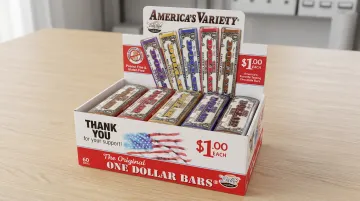
Individually priced confectionery items at $1–$2 per unit are among the simplest fundraisers to execute. Students can sell to neighbors, family members, and at school or church events with zero special setup. No booth, no event coordination — just a carrier box and a clear goal.
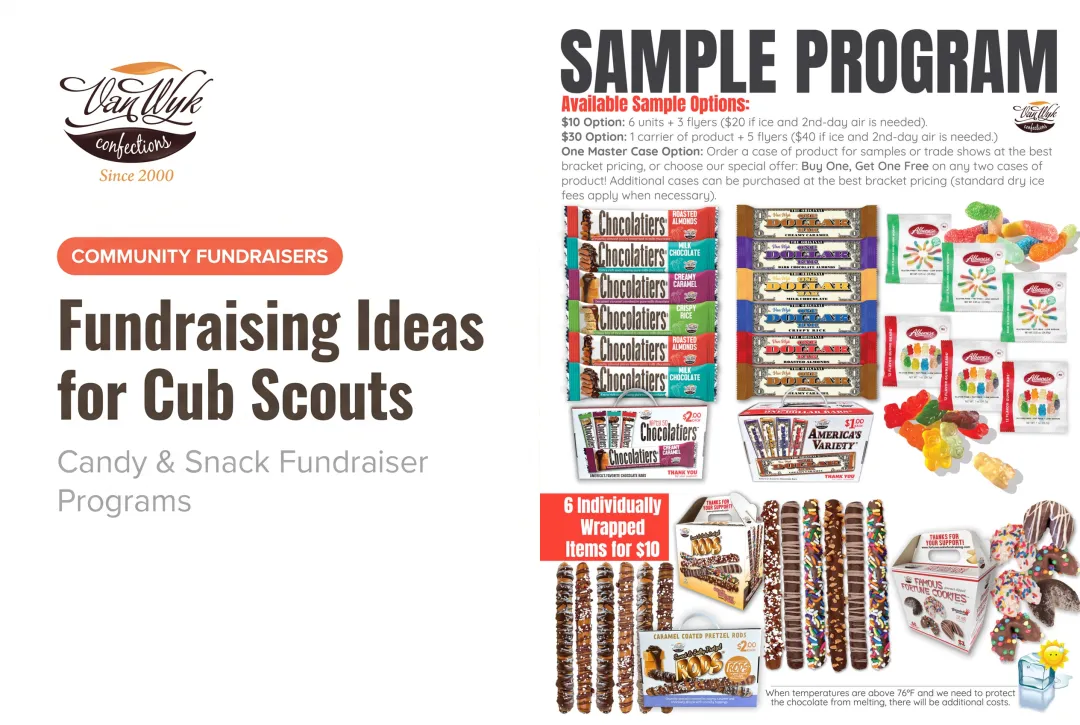
Van Wyk Confections' Original ONE DOLLAR BAR is built for exactly this model. Their America's Variety Pack includes five flavors of factory-sealed 1.2 oz chocolate bars, certified peanut-free and gluten-free. It's been America's best-selling $1 chocolate bar fundraiser for over 26 years.
Groups can earn up to 50% profit — and the $1 price point dramatically reduces sales resistance for even the shyest sellers.
Why this format works for youth:
- The low price point means even shy sellers succeed
- Factory-sealed, individually wrapped bars handle easily without spoilage concerns
- Peanut-free certification satisfies strict school district allergen policies
- No upfront event planning required
To get started or learn about current program terms, visit vanwykconfections.com/start-fundraising.
Gourmet Popcorn & Snack Sales
Specialty snack fundraisers perform well across multiple selling formats — church events, school pickup lines, sports games, or pre-orders. Unique flavors and attractive packaging help items sell themselves, especially when teens describe what they're raising money for.
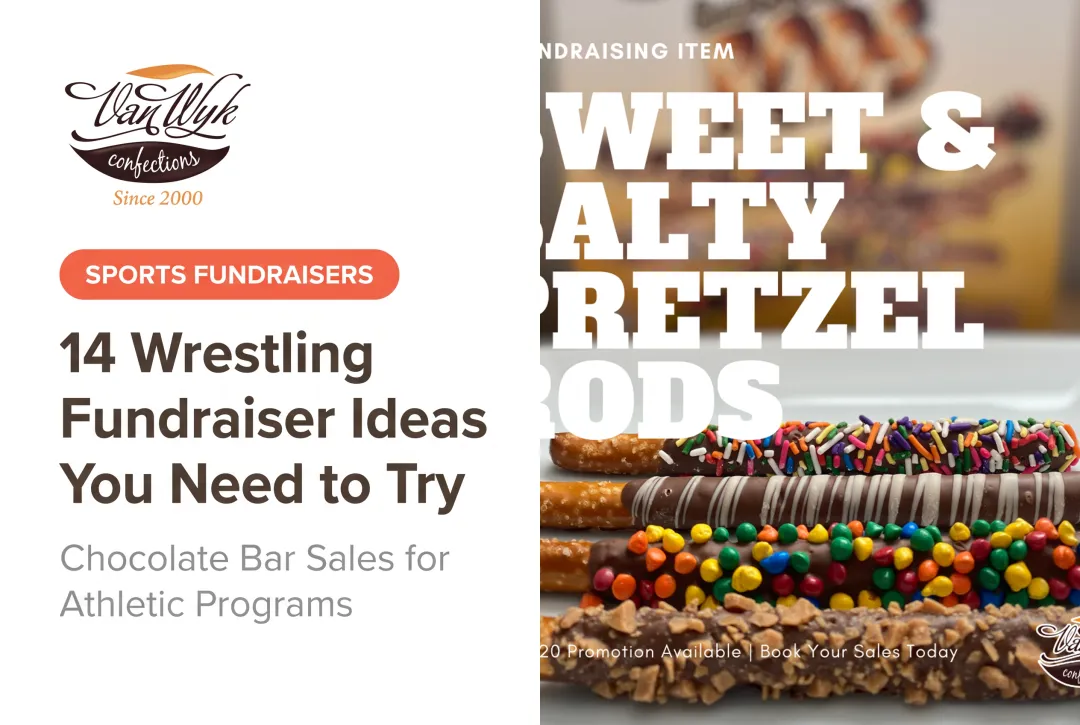
Van Wyk Confections also offers Sweet & Salty Pretzel RODS — their most popular item — which come in four flavors (S'mores Bits, Crunchy Toffee, Rainbow Sprinkles, Salted Caramel) at $1 per rod. The sweet-and-salty combination appeals to groups where not everyone gravitates toward chocolate.
Time this type of fundraiser for fall or the holiday season, when community appetite for shareable snacks is highest.
Baked Goods Sale
A baked goods sale performs best when it's a recurring, predictable touchpoint — muffins and cookies every Sunday morning after service — rather than a single event. High-margin items sold in high-traffic moments (right as church lets out) can generate consistent funds over four to six weeks with minimal additional planning.
The key is reliability. Announce it in advance, keep the menu simple, and assign specific teens to bake specific items each week so no single family carries the full burden.
Spirit Night with a Local Restaurant or Business
Partner with a local restaurant that agrees to donate a percentage of sales on a specific night when your group drives traffic. Current verified program terms:
- Chipotle: 25% of pre-tax event sales (minimum $150 in sales)
- Panera: 20–25% of net sales
- Panda Express: 20% back for local events
This fundraiser costs nothing upfront and brings your group's story in front of new audiences with minimal volunteer time. One practical tip: let the teens choose the restaurant. Students genuinely promote places they already love, which drives higher turnout.
Event & Activity-Based Fundraisers
These fundraisers create community energy and are ideal for raising a significant sum in a single push — though they require more planning and coordination than other types.
Trivia or Game Night
Charge a team entry fee, run several rounds of themed questions (Bible trivia works well for church groups), and supplement income with snack sales, a raffle, or a donation bucket. This is one of the best fundraisers to hand off almost entirely to the youth themselves — let them write questions, MC the event, and manage scoring.
Practical setup tips:
- Keep the event to two hours maximum
- Offer mobile payment options (Venmo, Cash App) at the door — guests who don't carry cash shouldn't leave without contributing
- Cap team sizes at 4–6 to maximize the number of entry fees collected
Talent Show
Youth performers take the stage — singing, comedy, spoken word, any skill — admission tickets are sold, and the audience votes for their favorite act with a small additional donation.
Involve youth as performers, stage managers, and ticket sellers simultaneously. The more invested they are in the event, the more aggressively they promote it.
A few additions that lift per-attendee revenue with minimal extra effort:
- Set up a concession stand with snacks and drinks
- Add a photo booth with a small donation jar
- Sell a "vote for your favorite act" donation ticket at the door
5K Race or Walkathon
The pledge-based model extends the fundraiser's reach far beyond race day. Each teen collects pledges per lap or per mile — from parents, grandparents, neighbors, and family friends, pulling in donations across the full fundraising window.
This format works in church parking lots, local parks, or school tracks. Combine it with a bake sale or plant table to generate additional income from spectators. According to Blackbaud's peer-to-peer fundraising research, events without a registration fee average higher per-participant fundraising than those with one — worth considering when designing your entry structure.
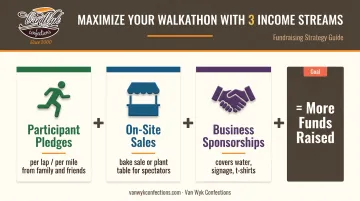
Look for local businesses willing to sponsor basic costs (water cups, signage, t-shirts) so participant donations go directly to the cause.
Silent Auction or Ticketed Dinner
Solicit donated items from local businesses and congregation members, host a ticketed catered dinner or potluck-style meal, and let guests bid on items throughout the evening. According to OneCause's 2025 State of Nonprofit Auctions Report, the average nonprofit auction attracts 5.36 bids per item and realizes 134.5% of stated item value — meaning well-sourced items regularly exceed their estimated worth.
Youth can decorate the venue, serve food, manage bid sheets, and greet guests. Aim for a mix of high-value and approachable items so bidding stays competitive at multiple price points. Consider recruiting a local auctioneer — many are willing to volunteer — for any live auction segments.
Digital & Low-Lift Fundraisers
When volunteers are stretched thin, digital tools can automate tracking, communication, and reporting that would otherwise fall entirely on the leader.
Peer-to-Peer Fundraising
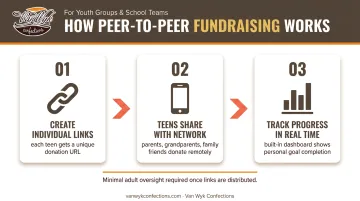
Each youth participant gets their own unique donation link. Parents, grandparents, and family friends give directly and securely from anywhere — no cash envelopes or tally sheets required.
Peer-to-peer also happens to be one of the lowest-lift formats for adult organizers. Once the links are created, teens take over. Built-in dashboards make the rest straightforward:
- Tracks individual progress toward personal goals in real time
- Gives teens a clear, visible target (earning their spot on a retreat, for example)
- Reduces adult follow-up since participants can monitor their own totals
Social Media Challenge Campaign
A themed challenge — each teen posts a short video or photo with a donation link and tags friends to repeat it — expands the fundraiser's reach organically. This format suits mission trips and emotionally compelling causes especially well, because personal storytelling drives generosity in ways that generic posts don't.
Two common pitfalls to avoid:
- Send a thank-you update after the campaign ends — one paragraph and a photo is enough. This single step dramatically improves donor retention for future fundraisers.
- Avoid running multiple small campaigns back-to-back. Frequent solicitations exhaust volunteers and train donors to ignore asks. Combine complementary ideas — a walkathon, bake sale, and raffle — into one high-impact community day instead.
Frequently Asked Questions
What is the most profitable fundraiser for youth groups?
Product-based fundraisers — particularly candy bars and snack items priced at $1–$2 per unit — consistently generate the highest profit margins, often 40–50%, because overhead is low and items are easy to sell. Supporters get something tangible in return, which reduces hesitation and increases the average transaction size.
How much money can a youth group realistically raise?
It varies widely by method and group size. A car wash might bring in a few hundred dollars in a single afternoon, while a well-organized silent auction dinner can net several thousand. Setting a specific dollar goal upfront — and sharing it publicly — consistently improves results.
What are the easiest youth group fundraisers to run with few volunteers?
Product sales (chocolate bars, pretzel rods, popcorn) and digital peer-to-peer campaigns are the lowest-lift options. Both require minimal day-of coordination, no event setup, and tracking that one or two adult organizers can handle from start to finish.
How do you motivate youth to actually participate in fundraising?
Tie each teen's goal to something personally meaningful — their own camp spot, trip registration, or new equipment. A personal stake beats a group-wide target every time, especially when teens have real roles in planning and running the effort.
When is the best time of year to run a youth group fundraiser?
Fall and the holiday season see the highest community giving impulse — Blackbaud data shows Q4 accounts for roughly 36% of annual charitable giving. Summer suits service-based and event fundraisers, while spring is strong for product sales tied to end-of-year trip goals.
How do product fundraisers work for youth groups?
Groups partner with a supplier who provides products at wholesale cost. Youth sell them at the retail price and keep the difference as profit — typically 40–50%. Van Wyk Confections' programs, for example, ship products factory-sealed in cases of 60–240 units, ready to distribute directly to sellers with no additional prep.