Many schools default to copying last year's fundraiser. That's a mistake if your volunteer roster looks different than it did in 2025.
This guide covers how to pick the right fundraiser for your actual capacity, product-based ideas with real margins, effort-tiered events from quick wins to full galas, digital trends worth watching, and tips that boost participation without burning out your committee.
Key Takeaways
- Match capacity to volunteers, not popularity — smaller, well-staffed fundraisers consistently outperform ambitious ones
- Chocolate bar and pretzel rod fundraisers deliver 40-50% profit margins with minimal upfront risk
- Running 2-3 smaller fundraisers typically outperforms betting everything on one big event
- Online giving tools and progress trackers are standard, not optional, for 2026 campaigns
How to Choose the Right School Fundraiser for 2026
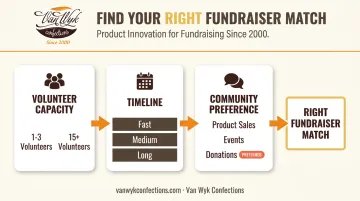
Before picking a fundraiser, answer three questions honestly. Skip this step and you'll end up with a burned-out committee or a disappointing total.
Count Your Real Volunteer Capacity
Think in terms of your realistic volunteer capacity, not the number you wish you had. A dress-down day or product sale can run with 1-3 reliable volunteers. A carnival or auction needs a much bigger bench.
This isn't a small distinction. A survey of 896 schools found that groups with more than 30 volunteers dropped from 21% in 2013 to just 8% in 2019, according to PTO Today's spending survey. If your parent group has shrunk since then, plan for it now instead of discovering it two weeks before your gala.
Match Your Timeline to the Format
Some fundraisers can launch in two to three weeks. Others need three to four months of lead time to hit their revenue potential.
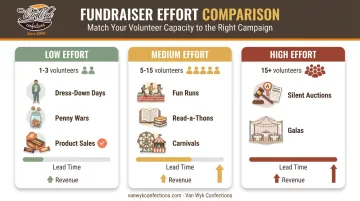
- Fast turnaround: dress-down days, penny wars, product sales
- Medium runway: fun runs, read-a-thons, restaurant nights
- Long lead time: carnivals, silent auctions, galas
Trying to compress a silent auction into three weeks almost always means fewer donated items and lower bids.
Know What Your Community Actually Wants
Some school communities love buying products from their kids, while others prefer writing a check or attending an event. Guess wrong and you'll get low participation no matter how well you execute.
Quick gut check: did last year's product sale sell out, or did boxes sit half-full in the gym? That answer tells you more than any national trend.
Product-Based Fundraising Ideas for 2026
Product fundraisers remain one of the most dependable options for schools. There's no event day to staff, students sell within their existing network of family and neighbors, and margins can reach the 40-50% range with virtually no upfront cost to the school.
Chocolate Bar Fundraisers
A simple, affordably priced item removes friction for buyers. When something costs a dollar, nobody has to think twice before saying yes. That instant "yes" is why chocolate bar fundraisers have stayed popular for decades.
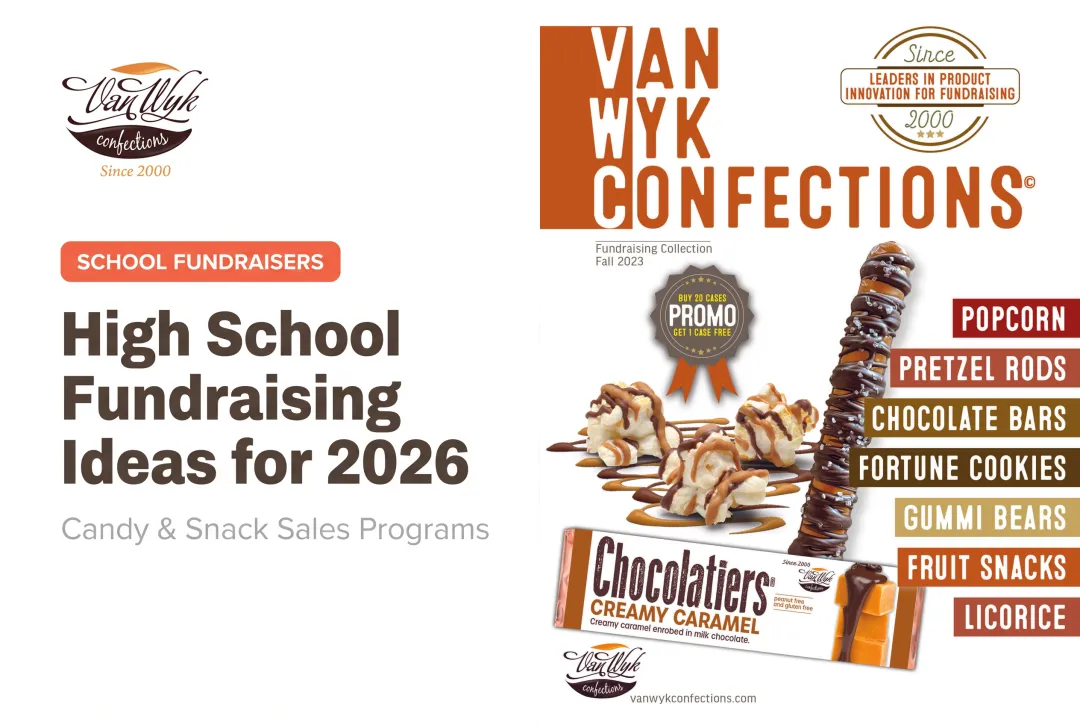
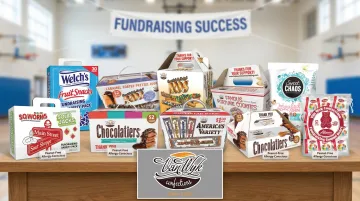
Van Wyk Confections built its business around this idea back in 2000 with the Original ONE DOLLAR BAR, and the company still sells the Chocolatiers Premium Bars ($2 Nifty 50 line) for groups wanting a slightly higher price point with the same easy-sell format. Over 26 years in the confectionery and fundraising industry, the company has helped nonprofit groups raise more than $50 million through products like these.
For a young seller, a $1 or $2 price point removes the need for explanation or negotiation. Kids can carry the product door-to-door and hand over exact change without missing a beat.
Gourmet Popcorn, Pretzels & Fortune Cookies
Variety keeps a fundraiser fresh. If your school runs a product sale every year, repeat supporters want something new, not the same catalog page they saw last spring.
Popular options include:
- Gourmet popcorn in sweet and savory flavors
- Sweet & Salty Pretzel Rods and Twists, which work as a $1 item alongside chocolate bars
- Famous Fortune Cookies, a novelty item that generates word-of-mouth simply because most buyers haven't seen it at a school fundraiser before
Allergies matter here too. Look for suppliers offering peanut-free options. Van Wyk's One Dollar Bars and Pretzel Rods, for example, are made in a peanut-free facility with gluten-free labeling, which matters for schools managing allergy-conscious families.
What smaller schools and clubs should look for in a supplier:
- A 1-case minimum, so you're not stuck with excess inventory
- Fast nationwide delivery so you're not waiting weeks to start selling
- Factory-sealed freshness so product arrives ready to sell, not stale
Van Wyk ships from a network of warehouses across the country specifically to keep turnaround short for groups on a tight timeline.
Fundraising Ideas by Effort Level: Quick Wins to Big Events
Comparing fundraisers by effort and revenue potential helps a committee choose realistically, rather than overcommitting to something bigger than the group can staff.
Low-Effort Fundraisers (1-3 Volunteers)
These work best as repeatable events, not one-off attempts:
- Dress-down or spirit days — simple to run, minimal planning
- Restaurant partnership nights — typically returns 10-20% of event sales
- Penny wars — a classroom competition that can launch in about a week
- Candy and snack fundraisers — need just 1-3 volunteers and typically return 40-50% profit with just a one-case minimum order
None of these generate huge totals on their own. The value comes from running them several times across the year instead of once.
Medium-Effort Fundraisers (5-15 Volunteers)
Fun runs and walk-a-thons combine peer-to-peer pledging with school spirit. One PTO Today example cites a $39,000 total at a 500-student school. Plan for roughly 3 months of lead time and up to 30 event-day volunteers, per PTO Today's fun run guide.
Read-a-thons work similarly, tying reading minutes to pledges.
Carnivals and Parents Night Out events build community connection but need more lead time and a larger coordination team to pull off smoothly.
High-Return Fundraisers (15+ Volunteers)
Silent auctions and galas carry the highest revenue ceiling — but also the highest risk. Plan for 3-4 months minimum of lead time, plus a dedicated committee to solicit donated items and sell tickets in advance.
Two warnings worth repeating:
- Outdated catalog product sales often underperform now due to shrinking margins and family fatigue with big glossy books
- Any high-upfront-cost event without a solid advance ticket strategy risks losing money, not just underperforming
Digital & Online Fundraising Trends for 2026
Online giving is now a core expectation for school fundraising campaigns.
Crowdfunding and direct donation pages with real-time progress trackers continue to grow. Naming a specific, visible goal tends to outperform a vague appeal, giving supporters a concrete reason to give now rather than later.
Social-driven challenges extend reach well past the school gates:
- Step challenges tracked online
- Read-a-thons with shareable progress pages
- Alumni outreach that reaches extended family beyond the school community
Digital raffles and virtual auctions let out-of-town grandparents and supporters participate without attending in person. One caveat: raffle rules vary significantly by state, so check local regulations before launching one.
Tips for a Successful School Fundraiser
A few habits separate fundraisers that hit their target from ones that quietly underperform.
- Name a specific goal. "$15,000 for new playground equipment" beats a vague "help our school" appeal every time. Specificity gives supporters a reason to act.
- Promote more than you think you need to. Most fundraisers are under-promoted. Families need to hear about an event across multiple channels (flyers, email, social media, verbal reminders) before they act.
- Close the loop fast. Send a thank-you and final results update within a week of the event's end. This keeps momentum for next year and shows supporters where their money went.
Frequently Asked Questions
How to raise money for students?
Schools typically combine product-based sales (like candy or snack fundraisers), community events, and direct online donation campaigns. The right mix depends on your volunteer capacity and available timeline.
What is the most profitable school fundraiser?
Fun runs, silent auctions, and product fundraisers with strong margins typically generate the highest returns. Results vary widely by school size and community connections, so treat any published figure as an example, not a guarantee.
What are the easiest school fundraising ideas?
Dress-down days, restaurant nights, and low-minimum-order product fundraisers require minimal planning or volunteers. These work well as repeatable, low-stress options throughout the year.
What are the best fundraising ideas for elementary schools?
Fun runs, read-a-thons, carnivals, and product fundraisers tend to fit elementary-age engagement well. Parents are often highly involved at this age, which boosts participation across all four formats.
How can a school raise money quickly?
Direct donation campaigns and product fundraisers with fast nationwide delivery can launch within a couple of weeks. Van Wyk Confections, for example, ships from multiple warehouses nationwide to keep turnaround short for groups on tight timelines.
How much profit can a school expect from a product fundraiser?
Well-run product fundraisers can earn in the 40-50% profit range, especially with suppliers offering low case minimums and no long lead times. Actual results depend on seller count, product choice, and shipping method.