Volunteer burnout is real. So is the frustration of picking an idea that seemed exciting in September and feels stale by November. Add spoilage risk and confusing supplier contracts, and it's no wonder committees dread the planning meeting.
This guide breaks down the best food fundraising ideas for 2026, how to match one to your school's size and volunteer bandwidth, and how to squeeze more profit out of whichever option you choose.
Key Takeaways
- Pre-packaged candy earns 40-50% profit margins with zero spoilage risk
- Shelf-stable snacks like chocolate and popcorn cut volunteer workload versus baked goods
- The right fundraiser fits your school's size, timeline, and volunteer hours, not trends
- Nationwide suppliers with low order minimums help smaller schools start easily
Why Food Fundraisers Still Work for Schools in 2026
A school food fundraiser is any campaign where a PTO, PTA, or booster club sells food items, from candy bars to pizza kits, to raise money for supplies, field trips, or extracurricular programs. Families already buy groceries and snacks; food fundraisers just redirect a portion of that spending toward the school.
They persist because the mechanics are simple:
- Order forms go home with students
- Students collect payments directly from buyers
- Product arrives ready for distribution
- Buyers get something they'd purchase anyway
No raffle tickets to explain, no auction items to source.
Still, one regulatory detail matters more than most committees realize. The USDA's Smart Snacks standards apply to food sold to students during the school day on school grounds. Items clearly intended for home consumption, such as bulk cookie dough or frozen pizza kits, generally fall outside those rules. That distinction is why take-home fundraisers remain so popular.
The following section ranks the top food fundraising ideas schools are actually using this year, based on profitability, ease of execution, and shelf-life logistics.
Top Food Fundraising Ideas for Schools in 2026
These seven ideas were selected using four criteria: profit potential, how much volunteer effort each requires, whether the product spoils or melts, and how broadly it appeals across grade levels.
Premium Chocolate Bar & Confectionery Fundraisers
Chocolate and candy bar fundraisers remain a school staple because nearly everyone eats chocolate, and margins tend to run high. Specialized confectionery suppliers have refined the model for over two decades. Van Wyk Confections, for instance, has offered its Original ONE DOLLAR BAR since 2000, alongside a $2 Chocolatiers line built for higher per-unit profit.
What makes this category stand out for volunteers:
- Individually wrapped, factory-sealed packaging reduces the melting and spoilage headaches that plague loose or homemade candy
- Peanut-free and gluten-free options exist within some product lines, widening participation
- Profit margins commonly land in the 40-50% range on standard $1 items
Gourmet Popcorn Sales
Gourmet popcorn has become a modern favorite because it sidesteps chocolate's biggest weakness: melting. Flavors range from sweet (cake batter drizzle, kettle corn) to savory (jalapeño blue cheese, white cheddar), giving families variety without temperature concerns.
Popcorn also travels well and stores easily, making it a low-hassle option for volunteers juggling pickup logistics. Parents tend to view it as a reasonable take-home treat rather than "just more candy," which can help with repeat participation.
Sweet & Salty Pretzel Rods and Twists
Pretzel rod and twist fundraisers have grown as a savory alternative that still satisfies a sweet tooth when dipped in chocolate or caramel. They're durable for shipping, don't require refrigeration, and hold up in backpacks far better than anything chocolate-dipped and loose.
Repeat-purchase appeal is strong here. Families who buy pretzel rods once tend to reorder in future campaigns, partly because the format feels distinct from typical candy bar catalogs.
Novelty Fortune Cookie Fundraisers
Fortune cookies bring a conversation-starting twist to a category otherwise dominated by candy and cookie dough. Instead of predictions, some suppliers fill them with encouraging or funny messages, which makes them a hit for classroom parties and teacher gifts, not just fundraising sales.
Customizable flavors and messages increase perceived value. A $1 item that also makes someone smile tends to outsell a plain candy bar at the same price point.
Classic Bake Sale & Cookie Dough Sales
Bake sales remain popular because they require little upfront cash. Families contribute items, and volunteers sell them at a table. However, allergen labeling matters more than ever.
Public health guidance commonly recommends individually wrapping bake-sale items and labeling each with its name, ingredients, and major allergens. Raw cookie dough carries its own risk: the CDC warns that raw flour and eggs can carry E. coli or Salmonella, so dough should stay refrigerated per label instructions and never be eaten unbaked.
DIY Pizza or Taco Night Kits
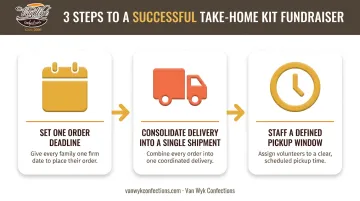
Take-home meal kits turn fundraising into a family dinner rather than a transaction. A documented 2023 elementary school taco-kit campaign followed a simple structure: orders opened, a firm cutoff date arrived, and families picked up their kits at a scheduled time.
That model scales well for pre-order logistics:
- Set one order deadline, not a rolling window
- Consolidate delivery into a single shipment
- Staff a defined pickup window to avoid day-of chaos
Food Truck Festival or Restaurant Partner Night
Partnering with local food trucks or restaurants shifts food prep entirely off your volunteer team. Restaurant nights typically return 10% to 20% of attributed sales to the school, according to PTO Today's guide to restaurant fundraisers, though the exact share varies by location.
Food truck events add a community feel, especially when paired with live music or a game night. Just budget time for contracts, insurance checks, and parking logistics, since the organizer still manages site access even when a vendor handles the food.
Comparing All Seven Options
| Fundraiser | Profit Potential | Effort Level | Shelf-Life & Logistics |
|---|---|---|---|
| Chocolate/Confectionery | 40-50%+ | Low | No-melt packaging, factory-sealed |
| Gourmet Popcorn | Moderate-high | Low | Shelf-stable, bagged |
| Pretzel Rods/Twists | 40-50% | Low | No refrigeration, individually wrapped |
| Fortune Cookies | Moderate | Low | Individually wrapped, long shelf life |
| Bake Sale/Cookie Dough | Variable | High | Perishable, refrigeration/labeling required |
| Pizza/Taco Kits | Moderate | Medium | Cold storage, tight pickup window |
| Food Truck/Restaurant Night | 10-20% of sales | Medium-high | Vendor-prepared, no storage needed |
How to Choose the Right Food Fundraiser for Your School
The most common mistake schools make? Picking an idea because it's trending, not because it fits volunteer capacity or timeline. A viral pizza kit campaign means nothing if your PTO has three active volunteers and two weeks to plan.
Start with the numbers. Ask suppliers directly what portion of each sale actually returns to the school, and get it in writing, not just a headline percentage.
Logistics That Actually Matter
- Shelf life and refrigeration needs determine how much spoilage risk your volunteers absorb
- Shipping speed matters more than people expect; suppliers with multiple nationwide warehouses reduce delivery delays. Van Wyk Confections, for example, ships from 10+ distribution centers across the country
- Minimum order requirements can trap smaller schools into buying more than they can sell. A straightforward 1-case minimum, without complicated tiers, keeps the barrier to entry low
Inclusivity isn't optional. Peanut-free and gluten-free options widen your buyer pool immediately. Families skip fundraisers that don't accommodate their kids' allergies, full stop. Products that disclose ingredients clearly, and ideally carry a peanut-free facility designation, tend to see broader participation across the school community.
Vet the supplier before you commit. Check for industry membership, such as AFRDS (Association for Fundraising Distributors and Suppliers), and ask how long the company has operated. A supplier with decades of experience and established distribution infrastructure is less likely to leave your school scrambling over a missed delivery window.
Tips to Maximize Fundraiser Profits in 2026
A few practical adjustments can lift your final total, regardless of which food fundraiser you pick.
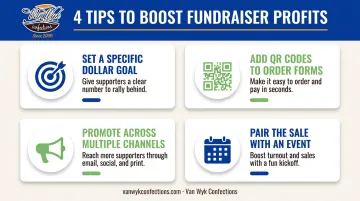
- Set a specific dollar goal. "Help us raise $5,000 for new playground equipment" motivates families far more than a vague appeal
- Add QR codes to order forms. They cut friction between "I want to help" and an actual completed order
- Promote across multiple channels. Newsletters, school Facebook groups, and morning announcements all reach different segments of your parent community
- Pair the sale with an event. A pretzel and popcorn sale tied to a fall festival or game night boosts average spend per family compared to a standalone order form
Conclusion
The best food fundraiser for your school in 2026 fits three things: your fundraising goal, your volunteers' available hours, and your community's dietary needs, not whatever's trending on social media.
Before you commit, run through this checklist:
- Weigh profit margin against real logistics, not just headline percentages
- Ask about allergy accommodations before families ask you
- Confirm delivery timelines before you set a pickup date
If you're ready to run a program that's easy on volunteers and strong on margin, Van Wyk Confections can help. The company has spent over 26 years helping schools, sports teams, and community groups raise more than $50 million, shipping shelf-stable, allergy-conscious fundraising products from warehouses nationwide.
Frequently Asked Questions
What are the best food ideas to sell at a fundraiser?
Top performers include chocolate and candy bars, gourmet popcorn, pretzel rods, bake sale goods, and pizza or taco kits. The best choice depends on your volunteer capacity and how much spoilage risk you're willing to manage.
What is the most profitable food fundraiser for schools?
Pre-packaged confectionery items like chocolate bars, popcorn, and pretzels often deliver 40-50% profit margins and outperform lower-margin options because they require minimal handling and carry no spoilage risk.
What food fundraising ideas require little to no upfront cost?
Bake sales, potlucks, and lemonade stands are classic low-cost starting points since families typically contribute the food itself. Keep in mind that "low-cost" doesn't mean permit-free or labor-free.
How can schools accommodate food allergies during a fundraiser?
Choose suppliers who disclose ingredients clearly and offer peanut-free or gluten-free product lines. For homemade items, label each product with its name, ingredients, and major allergens before selling.
What food fundraisers work best for elementary vs. high school students?
Younger students do well with simple, hands-on options like lemonade stands or bake sales. Older students can handle higher-ticket events such as restaurant nights or food truck festivals tied to a game or school event.
Do schools need permits to sell food for a fundraiser?
Permit requirements vary widely by state, district, and food type. Always check with your local health department and district policy before advertising homemade or perishable food sales.