Introduction
School budgets rarely stretch far enough to cover the real cost of sports, band, and clubs. A recent EdWeek Research Center survey found that about 70% of district and school leaders said their systems were cutting at least one spending category, with 32% specifically reducing summer or after-school programming.
Booster clubs exist to close that gap. But here's the problem: many booster clubs get stuck running the same car wash and candy bar routine year after year. Volunteers get tired. Donors stop responding. Revenue plateaus.
This guide breaks down product-based, event-based, digital, and creative fundraiser ideas, then shows you how to build a mix that actually keeps your community engaged instead of exhausted.
Key Takeaways
- Diversify across product sales, events, and digital campaigns to avoid donor and volunteer fatigue
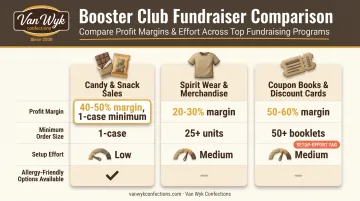
- Candy and snack sales often deliver 40-50% profit margins with almost no upfront cost
- Follow a "3-2-1" pacing approach: limit major campaigns, space out asks, keep each message focused
- The most profitable fundraisers pair low overhead with high perceived value, such as memberships and sponsorships
Product-Based Fundraisers: Selling Treats & Merchandise for Steady Profit
Product sales remain the backbone of most booster club budgets. They require no cooking, no special permits, and almost no setup time.
Candy & Snack Bar Fundraisers
Candy and snack fundraisers stay popular for a simple reason: demand never disappears. Games, practices, and school events create built-in customers, and there's nothing to bake or prepare.
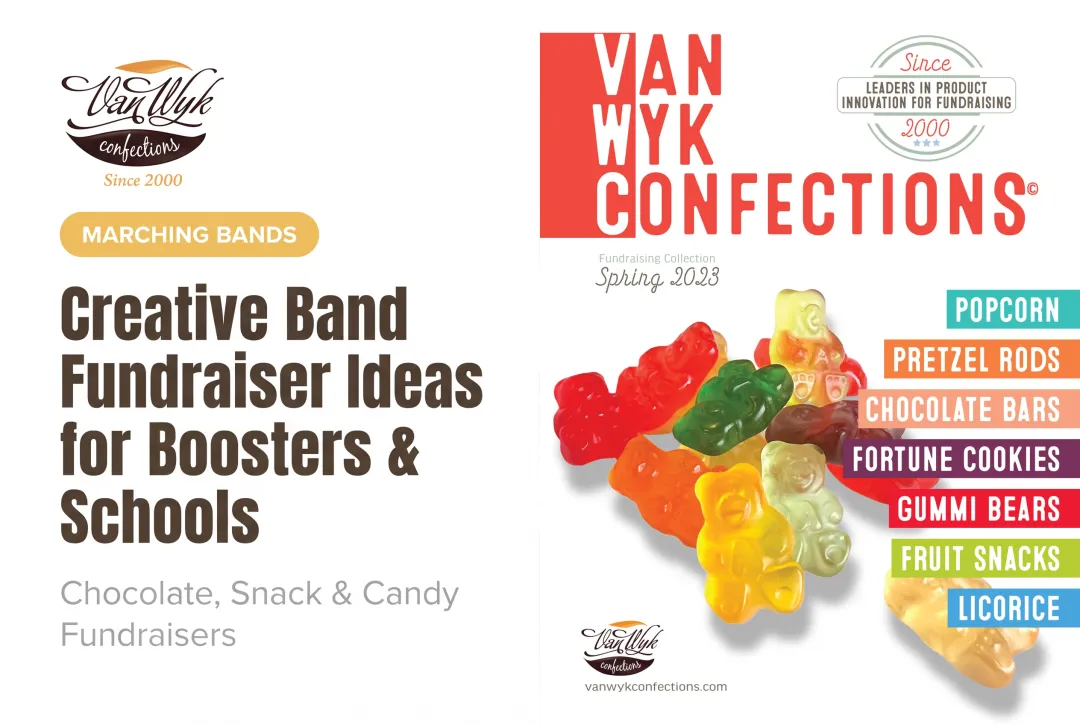
Suppliers like Van Wyk Confections structure their programs around a 1-case minimum order, so a small booster club doesn't need to gamble on hundreds of unsold units just to get started. Their lineup includes:
- The Original ONE DOLLAR BAR, sold since 2000
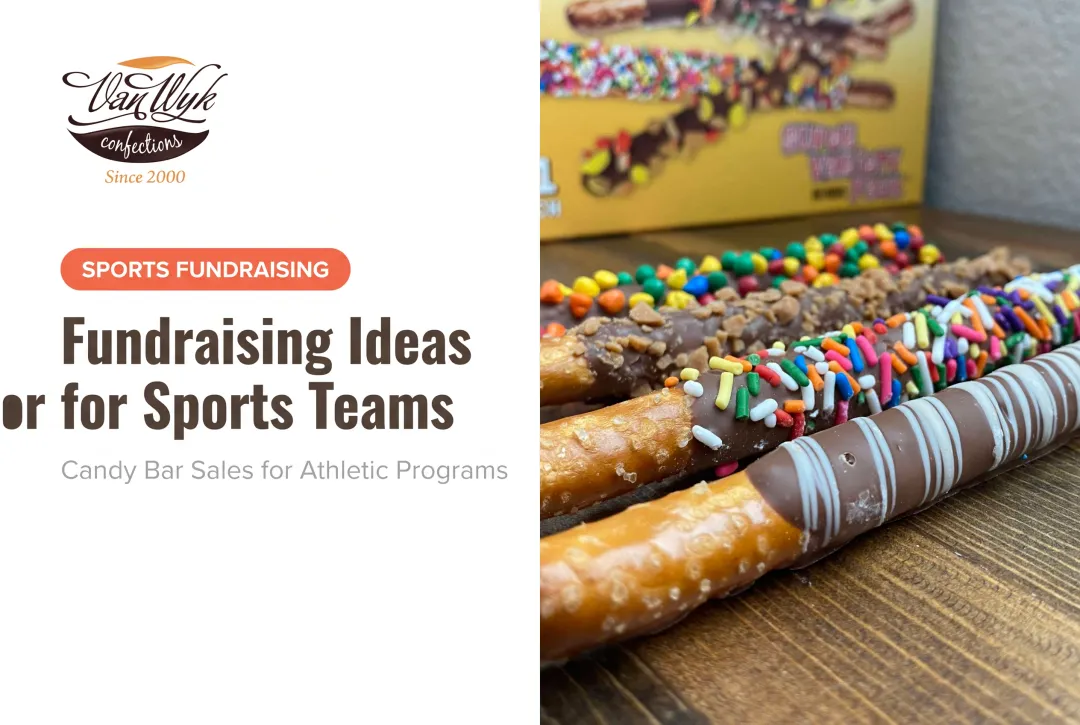
- Sweet & Salty Pretzel Rods, individually wrapped
- Gourmet popcorn in multiple flavors
- Famous Fortune Cookies, priced at $2 each
Most of these products run 40-50% profit margins, with peanut-free and gluten-free options available for allergy-conscious groups. Products ship factory-sealed nationwide, so freshness is guaranteed by the time they reach your team.
Spirit Wear & Custom Merchandise
Beyond consumables, spirit wear adds a second revenue stream: custom t-shirts, hoodies, and branded gear do double duty, raising money while building school pride. An online store extends your reach to grandparents and relatives who can't make it to games in person.
Seasonal or limited-edition designs create urgency. A "senior night" hoodie or playoff-run t-shirt sells faster than a generic year-round design because families know it won't be available later.
Discount Cards, Coupon Books & Other Product Sales
Rounding out the product mix, coupon book fundraisers create a genuine win for everyone: your club raises money, local businesses gain foot traffic, and families save on things they'd buy anyway.
Other rotating product options worth adding to your calendar:
- Cookie dough tubs (seasonal, high repeat-purchase rate)
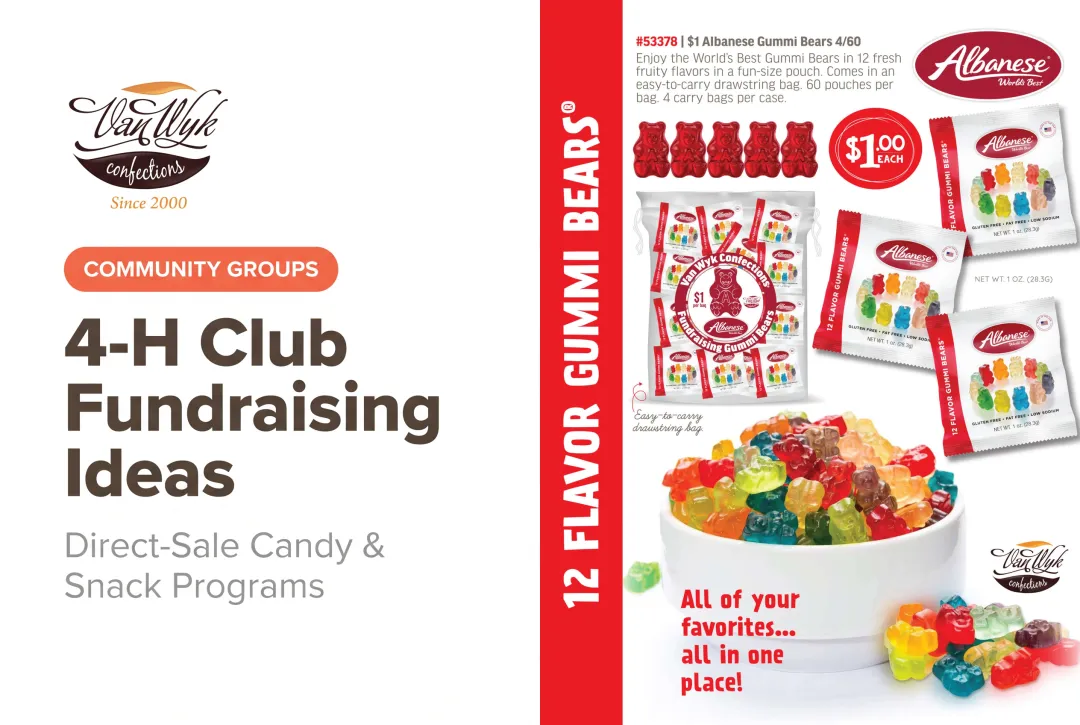
- Lollipops or gummy variety packs for younger grades
- Gift wrap and holiday-themed items in Q4
Community & Event-Based Fundraisers That Bring People Together
Events build relationships that product sales can't. They're also where most volunteer burnout starts if you don't plan carefully. The formats below balance impact with effort, starting with the proven crowd-pleasers.
Classic Crowd-Pleasers
Car washes and concession stands remain reliable because they pair naturally with something people already attend. Concessions especially work as near-zero-cost profit centers — you're selling to a captive audience at every home game.
Bake sales still work too, but only with structure. Use a sign-up sheet to guarantee variety (nobody wants a table with twelve trays of brownies and nothing else), and pair the sale with another event to capture foot traffic you'd otherwise miss.
Dinners, Auctions & Galas
Spaghetti dinners and chili cook-offs scale well for mid-size booster clubs. The math is straightforward: a dinner charging $10-$12 per plate with 150 attendees can gross $1,500-$1,800 in ticket sales before food and venue costs. Donated ingredients and a borrowed cafeteria or gym push net profit higher.
Themed silent and live auctions add another revenue layer. Popular categories include:
- Sports memorabilia (signed jerseys, tickets to pro games)
- Experiences (dinner with the coach, parking spot for the season)
- Local business donations (gift cards, services)
- Themed gift baskets assembled from parent and vendor contributions
Mobile bidding platforms simplify hosting by letting guests bid from their phones instead of crowding around a table.
Carnivals, Tournaments & Big Community Events
School carnivals and spring festivals generate high engagement and build loyalty that lasts well beyond a single event. Game booths, food trucks, and raffle tickets all add up.
For athletic booster clubs, golf tournaments and sports tournaments offer premium revenue through:
- Entry fees per player or team
- Hole sponsorships from local businesses
- Concessions sold throughout the day
Digital, Sports & Creative Fundraising Ideas to Diversify Your Portfolio
Digital & Online Fundraising
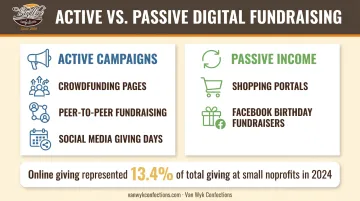
Online giving isn't the majority of nonprofit revenue yet, but it's growing fast. It represented 13.4% of total giving at small nonprofits in 2024, according to the Blackbaud Institute's 2024 giving report.
That's enough to justify a real digital strategy, including:
- Crowdfunding pages for specific needs (new uniforms, travel costs)
- Peer-to-peer campaigns where players fundraise individually
- Social media giving days tied to a specific deadline
Beyond active campaigns, passive-income options require less ongoing effort. Shopping portals that donate a percentage of purchases and Facebook birthday fundraisers both generate small, steady contributions without anyone running a campaign.
Sports-Themed & Creative Fundraisers
Fun runs, 5Ks, and step challenges engage athletes directly, while battle-of-the-bands events do the same for music programs.
Lower-cost creative add-ons work well alongside bigger events:
- Scavenger hunts that turn fundraising into a team game
- Dunk tanks featuring coaches, teachers, or team captains as targets
- Trivia nights with prizes for top-scoring teams
These rarely stand alone as major revenue sources, but they boost attendance and energy at whatever bigger event they're attached to.
Which Booster Club Fundraiser Is Most Profitable?
True profitability isn't just the number printed on a flyer; it's what's left after you account for:
- Cost of goods: what you pay per unit or per event expense
- Volunteer labor hours: time is a real cost, even unpaid
- Overhead: venue rental, payment processing, permits
- Dollars raised per participant: a $500 event with 200 volunteer hours isn't as efficient as it looks
By this measure, product-based fundraisers through suppliers like Van Wyk Confections sit alongside memberships and sponsorships as consistently strong performers. A 1-case minimum order and 40-50% margins mean a club can test a candy sale with minimal risk and scale it up once it proves out.
A simple way to sort your options:
| Effort Level | Examples | Typical Return |
|---|---|---|
| High-effort / high-reward | Galas, carnivals, golf tournaments | Large but unpredictable; heavy volunteer hours |
| Medium-effort / steady-return | Spirit wear, coupon books, spaghetti dinners | Reliable, moderate planning required |
| Low-effort / passive-income | Candy/snack sales, shopping portals, memberships | Consistent margin, minimal ongoing work |
A balanced calendar pulls from all three buckets instead of leaning entirely on one.
Tips for Choosing the Right Mix & Avoiding Fundraising Fatigue
Nonprofit research backs up the diversification approach. A Nonprofit Research Collaborative study of over 1,600 organizations found that smaller nonprofits using seven or more fundraising methods were more likely to hit their annual goals.
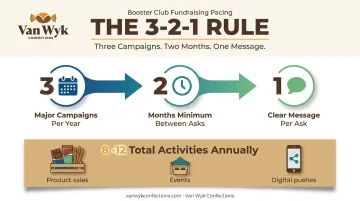
That doesn't mean running seven separate campaigns and exhausting everyone. Use the 3-2-1 rule instead:
- Limit major campaigns to about three per year: one product sale, one event, one digital push
- Space asks at least two months apart so the same families aren't hit repeatedly
- Keep one clear message per ask — don't mix a candy sale pitch with a raffle pitch in the same email
Aim for 8-12 total activities annually across effort levels and seasons. That gives you steady revenue without asking the same 50 families to buy something new every three weeks.
Finally, close the loop by sharing where the money went (new uniforms, a bus for an away tournament, instrument repairs) before you launch the next ask. Donors who see impact give again.
Frequently Asked Questions
What are common booster club fundraisers?
Most booster clubs rely on product sales (candy, snacks, spirit wear), community events (car washes, bake sales, dinners), and digital campaigns like crowdfunding pages or giving days. A mix of all three works best.
What are the most profitable fundraisers?
Memberships, sponsorships, and high-margin product sales like candy or snack fundraisers typically deliver the best return relative to effort. They require less volunteer labor per dollar raised than large events.
How do booster clubs raise money?
Booster clubs often combine membership dues, business sponsorships, product sales, and community events throughout the school year. Layering these sources keeps revenue steady instead of relying on one big push.
What is the easiest fundraiser for a booster club to run?
Product fundraisers with low case minimums, like candy or snack sales, are among the easiest to start. Passive digital programs, such as shopping portals, also require very little ongoing management.
How much profit margin should a booster club fundraiser have?
Strong fundraisers typically target 40-50% profit margins or higher. Product-based options with low order minimums, like candy and snack sales, often hit this range with little upfront investment.
How many fundraisers should a booster club run per year?
The 3-2-1 rule suggests roughly three major campaigns per year, spaced at least two months apart, supplemented by smaller ongoing activities like memberships or passive digital giving.